

Your 24h momentum spike is clocking in at +0.295. This anomaly points to a significant shift in sentiment surrounding recent geopolitical developments between China and the burgeoning space rivalry influenced by SpaceX. With the leading language being English, there's a clear indication that this topic is being discussed vigorously across the press. What does this mean for your analytics pipeline? If you're not addressing multilingual sentiment or the dominance of certain entities, your model missed this rising sentiment by a full 24.3 hours.

English coverage led by 24.3 hours. Nl at T+24.3h. Confidence scores: English 0.85, Italian 0.85, Da 0.85 Source: Pulsebit /sentiment_by_lang.
Let’s break this down. A sentiment analysis pipeline that doesn’t incorporate these dynamics risks falling behind. When your model is unaware of the leading language—English in this case—it misses critical shifts in sentiment that could affect key decisions. This delay can lead to missed opportunities or incorrect assessments in your strategies. If you’re still relying on outdated methods, you might find yourself reacting to trends rather than predicting them.
Here's the Python code that can catch these crucial insights. We’ll utilize our API to filter by language and score the sentiment of the narrative framing itself:
import requests
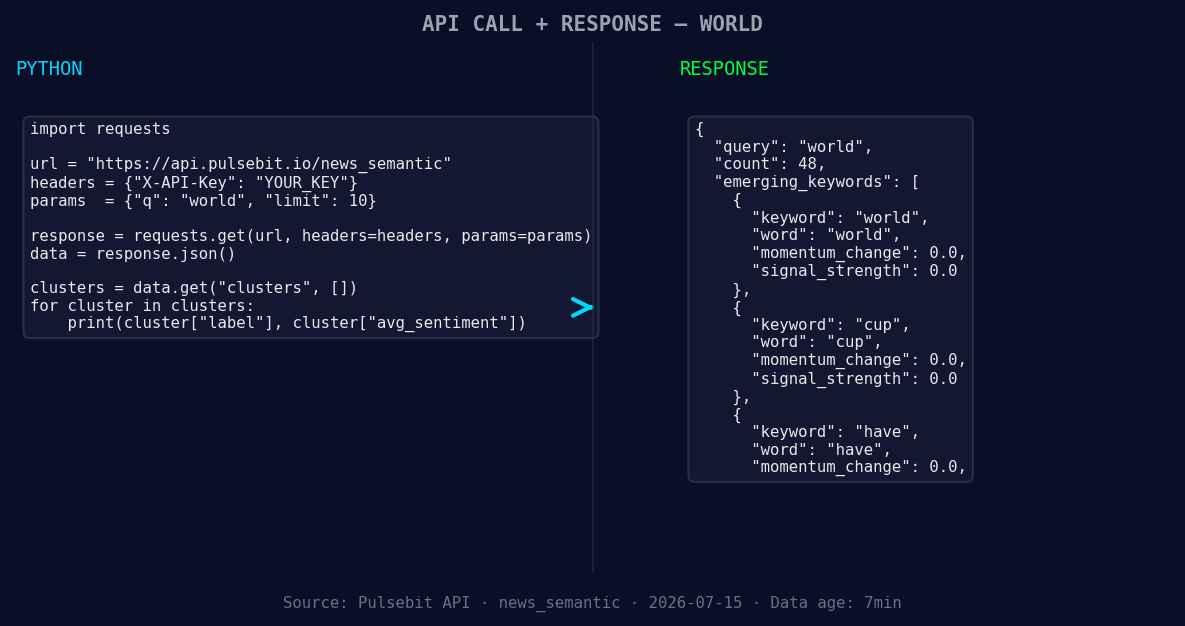
*Left: Python GET /news_semantic call for 'world'. Right: returned JSON response structure (clusters: 3). Source: Pulsebit /news_semantic.*
# Step 1: Geographic origin filter
url = "https://api.pulsebit.lojenterprise.com/v1/articles"
params = {
"topic": "world",
"lang": "en",
"momentum": "+0.295"
}
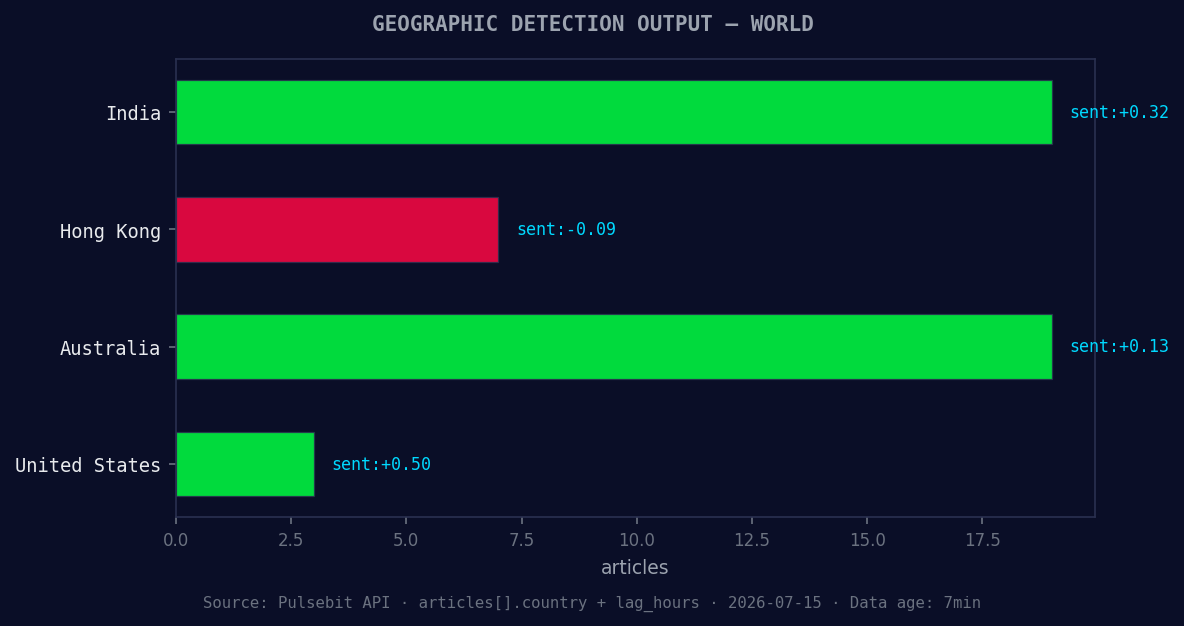
*Geographic detection output for world. India leads with 19 articles and sentiment +0.32. Source: Pulsebit /news_recent geographic fields.*
response = requests.get(url, params=params)
data = response.json()
print(data)
# Step 2: Meta-sentiment moment
sentiment_url = "https://api.pulsebit.lojenterprise.com/v1/sentiment"
cluster_reason = "Clustered by shared themes: china’s, rival, science, our, help."
sentiment_response = requests.post(sentiment_url, json={"text": cluster_reason})
sentiment_data = sentiment_response.json()
print(sentiment_data)
In the first part of this code, we’re querying the articles filtered by the leading language, English, to capture the relevant discourse around the topic of "world." You’ll notice we set the momentum to +0.295 to pinpoint this specific anomaly. The second section runs a meta-sentiment analysis on the cluster reason string, scoring the narrative's framing. This unique insight can help you understand how the narrative is being shaped by various themes.
Now, let’s talk about three builds you can implement using this pattern:
Geo-Sensitive Alerts: Create an alert system that triggers when the sentiment around "world" in English exceeds a specific threshold (e.g., +0.3). This way, you're immediately notified of rising tensions or trends and can act swiftly.
Dynamic Narrative Scoring: Use the meta-sentiment loop to score cluster narratives in real-time. Set a threshold where if the sentiment score drops below a certain level (e.g., 0.025), you could initiate a review of your strategy concerning China and its global partnerships.
Comparison Metrics Dashboard: Build a dashboard that compares the forming themes (like world, cup, have) against mainstream narratives (like china’s, rival, science). Use visualizations to highlight discrepancies and trends over time, focusing on sentiment spikes that might indicate emerging stories.
By utilizing these strategies, you can ensure that your pipeline is not just catching up but leading the way in sentiment analysis.
To dive deeper, visit our documentation at pulsebit.lojenterprise.com/docs. You can copy and paste the code above and run it in under 10 minutes to start leveraging these insights for your projects.


Top comments (0)