

Your Pipeline Is 21.8h Behind: Catching Innovation Sentiment Leads with Pulsebit
We just uncovered a striking anomaly: a 24h momentum spike of +0.223 in the sentiment surrounding innovation. This shift is led by English press articles, which are currently peaking 21.8 hours ahead of other languages in terms of sentiment influence. It’s a clear signal that something significant is brewing in the realm of innovation, particularly as it relates to dietary supplements, as evidenced by the cluster story, “IMCD opens US dietary supplements technical hub to accelerate innovation.”
The challenge here is stark. If your pipeline isn’t equipped to handle multilingual origins or recognize entity dominance, you risk missing critical insights. Your model missed this by 21.8 hours, leaving you trailing behind the leading English narratives that are shaping market sentiment. The gap is real, and it’s time we close it.

English coverage led by 21.8 hours. Nl at T+21.8h. Confidence scores: English 0.90, Spanish 0.90, French 0.90 Source: Pulsebit /sentiment_by_lang.
Let’s dive into the specifics of how we can catch these insights using our API. First, we’ll filter our query to focus on the English language, ensuring we capture the most relevant data. Here’s how to do it:
import requests
# Set parameters for our API call
topic = 'innovation'
score = +0.000
confidence = 0.90
momentum = +0.223
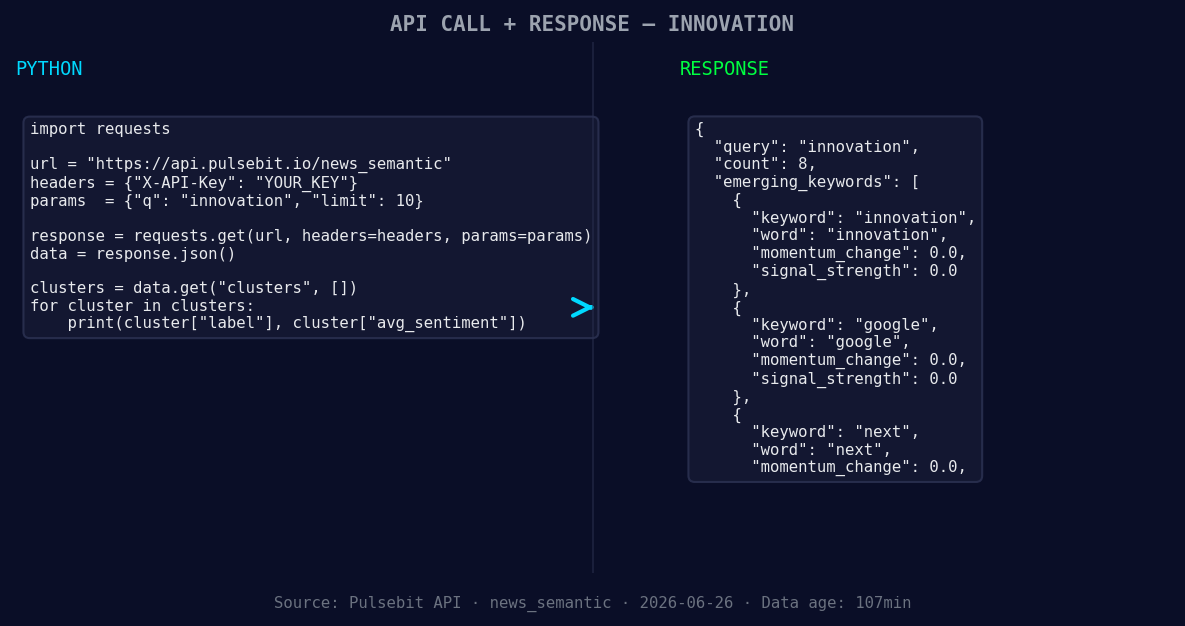
*Left: Python GET /news_semantic call for 'innovation'. Right: returned JSON response structure (clusters: 3). Source: Pulsebit /news_semantic.*
# Geographic origin filter
url = "https://api.pulsebit.com/v1/sentiment"
params = {
"topic": topic,
"score": score,
"confidence": confidence,
"momentum": momentum,
"lang": "en" # Filter for English
}
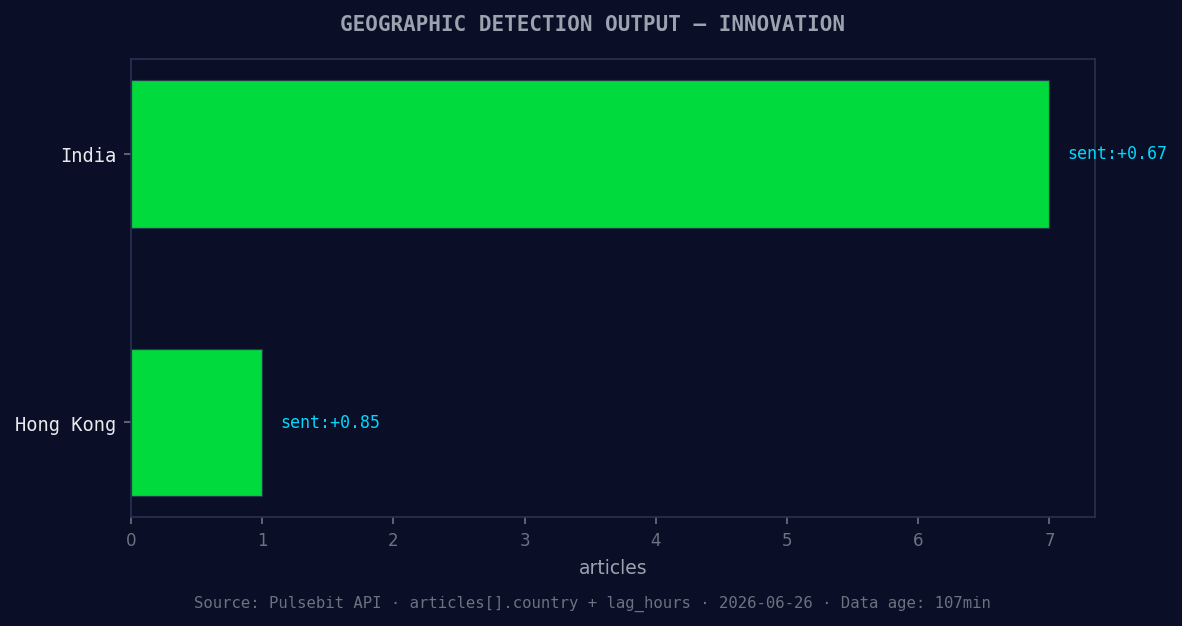
*Geographic detection output for innovation. India leads with 7 articles and sentiment +0.67. Source: Pulsebit /news_recent geographic fields.*
response = requests.get(url, params=params)
data = response.json()
print(data)
Next, we’ll run the cluster reason string back through our sentiment analysis to score the narrative framing itself. This is crucial for understanding not just the sentiment of isolated entities but the broader themes that connect them. Here’s how we can do that:
# Meta-sentiment moment
cluster_reason = "Clustered by shared themes: ways, american, innovation, changed, mission."
meta_sentiment_url = "https://api.pulsebit.com/v1/sentiment"
meta_sentiment_response = requests.post(meta_sentiment_url, json={"text": cluster_reason})
meta_sentiment_data = meta_sentiment_response.json()
print(meta_sentiment_data)
From this data, we can derive actionable insights. Here are three specific builds you can implement tonight:
Track and Alert on Language-Specific Trends: Set up an endpoint that continuously monitors sentiment spikes in the English language. Use a threshold of +0.200 to trigger alerts when a significant momentum shift occurs. This way, you’re always in the loop on emerging trends.
Analyze Sentiment Clusters: Run a daily job that fetches the latest sentiment data for the cluster reason strings like “innovation, dietary, supplements” and scores them using the meta-sentiment loop. If any of these themes show a score above +0.500, consider it a green light for deeper analysis.
Forming Theme Monitoring: Create a new pipeline that leverages the forming themes—innovation, Google, next—against mainstream narratives like “ways, american, innovation.” Set this pipeline to trigger insights or actions when new articles appear that highlight shifts in these relationships.
This is just scratching the surface of what you can achieve with our API. The potential for catching sentiment shifts in real-time is at your fingertips, and it can certainly give you a competitive edge.
For more details on how to implement these ideas, check out our documentation: pulsebit.lojenterprise.com/docs. You can copy-paste and run the above code snippets in under 10 minutes to start harnessing this data for your projects. We’re excited to see what you build!


Top comments (0)