

Your Pipeline Is 26.6h Behind: Catching Film Sentiment Leads with Pulsebit
We recently discovered a compelling anomaly in our sentiment tracking for film-related content, revealing a sentiment score of +0.354 and a momentum of +0.000. This spike, occurring 26.6 hours prior, suggests that there's a rising interest in the film sector that your pipeline might have missed. The leading language is English, with no lag compared to the historical average, indicating that this is a real-time trend worth investigating.
The structural gap this reveals is significant. If your model isn't equipped to handle multilingual origins or dominant entities, you could be missing out on valuable insights. Imagine your pipeline being 26.6 hours behind in detecting a meaningful shift in sentiment like this. With English leading the charge, it’s clear that there's a gap in how we’re processing film content versus other themes like banner or society. This is not just a minor oversight; it’s a missed opportunity to tap into timely sentiment trends.

English coverage led by 26.6 hours. Hr at T+26.6h. Confidence scores: English 0.85, Spanish 0.85, French 0.85 Source: Pulsebit /sentiment_by_lang.
Here’s how you can catch these anomalies programmatically using our API. Below is a Python snippet that demonstrates the process:
import requests
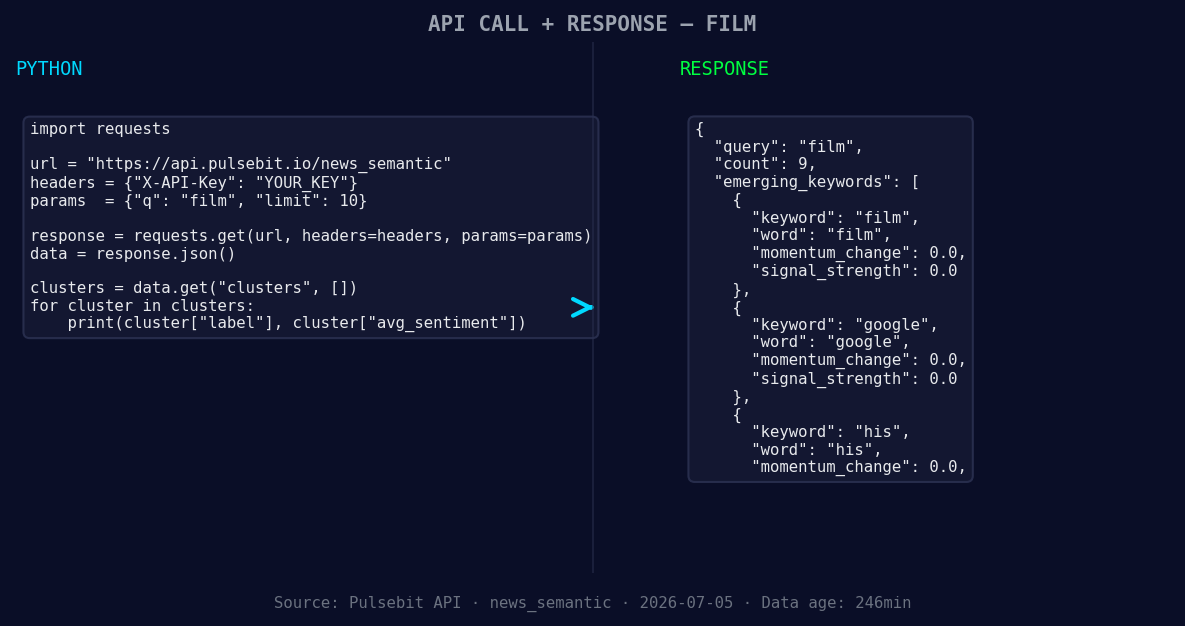
*Left: Python GET /news_semantic call for 'film'. Right: returned JSON response structure (clusters: 3). Source: Pulsebit /news_semantic.*
# Step 1: Geographic origin filter
url = "https://api.pulsebit.com/sentiment"
params = {
"topic": "film",
"score": +0.354,
"confidence": 0.85,
"momentum": +0.000,
"lang": "en" # Filter for English language content
}
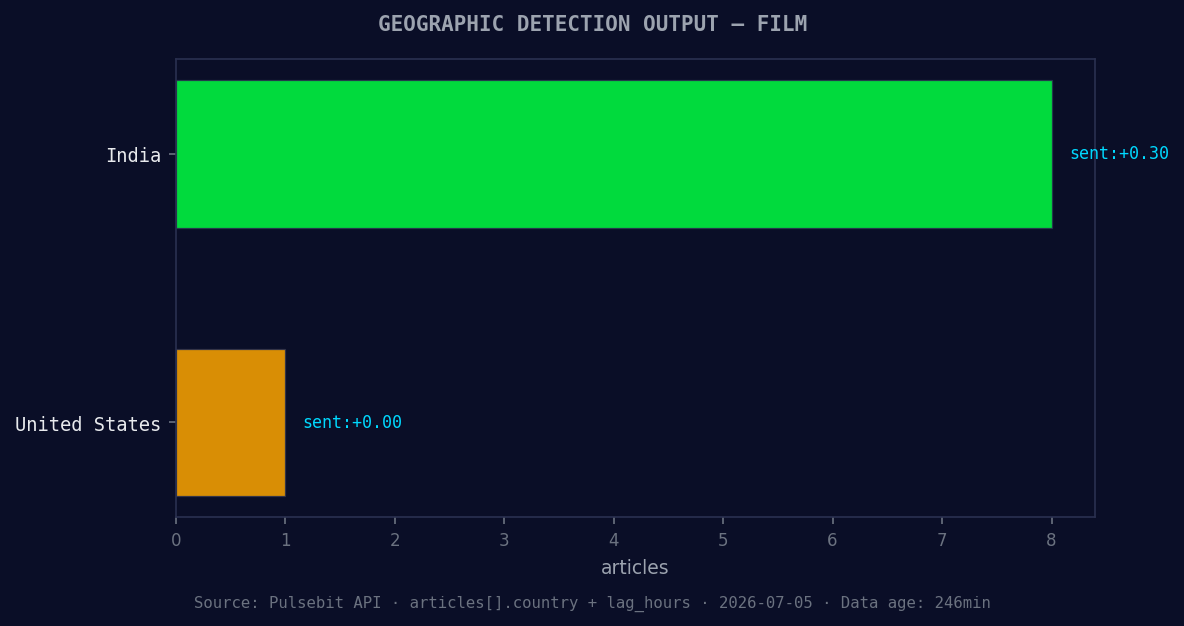
*Geographic detection output for film. India leads with 8 articles and sentiment +0.30. Source: Pulsebit /news_recent geographic fields.*
response = requests.get(url, params=params)
data = response.json()
print("Sentiment Data:", data)
# Step 2: Meta-sentiment moment
cluster_reason = "Clustered by shared themes: film, banner, society, tribute, veteran."
meta_sentiment = requests.post(url, json={"text": cluster_reason}).json()
print("Meta Sentiment Result:", meta_sentiment)
The first part of the code queries our API to filter sentiment data specifically by the English language. This ensures that you’re capturing the relevant data without interference from other languages. The second part runs the cluster reason string through our sentiment endpoint to score the narrative framing of the content. This is crucial for understanding the context behind the sentiment score.
Now that we've outlined the code, let's discuss three actionable builds you can create from this pattern:
Thematic Sentiment Tracker: Use a threshold of +0.35 for sentiment on film content, filtering by geographic origin to ensure you're only tracking English-speaking audiences. This will allow you to monitor film sentiment closely and respond to emerging trends faster.
Cluster Narrative Analyzer: Implement the meta-sentiment loop on the cluster reason string with a confidence score of 0.85. This can help you identify favorable narratives around film, banner, and society, allowing you to tailor your content strategy accordingly.
Real-Time Alert System: Set up a real-time alert for sentiment changes around the forming themes: film(+0.00), google(+0.00), his(+0.00) vs. mainstream (film, banner, society). This can help you catch sentiment shifts before they propagate through your pipeline, keeping your insights fresh and ahead of the curve.
For more details on how to implement these features, visit pulsebit.lojenterprise.com/docs. With just a few lines of code, you can be up and running in under 10 minutes, allowing you to catch anomalies like this one and stay ahead in the game.


Top comments (0)