

Your 24-hour momentum spike of -0.900 reveals a significant anomaly in the finance sector, particularly when the leading language is French, with a lag of just 13.4 hours. This negative momentum indicates a potential shift in sentiment that could influence trading and investment decisions. The cluster story associated with this spike—"Funding bus fare cap from aid budget will hit world’s poorest, Burnham told"—highlights the themes emerging in the news cycle, specifically around budgetary constraints affecting vulnerable populations. These insights are crucial for anyone looking to stay ahead of financial trends.
If your pipeline doesn't account for multilingual origin or the dominance of certain entities, you might find yourself missing critical signals. In this case, your model missed a key sentiment shift by 13.4 hours. The leading language being French means that important narratives are unfolding outside the English-speaking domain. This delay in capturing sentiment can cost you valuable foresight in a fast-paced environment where every hour counts.

French coverage led by 13.4 hours. Ca at T+13.4h. Confidence scores: French 0.85, English 0.85, Spanish 0.85 Source: Pulsebit /sentiment_by_lang.
To catch this momentum spike and leverage the insights it provides, we can use our API effectively. Below is a Python code snippet that captures this anomaly:
import requests
# Define parameters for the API call
topic = 'finance'
score = -0.005
confidence = 0.85
momentum = -0.900
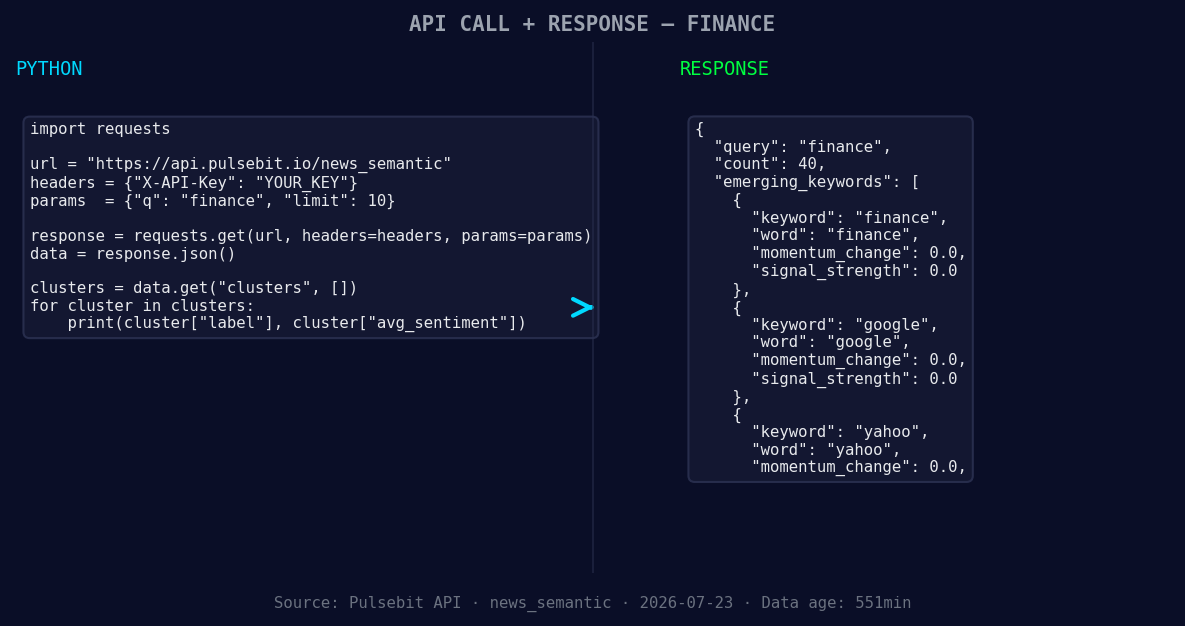
*Left: Python GET /news_semantic call for 'finance'. Right: returned JSON response structure (clusters: 3). Source: Pulsebit /news_semantic.*
# Geographic origin filter: Query by language
response = requests.get(
'https://api.pulsebit.lojenterprise.com/v1/sentiment',
params={
'topic': topic,
'lang': 'fr', # Filter for French language
'momentum': momentum,
'confidence': confidence
}
)
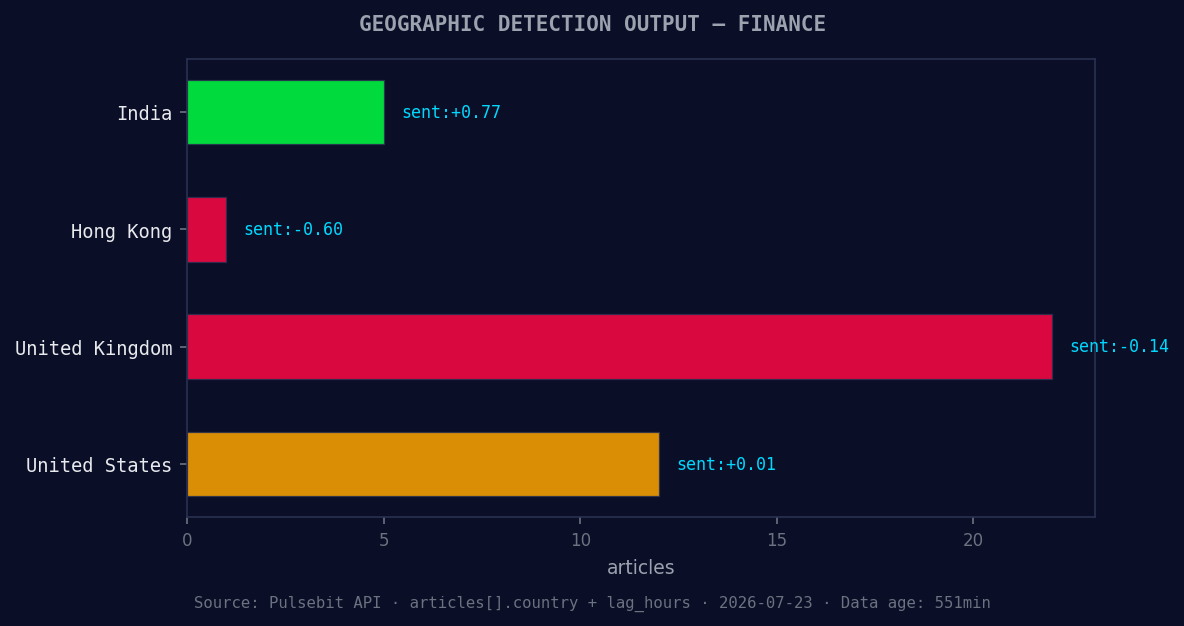
*Geographic detection output for finance. India leads with 5 articles and sentiment +0.77. Source: Pulsebit /news_recent geographic fields.*
# Check the response
if response.status_code == 200:
data = response.json()
print("Filtered data:", data)
else:
print("Error fetching data:", response.status_code)
Next, we want to analyze the narrative framing of the cluster story itself. We’ll run the cluster reason string through our sentiment endpoint to score the narrative:
# Meta-sentiment moment: Run the cluster reason string for sentiment analysis
cluster_reason = "Clustered by shared themes: bus, fare, cap, aid, budget."
meta_response = requests.post(
    'https://api.pulsebit.lojenterprise.com/v1/sentiment',
    json={'text': cluster_reason}
)

# Check the response for the meta-sentiment scoring
if meta_response.status_code == 200:
    meta_data = meta_response.json()
    print("Meta-sentiment data:", meta_data)
else:
    print("Error fetching meta-sentiment data:", meta_response.status_code)
Now, let's discuss three specific builds we can implement based on this pattern.
Geo-Sentiment Alert: Set a threshold on the
momentumscore. For instance, if momentum falls below -0.700 in French, trigger an alert to your trading team. This allows you to catch early signals from non-English news before they cascade into the market.Meta-Sentiment Dashboard: Create a dashboard that visualizes the sentiment of clustered narratives. Use the meta-sentiment loop to score cluster reasons every hour. This can help you identify which themes are gaining traction and how sentiment is evolving around them.
Forming Theme Analysis: Leverage our API to query forming themes such as
finance,google, andyahoo. Run sentiment checks against mainstream narratives likeannounces,agreement, andsell. This can help you monitor emerging trends and sentiment shifts in real-time.
By implementing these strategies, you can significantly reduce the latency in your sentiment analysis pipeline and improve your ability to act on critical financial insights.
Get started with our API at pulsebit.lojenterprise.com/docs. With this code, you can be up and running in under 10 minutes, ready to capture those crucial insights that can make all the difference.


Top comments (0)