

Your Pipeline Is 23.3h Behind: Catching World Sentiment Leads with Pulsebit
We recently discovered a notable anomaly in our sentiment analysis: a 24h momentum spike of +0.130. This spike is highlighted by English press coverage focused on Coca-Cola's innovative AI avatar showcased during the World Cup. With a leading language lag of 23.3 hours behind Hindi, it’s clear that this is a moment you can't afford to overlook. As developers, we need to be vigilant about these shifts in sentiment, especially when they’re fueled by major events like the World Cup.

English coverage led by 23.3 hours. Hindi at T+23.3h. Confidence scores: English 0.70, Spanish 0.70, French 0.70 Source: Pulsebit /sentiment_by_lang.
The Problem
This spike reveals a critical structural gap for any pipeline that doesn’t accommodate multilingual sources or properly account for entity dominance. Your model likely missed this momentum shift by 23.3 hours due to an oversight in language processing. While the English coverage surged, the underlying sentiment around Coca-Cola’s World Cup initiative, clustered around themes like “world”, “cup”, and “avatar”, was only beginning to bubble up. If your model is not adapting to these shifts in real-time, you’re operating with a significant lag.
The Code
To catch this momentum spike effectively, we can leverage our API to filter by language and assess sentiment. Below is a Python example that demonstrates how to do this:
import requests
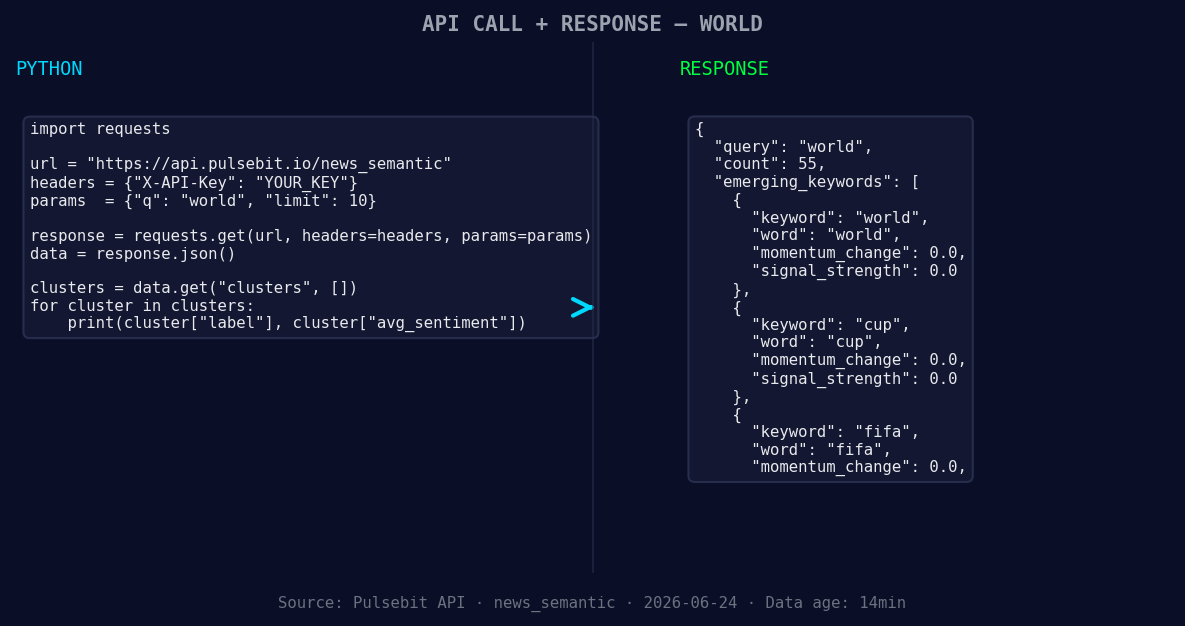
*Left: Python GET /news_semantic call for 'world'. Right: returned JSON response structure (clusters: 3). Source: Pulsebit /news_semantic.*
# Step 1: Geographic origin filter
topic = 'world'
score = +0.047
confidence = 0.70
momentum = +0.130
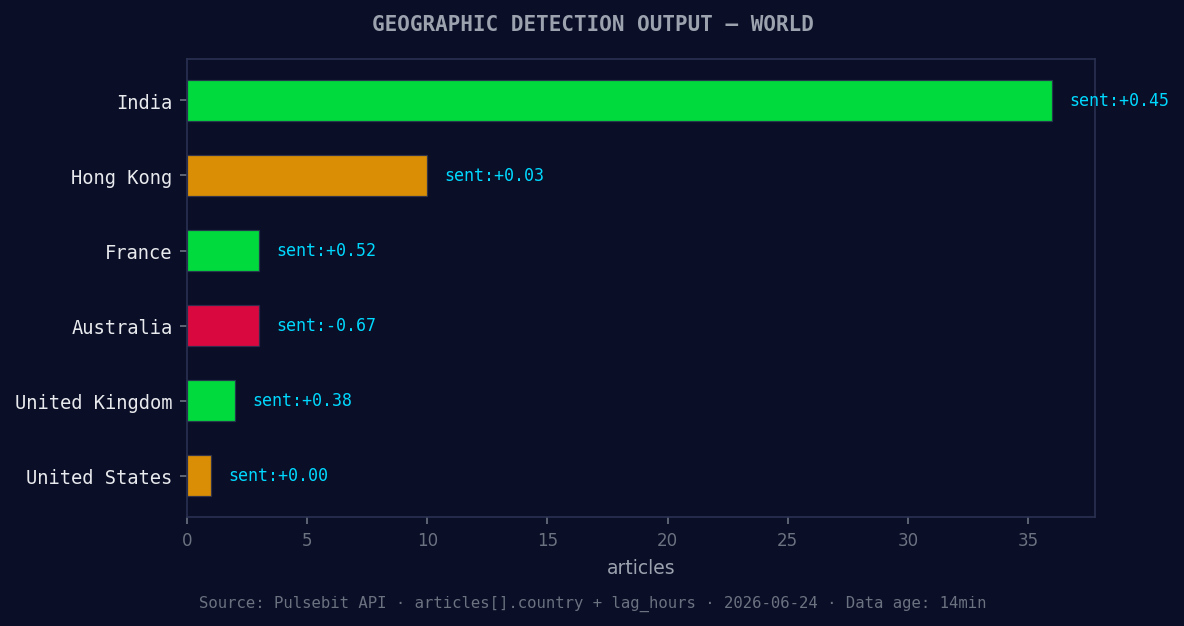
*Geographic detection output for world. India leads with 36 articles and sentiment +0.45. Source: Pulsebit /news_recent geographic fields.*
response = requests.get('https://api.pulsebit.com/sentiment', params={
'topic': topic,
'lang': 'en' # Filtering by language
})
if response.status_code == 200:
data = response.json()
print(f"Sentiment Data: {data}")
else:
print("Error fetching sentiment data.")
# Step 2: Meta-sentiment moment
cluster_reason = "Clustered by shared themes: coca-cola's, world, cup, avatar, showcases."
meta_response = requests.post('https://api.pulsebit.com/sentiment', json={
'text': cluster_reason
})
if meta_response.status_code == 200:
meta_data = meta_response.json()
print(f"Meta Sentiment Data: {meta_data}")
else:
print("Error fetching meta sentiment data.")
In this code, we first filter sentiment by English language using the lang parameter. Then, we analyze the narrative framing by sending a cluster reason string through a sentiment scoring endpoint. This dual approach allows us to not only capture the sentiment but also to understand the narratives driving it.
Three Builds Tonight
Here are three specific builds we can implement using this pattern:
Language-Based Alerting: Create an alert system that triggers when a sentiment score for a specific topic reaches a defined threshold (e.g., +0.050) in English. This could be based on our earlier query filtering sentiment around “world” in English.
Meta-Sentiment Analysis Dashboard: Build a dashboard that visualizes the meta-sentiment scores for cluster reasons. By using the response from the meta-sentiment analysis, we can display narratives alongside their sentiment scores to identify emerging themes quickly.
Comparative Analysis of Forming Themes: Implement a comparative analysis feature that contrasts forming themes (like “world” and “cup”) against mainstream narratives (like “Coca-Cola’s”). Use the sentiment scores to gauge which narratives are gaining traction and adjust your content strategy accordingly.
Get Started
Ready to catch those sentiment leads? Check out our documentation at pulsebit.lojenterprise.com/docs. With just a few lines of code, you can copy, paste, and run this in under 10 minutes to start harnessing the power of real-time sentiment data. Let’s make sure you’re not left behind.


Top comments (0)