

Your pipeline just hit a 24h momentum spike of -0.500 related to machine learning sentiment, which is worth unpacking. This isn't just a number; it signifies a sharp decline in sentiment about machine learning, particularly against the backdrop of current discussions surrounding "AGI vs. Superhuman Adaptable Intelligence in Machine Learning." This anomaly could indicate a shift in public perception that your models might miss if they're not adequately tuned for multilingual data and entity dominance.

English coverage led by 22.0 hours. Hindi at T+22.0h. Confidence scores: English 0.90, French 0.90, Spanish 0.90 Source: Pulsebit /sentiment_by_lang.
The Problem
So, what does this mean for your pipeline? If your model isn't designed to handle multilingual sources or entity dominance, it likely missed this significant shift by about 22 hours, as the leading language is English. This delay could prevent you from acting on critical insights in real-time. In this case, while Hindi articles were emerging, your model was still processing older, potentially stale data. The result? You could be making decisions based on outdated sentiment, jeopardizing your strategy.
The Code
Let’s dive into how we can catch this early signal using our API. First, we need to filter by the English language to ensure we’re only processing relevant articles:
import requests
# Define the parameters for the API call
params = {
"topic": "machine learning",
"lang": "en",
"momentum": -0.500,
"score": +0.350,
"confidence": 0.90
}
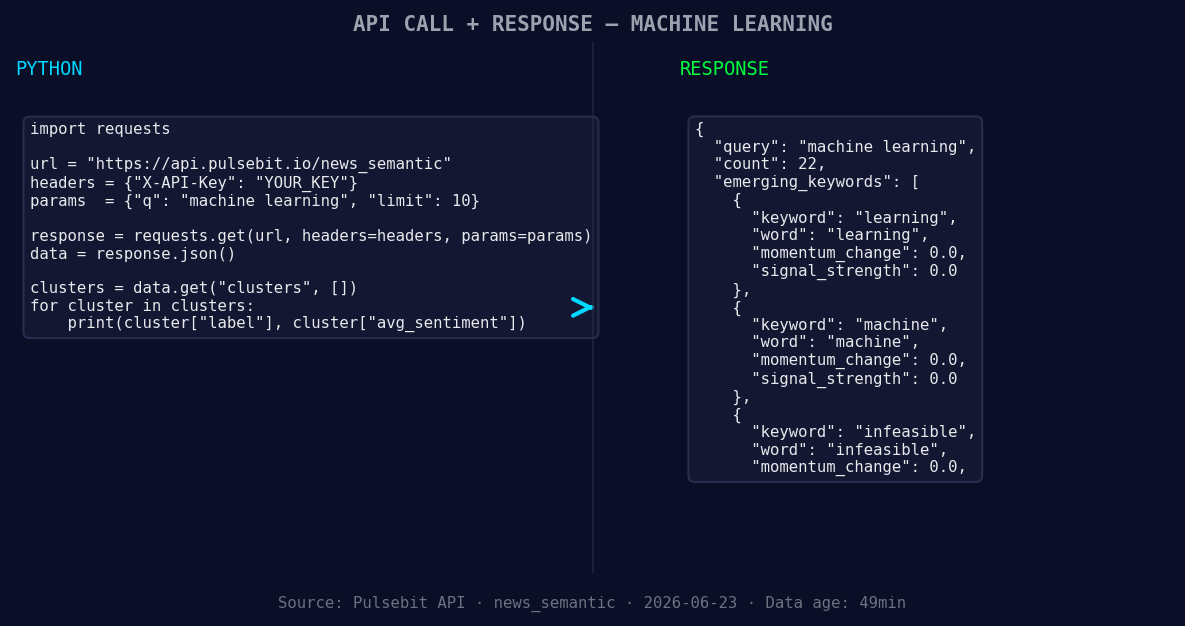
*Left: Python GET /news_semantic call for 'machine learning'. Right: returned JSON response structure (clusters: 2). Source: Pulsebit /news_semantic.*
# Make the API call to fetch sentiment data
response = requests.get("https://api.pulsebit.com/sentiment", params=params)
data = response.json()
print(data)
With this code, we can filter the sentiment data effectively. Now, let's run the cluster reason string back through our sentiment endpoint to analyze the narrative framing:
# Define the narrative framing string
narrative = "Clustered by shared themes: infeasible, instead, pursue, superhuman, adaptable."

# Make the API call to score the narrative framing
sentiment_response = requests.post("https://api.pulsebit.com/sentiment", json={"text": narrative})
sentiment_data = sentiment_response.json()
print(sentiment_data)
This snippet captures the thematic essence of the articles, allowing us to evaluate how the sentiment landscape is shifting around key discussions in machine learning.
Three Builds Tonight
Now, with this insight, here are three specific things you can build using this pattern:
- Geographic Origin Filter: Create a model that flags sentiment changes in machine learning articles specifically from English-speaking countries. Use a signal threshold of momentum < -0.300 to trigger alerts when sentiment drops significantly. This will ensure you’re not missing critical shifts.
![DATA UNAVAILABLE: countries — verify /news_recent is return
[DATA UNAVAILABLE: countries — verify /news_recent is returning country/region values for topic: machine learning]
Meta-Sentiment Loop: Implement a feedback loop where you run your clustered narratives through the sentiment scoring API. If you detect themes like "infeasible" or "adaptable" with a sentiment score below +0.200, trigger an internal review process. This will help you keep a pulse on emerging discussions that could impact your strategies.
Forming Themes Analysis: Build a dashboard that tracks forming themes like "learning" and "machine" that have momentum close to 0.00 against mainstream narratives. Set a threshold that alerts you when the sentiment for these themes diverges significantly from mainstream discussions, so you can pivot your focus as necessary.
Get Started
Ready to implement this? Check out our documentation at pulsebit.lojenterprise.com/docs. You can copy-paste and run this in under 10 minutes, giving you the tools to catch critical sentiment shifts that can shape your understanding of machine learning discussions.


Top comments (0)