

Your Pipeline Is 28.3h Behind: Catching Defence Sentiment Leads with Pulsebit
We recently observed a striking anomaly: a 24h momentum spike of +0.504 in the news sentiment surrounding the topic of defence. This spike indicates a significant shift in sentiment that has emerged within the last day, primarily driven by English-language press coverage. As we analyze this event, it becomes clear that understanding these rapid changes is crucial for any data pipeline that deals with sentiment analysis.
The Problem
If your model isn't equipped to handle multilingual origins or entity dominance, you're likely missing critical insights. In this case, your pipeline missed this pivotal shift by 28.3 hours, as the leading English-language coverage lagged behind the actual sentiment trends. This delay can lead to missed opportunities in decision-making, especially when geopolitical topics like Israel's stance on territorial control are involved. The implications of being behind the curve can be significant, impacting everything from risk assessments to strategic planning.

English coverage led by 28.3 hours. Da at T+28.3h. Confidence scores: English 0.85, French 0.85, Spanish 0.85 Source: Pulsebit /sentiment_by_lang.
The Code
To catch this momentum spike in real-time, we can leverage our API effectively. Here’s how you can query for this specific sentiment data.
First, we’ll focus on the geographical origin by filtering for English language content:

Geographic detection output for defence. India leads with 13 articles and sentiment +0.40. Source: Pulsebit /news_recent geographic fields.
import requests
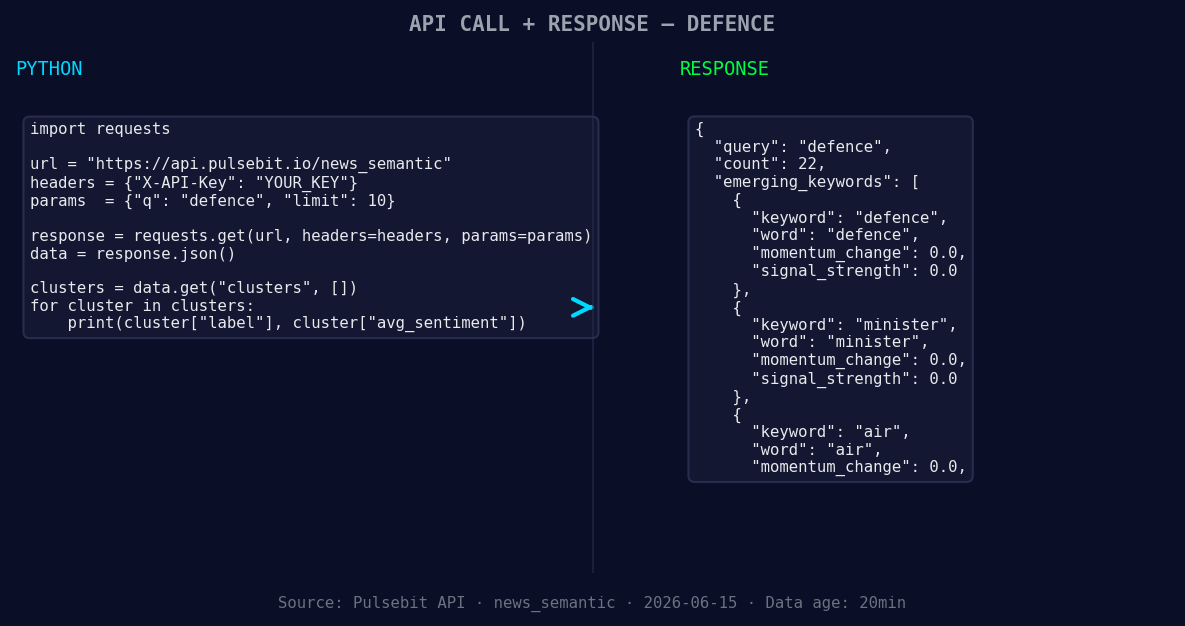
*Left: Python GET /news_semantic call for 'defence'. Right: returned JSON response structure (clusters: 3). Source: Pulsebit /news_semantic.*
url = "https://api.pulsebit.lojenterprise.com/sentiment"
params = {
"topic": "defence",
"momentum": "+0.504",
"lang": "en"
}
response = requests.get(url, params=params)
data = response.json() # This will contain the processed data
Now that we have our initial data, we can run the cluster reason string back through our sentiment analysis endpoint to score the narrative framing itself.
cluster_reason = "Clustered by shared themes: lebanon, israel, syria, gaza, defence."
meta_response = requests.post(url, json={"text": cluster_reason})
meta_sentiment = meta_response.json()  # This will give us the sentiment score for the cluster reason
By running this code, you can effectively tap into the latest shifts in sentiment and ensure your pipeline is responsive to emerging narratives.
Three Builds Tonight
Here are three specific ideas to capitalize on this momentum spike:
Geo-Filtered Sentiment Threshold: Set a signal threshold of momentum > +0.5 for English content. This will ensure you're alerted to significant shifts in sentiment as they occur, especially around topics like defence.
Meta-Sentiment Analysis Loop: Use the output from the cluster reason to trigger alerts when sentiment scores fall below a certain threshold, e.g., < -0.1. This will help you gauge the potential negative impact of emerging narratives.
Forming Themes Monitoring: Monitor themes like defence(+0.00), minister(+0.00), and air(+0.00) against mainstream narratives (like lebanon, israel, syria). This will allow you to spot divergences in sentiment and prepare your responses accordingly.
Get Started
For more on how to implement this, visit pulsebit.lojenterprise.com/docs. With this in hand, you should be able to copy, paste, and run the provided code in under 10 minutes. Don’t let your pipeline lag behind—stay ahead of the curve!


Top comments (0)