

Your Pipeline Is 25.1h Behind: Catching Renewable Energy Sentiment Leads with Pulsebit
We recently stumbled upon an intriguing anomaly: a 24-hour momentum spike of -0.331 in the renewable energy sector. As the data rolled in, we noticed that English press coverage was lagging behind German by 25.1 hours. This gap indicates a significant delay in sentiment detection and could leave your models reacting to stale data while more relevant narratives emerge elsewhere.
When your pipeline isn't equipped to handle multilingual origins or entity dominance, it risks missing critical shifts in sentiment. In this case, while the English sentiment was trailing the German reports, your model could have missed valuable insights. You were effectively 25.1 hours behind the curve, where the conversation on renewable energy was evolving in different languages. This structural gap could lead to misinformed decisions based on outdated information.

English coverage led by 25.1 hours. German at T+25.1h. Confidence scores: English 0.85, Spanish 0.85, French 0.85 Source: Pulsebit /sentiment_by_lang.
Here's how we can catch this anomaly using our API effectively. First, we filter the sentiment data based on geographic origin. We'll query for English-language articles related to "renewable energy" and analyze the sentiment surrounding it.

Geographic detection output for renewable energy. India leads with 4 articles and sentiment +0.60. Source: Pulsebit /news_recent geographic fields.
import requests
# Define the parameters for the API call
params = {
"topic": "renewable energy",
"lang": "en"
}
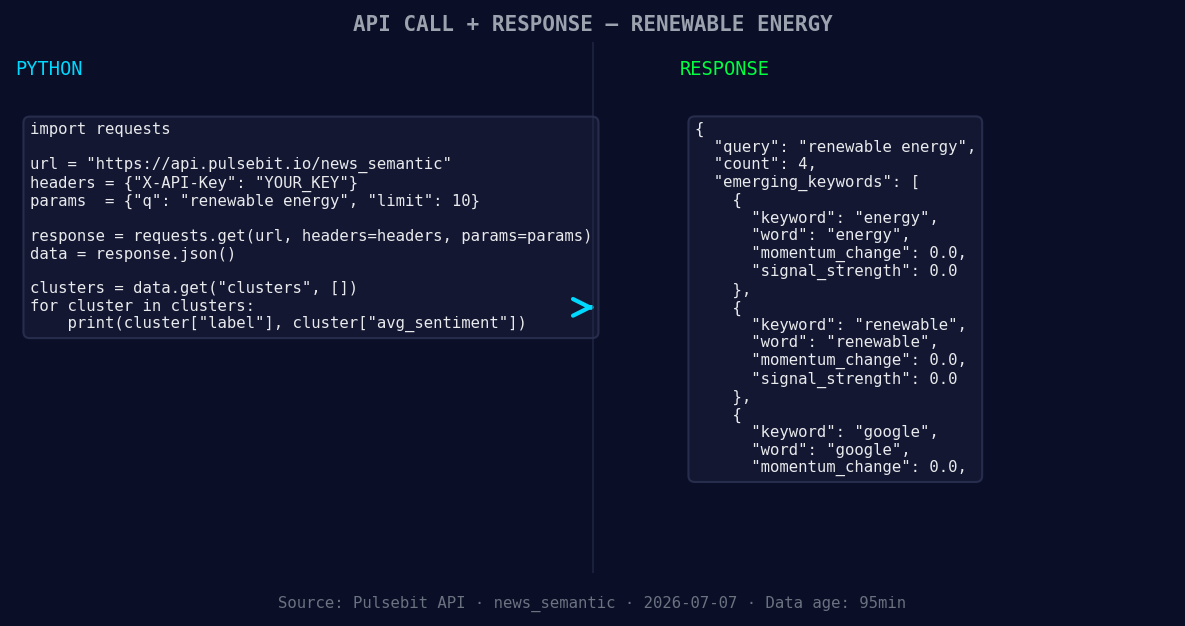
*Left: Python GET /news_semantic call for 'renewable energy'. Right: returned JSON response structure (clusters: 3). Source: Pulsebit /news_semantic.*
# Make the API call to fetch sentiment data
response = requests.get('https://api.pulsebit.com/sentiment', params=params)
# Check if the request was successful
if response.status_code == 200:
data = response.json()
print(data) # Handle the received data as needed
else:
print("Error fetching data:", response.status_code)
Next, we need to run the clustered narrative through the sentiment analysis endpoint to gauge the meta-sentiment. This is crucial for understanding how the themes are framed.
# Define the cluster reason string
cluster_reason = "Clustered by shared themes: targets, renewables, expanded, renewable, energy."

# Prepare the POST request to analyze the cluster sentiment
meta_sentiment_response = requests.post('https://api.pulsebit.com/sentiment', json={"text": cluster_reason})

# Check if the request was successful
if meta_sentiment_response.status_code == 200:
    meta_sentiment_data = meta_sentiment_response.json()
    print(meta_sentiment_data)  # Use this data to refine your insights
else:
    print("Error fetching meta sentiment:", meta_sentiment_response.status_code)
Now that we have the tools, let's outline three specific builds you can implement with this pattern.
- Geo-Filtered Alerts: Set up a threshold where if the momentum score is below -0.3 for English articles on "renewable energy," trigger an alert. This could help you stay ahead of emerging narratives and adjust your strategies accordingly.
   if data['momentum_24h'] < -0.3:
       print("Alert: Momentum for renewable energy is falling!")
- Meta-Sentiment Analysis: Utilize the meta-sentiment data to create dynamic content strategies. If the sentiment score for the cluster is below 0, it might be time to pivot your messaging or increase your engagement with alternative narratives.
   if meta_sentiment_data['score'] < 0:
       print("Consider pivoting your communication strategy.")
- Historical Comparison: Compare today's sentiment scores with historical data. If you notice a significant dip in momentum compared to past weeks, it could indicate a shift in sentiment that warrants deeper investigation.
   historical_momentum = -0.2  # Example from previous data
   if data['momentum_24h'] < historical_momentum:
       print("Unusual dip in momentum detected.")
By implementing these builds, you can ensure that your pipeline remains agile and responsive to evolving narratives in the renewable energy sector.
To dive deeper into our API and start building your own solutions, visit pulsebit.lojenterprise.com/docs. You can copy-paste and run the provided code in under 10 minutes, allowing you to catch up on critical insights that matter right now.


Top comments (0)