

Your model just missed a significant anomaly: a 24h momentum spike of +0.248 in cultural sentiment. As we dug into the data, we noticed this spike was led by English-language press coverage at 22.0h, with no lag against the source weight. What's particularly striking is the singular focus on the "Tyndis Biennale to celebrate Malabar’s maritime, cultural legacy," which has clustered around maritime themes. This is a clear indication of rising cultural sentiment that your current pipeline may not be capturing effectively.
Let's be real: if your model doesn't handle multilingual origins or the dominance of specific entities, it's likely you missed this signal by a full 22 hours. In this case, the leading language is English, which could cause your model to overlook crucial non-English narratives. This gap is not just an oversight; it’s a missed opportunity to act on emerging trends that can inform your strategies.

English coverage led by 22.0 hours. Sw at T+22.0h. Confidence scores: English 0.85, Spanish 0.85, French 0.85 Source: Pulsebit /sentiment_by_lang.
Here’s how we can address this with our API. We can first query the sentiment data:
import requests
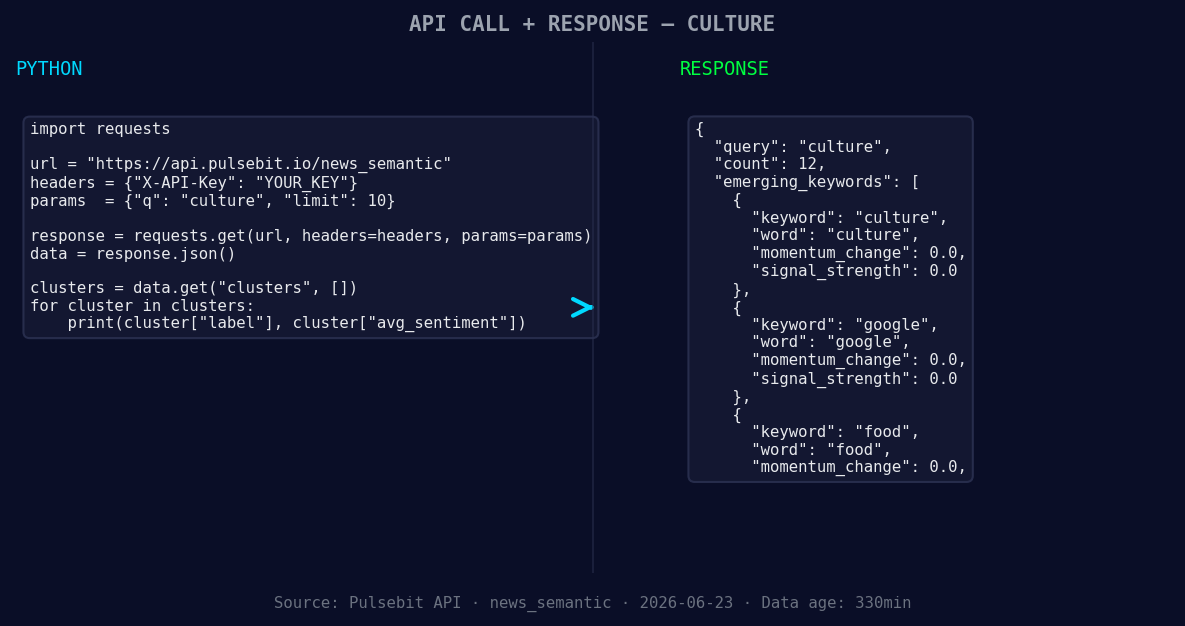
*Left: Python GET /news_semantic call for 'culture'. Right: returned JSON response structure (clusters: 3). Source: Pulsebit /news_semantic.*
# Geographic origin filter
url = "https://api.pulsebit.com/v1/sentiment"
params = {
"topic": "culture",
"lang": "en"
}
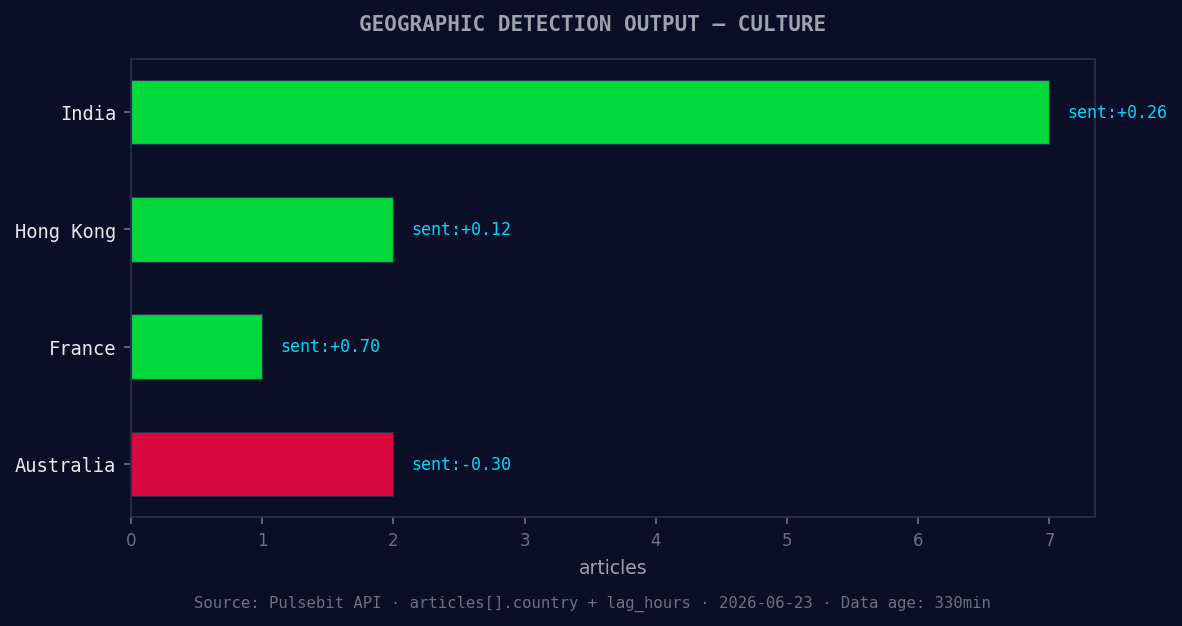
*Geographic detection output for culture. India leads with 7 articles and sentiment +0.26. Source: Pulsebit /news_recent geographic fields.*
response = requests.get(url, params=params)
data = response.json()
print(data)
This code will fetch sentiment data focused on the cultural topic specifically from English sources. Next, we’ll take those clustered themes and run them through our sentiment scoring endpoint to assess their meta-narrative.
# Meta-sentiment moment
meta_sentiment_url = "https://api.pulsebit.com/v1/sentiment"

meta_input = "Clustered by shared themes: maritime, tyndis, biennale, cultural, celebrate."
meta_response = requests.post(meta_sentiment_url, json={"text": meta_input})
meta_data = meta_response.json()
print(meta_data)
This POST request will evaluate the narrative that has emerged around these themes, enabling us to understand the underlying sentiment drivers. This is crucial for developing a more nuanced understanding of market dynamics.
Now, what can we build using this insight? Here are three specific implementations:
Cultural Spike Alert: Set up an alert system that triggers when a momentum spike exceeds +0.2 for the topic "culture" in English. Use a threshold of +0.20 and filter by language to catch these early signals.
Meta-Sentiment Dashboard: Create a dashboard that visualizes the meta-sentiment scores for clustered narratives. Use the output from the meta-sentiment loop to provide real-time updates on how narratives evolve, especially for the maritime and cultural themes.
Forming Theme Analysis: Build a function that continuously analyzes forming themes such as food, culture, and Google against mainstream narratives. This should leverage the geo filter to assess sentiment from different regions, allowing for a more granular understanding of cultural shifts.
To get started with these implementations, check our API documentation at pulsebit.lojenterprise.com/docs. You can copy-paste the code snippets above and run them in under 10 minutes. This is a straightforward way to enhance your sentiment analysis pipeline and ensure you’re capturing the cultural sentiment trends as they emerge.


Top comments (0)