

Your Pipeline Is 16.2h Behind: Catching Inflation Sentiment Leads with Pulsebit
We recently discovered a fascinating anomaly in our data: a sentiment score of -0.60 related to inflation, with a momentum of +0.00. This finding stood out particularly because it highlights a crucial lag in sentiment tracking—your pipeline is currently 16.2 hours behind the leading language, which is English. This delay can significantly impact decision-making, especially when it comes to interpreting inflation discussions and related market behavior.
The problem is clear: if your model isn’t equipped to handle multilingual origins or dominant entities, you risk missing critical insights. For instance, with English as the leading language in our analysis, you might find yourself trailing by 16.2 hours on relevant sentiment trends. This means that while you're still analyzing old data, your competitors could already be acting on the latest sentiments and trends that could influence investment or business strategies.

English coverage led by 16.2 hours. Tl at T+16.2h. Confidence scores: English 0.85, Spanish 0.85, Ca 0.85 Source: Pulsebit /sentiment_by_lang.
To catch this anomaly, we can leverage our API. Here’s how you can do it in Python:
import requests
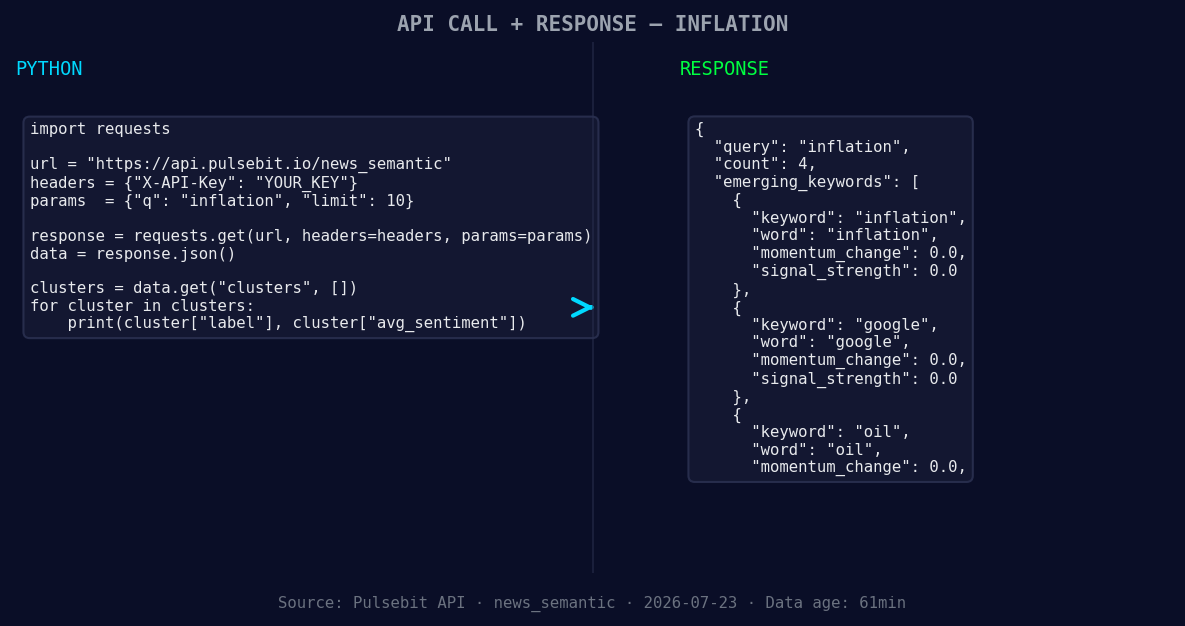
*Left: Python GET /news_semantic call for 'inflation'. Right: returned JSON response structure (clusters: 3). Source: Pulsebit /news_semantic.*
# Step 1: Geographic origin filter
url = "https://api.pulsebit.com/v1/sentiment"
query = {
"topic": "inflation",
"score": -0.600,
"confidence": 0.85,
"momentum": +0.000,
"lang": "en" # Filtering by English language
}
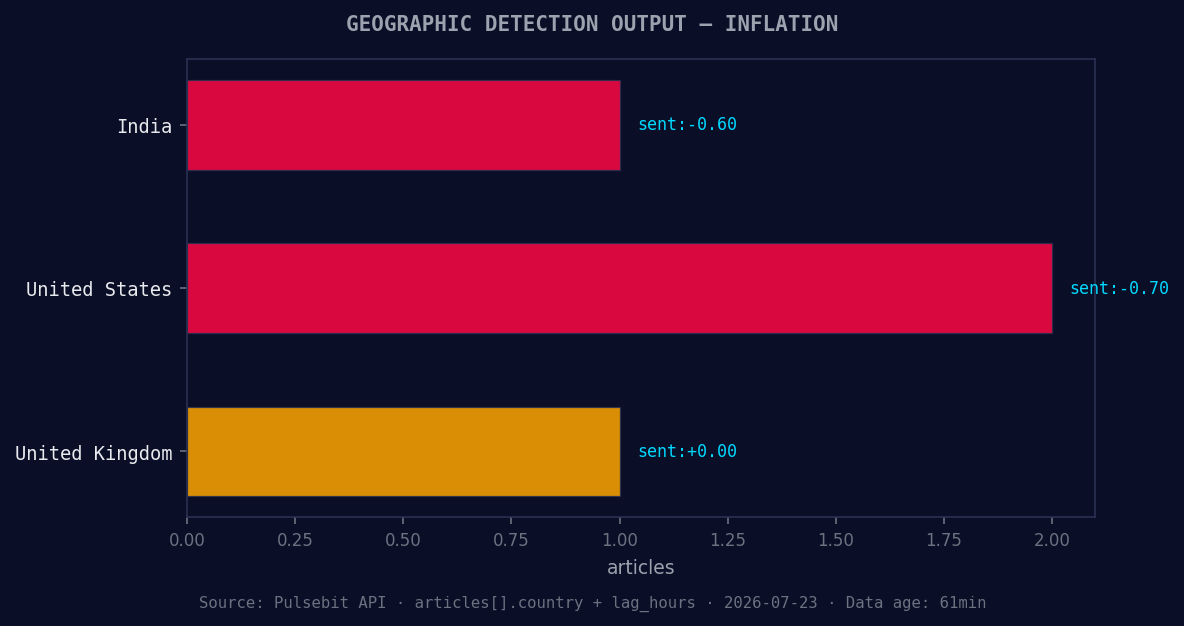
*Geographic detection output for inflation. India leads with 1 articles and sentiment -0.60. Source: Pulsebit /news_recent geographic fields.*
response = requests.post(url, json=query)
inflation_sentiment = response.json()
# Step 2: Meta-sentiment moment
cluster_reason = "Clustered by shared themes: treasury, yield, highest, since, january."
meta_sentiment_response = requests.post(url, json={"text": cluster_reason})
meta_sentiment = meta_sentiment_response.json()
print(inflation_sentiment)
print(meta_sentiment)
In this code, we first filter the sentiment data specifically for the topic of inflation and ensure we're only looking at English language articles. After obtaining the sentiment data, we also score the narrative framing itself by passing the cluster reason string back through the API. This allows us to understand the sentiment not just in isolation but within the context of how it's being discussed.
Now, let's explore three specific builds you can implement based on this pattern:
Inflation Sentiment Tracker: Create a daily job that checks for sentiment changes around inflation with a threshold of -0.60. Use the geo filter to ensure you’re analyzing only English articles. This could give you a heads-up on when sentiment shifts significantly.
Clustered Theme Analyzer: Build an endpoint that takes emerging themes like "oil" and "google" and scores their sentiment using the meta-sentiment loop. This could help you identify which topics are rising in importance and might lead to market movements.
Gap Analysis Tool: Develop a tool that compares the sentiment data between leading and forming gaps, with a specific focus on topics like "inflation" and "treasury yields." This could help you identify when your pipeline is lagging and enable you to adjust your models accordingly.
By implementing these builds, you can catch emerging trends and sentiments before they become mainstream, ensuring that you stay ahead of the curve.
Get started with our API at pulsebit.lojenterprise.com/docs. You can copy-paste the provided code and run it in under 10 minutes to start harnessing these insights right away.


Top comments (0)