

Your Pipeline Is 22.7h Behind: Catching Music Sentiment Leads with Pulsebit
We recently discovered a fascinating anomaly in our data: a 24h momentum spike of +0.309 in the music domain. This spike stands out against a historical baseline, indicating a significant shift in sentiment that you’ll want to catch. The leading language for this surge is English, with a notable 22.7-hour lead time. In a fast-paced environment, missing out on this critical window can mean losing valuable insights.
The Problem
This anomaly reveals a structural gap in pipelines that fail to account for multilingual origins or entity dominance. If your model isn’t set up to handle this, you could find yourself trailing behind by 22.7 hours. The leading language of English is particularly crucial here, as it drives much of the engagement and sentiment in the music industry. If you’re not capturing this, you’re missing a key signal that could inform your strategies.

English coverage led by 22.7 hours. Sw at T+22.7h. Confidence scores: English 0.85, Spanish 0.85, French 0.85 Source: Pulsebit /sentiment_by_lang.
The Code
To catch this momentum spike, we can utilize our API to filter and analyze sentiment effectively. Below is the Python code that accomplishes this:
import requests
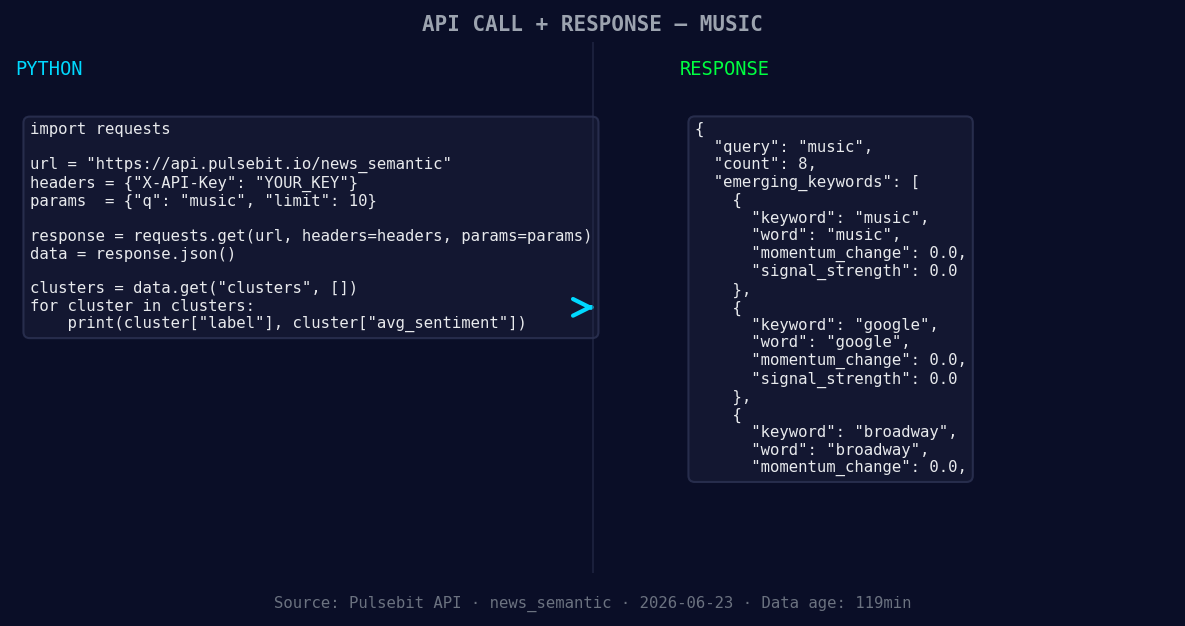
*Left: Python GET /news_semantic call for 'music'. Right: returned JSON response structure (clusters: 3). Source: Pulsebit /news_semantic.*
# Parameters
topic = 'music'
score = +0.486
confidence = 0.85
momentum = +0.309
# Step 1: Geographic origin filter
response = requests.get('https://api.pulsebit.io/sentiment', params={
'topic': topic,
'lang': 'en',
'score': score,
'confidence': confidence,
'momentum': momentum
})
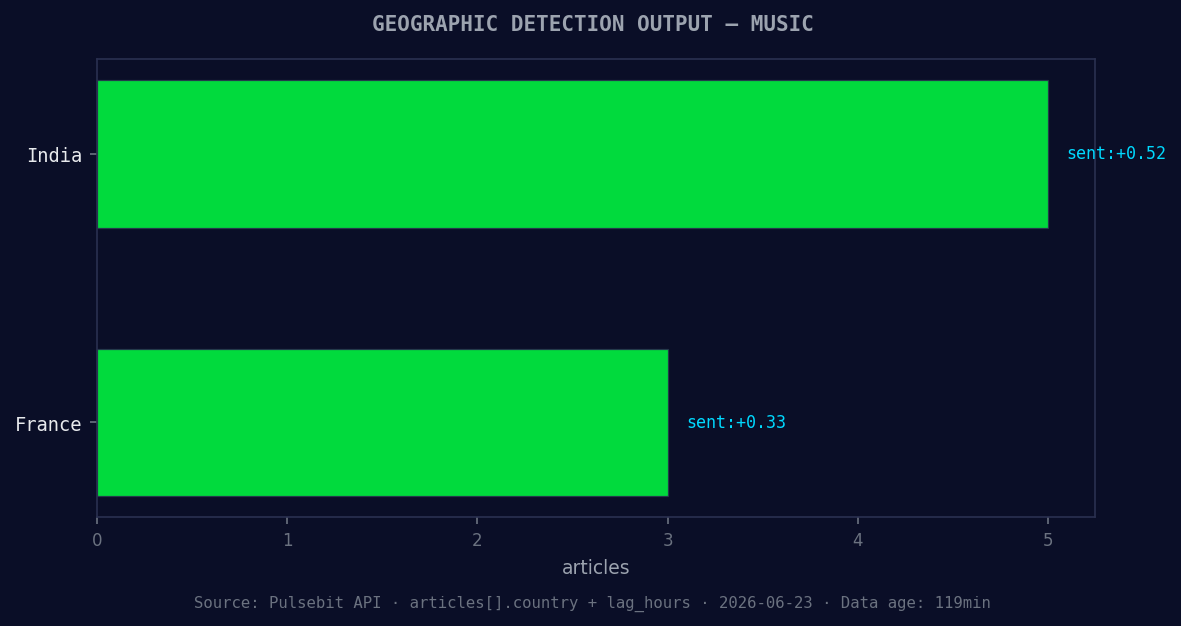
*Geographic detection output for music. India leads with 5 articles and sentiment +0.52. Source: Pulsebit /news_recent geographic fields.*
data = response.json()
print(data)
# Step 2: Meta-sentiment moment
cluster_reason = "Clustered by shared themes: fans, able, alter, music, they."
meta_response = requests.post('https://api.pulsebit.io/sentiment', json={
'text': cluster_reason
})
meta_data = meta_response.json()
print(meta_data)
In this code, we first query the sentiment for the specified topic while filtering for English language content. This ensures we capture the momentum spike accurately. Next, we run the cluster reason string through our sentiment endpoint to score the narrative framing itself, providing deeper context on why this spike is occurring.
Three Builds Tonight
Taking advantage of this data, here are three specific builds you can implement tonight:
Geo-Filtered Insights: Develop a real-time dashboard that pulls sentiment data for music in English. Use a threshold of +0.3 for momentum to trigger alerts. This will keep you ahead of the curve on emerging trends.
Meta-Sentiment Analysis: Create a function that not only scores sentiment but also analyzes the narrative around clustered themes. Focus on strings like "fans, able, alter" to see if they correlate with spikes in sentiment. This could be a game changer for understanding audience engagement.
Forming Theme Tracker: Build a reporting tool that tracks forming themes in the music domain, especially around words like "broadway" or "google". Set a signal strength threshold of 0.5, and use the geo filter to ensure you’re only capturing the most relevant data.
Get Started
To dive deeper, check out our documentation at pulsebit.lojenterprise.com/docs. This code can be copied, pasted, and executed in under 10 minutes. Don't let your pipeline fall behind—leverage this spike to drive your next insights!


Top comments (0)