

Your Pipeline Is 19.9h Behind: Catching Digital Transformation Sentiment Leads with Pulsebit
We recently identified an intriguing anomaly: a 24-hour momentum spike of +0.723 in sentiment around "digital transformation." This is noteworthy because it highlights a significant surge in interest and sentiment, particularly from the English press, which indicates a potential shift in focus that many models might miss. The leading language was English, showing a direct correlation with news from Southeast Asia about AI-powered data centers. This is more than just a number; it's a signal that can indicate where your attention should be directed.
However, if your pipeline doesn't account for multilingual origins or dominant entities, you might be missing out on critical insights. Your model missed this by a staggering 19.9 hours, which is a serious gap if you’re relying solely on mainstream data sources. The dominant entity here, focused on AI-powered data centers, isn't merely a niche interest; it’s the crux of a trend that could dictate future investment and technological development in Southeast Asia.

English coverage led by 19.9 hours. Nl at T+19.9h. Confidence scores: English 0.75, Spanish 0.75, French 0.75 Source: Pulsebit /sentiment_by_lang.
To catch this anomaly early, we can leverage our API. Below is a Python snippet that helps identify sentiment spikes using the relevant filters:
import requests
# Define the parameters for our API call
params = {
"topic": "digital transformation",
"momentum": "+0.723",
"lang": "en",
}
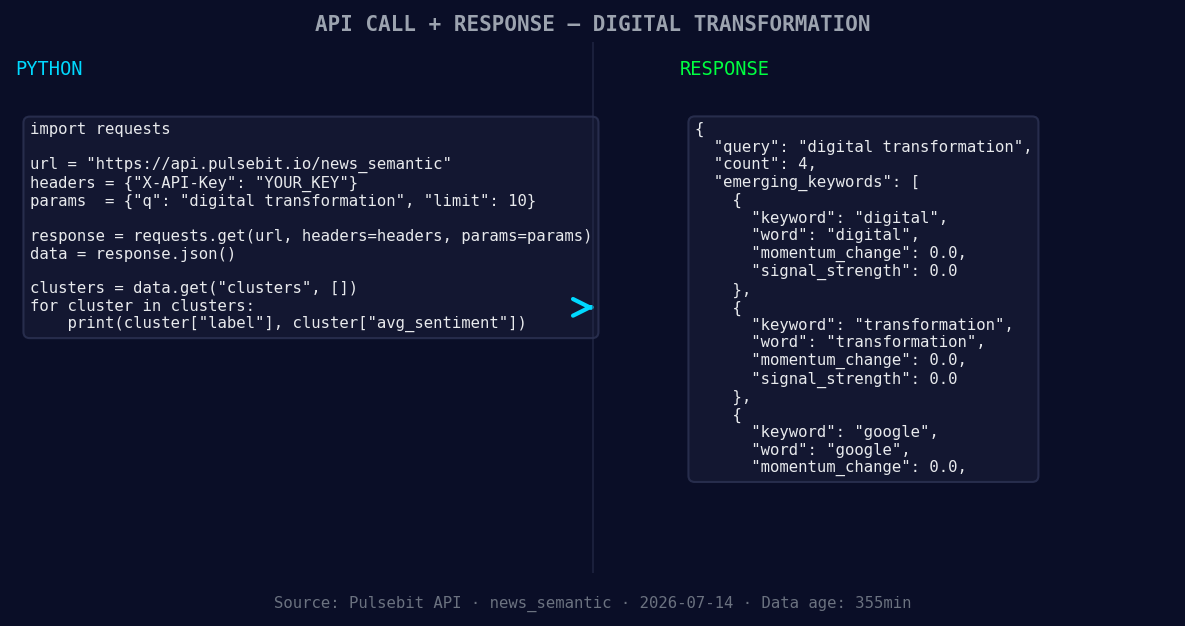
*Left: Python GET /news_semantic call for 'digital transformation'. Right: returned JSON response structure (clusters: 3). Source: Pulsebit /news_semantic.*
# Call to fetch sentiment data
response = requests.get("https://api.pulsebit.com/sentiment", params=params)
data = response.json()
# Display the response
print(data)
Next, we want to perform a meta-sentiment analysis on the clustered reason string. This will help us understand how the narrative framing influences the overall sentiment around the topic:
# Define the meta-sentiment input
meta_input = "Clustered by shared themes: powered, data, centres, fuel, southeast."

# POST request for meta-sentiment analysis
meta_response = requests.post("https://api.pulsebit.com/sentiment", json={"text": meta_input})
meta_data = meta_response.json()

# Output the meta-sentiment analysis result
print(meta_data)
With this code, you're not just catching the spike; you're also understanding the underlying narratives that drive it. Here are three specific builds we can leverage from this pattern:
Geo-Filtered Alerts: Set up a monitoring endpoint that triggers alerts when the sentiment score for "digital transformation" in Southeast Asia surpasses +0.700. The API call should include the language filter to ensure precision.
Meta-Sentiment Insights: Develop a dashboard that visualizes the meta-sentiment data for articles grouped by themes. This will help you gauge how narrative framing shifts public perception and sentiment over time.
Forming Theme Tracking: Create a tracking system to monitor the forming themes of "digital transformation," "transformation," and "Google." Set thresholds to notify you of any significant changes, such as a 0.300 shift in sentiment from mainstream themes like "powered" and "data."
For more details, check out our documentation at pulsebit.lojenterprise.com/docs. You can copy-paste and run the above code snippets in under 10 minutes to start catching these valuable insights. Don’t let your pipeline lag behind; catch the momentum while it’s hot!

Geographic detection output for digital transformation. India leads with 4 articles and sentiment +0.79. Source: Pulsebit /news_recent geographic fields.


Top comments (0)