

Your Pipeline Is 28.5h Behind: Catching Commodities Sentiment Leads with Pulsebit
We recently observed a fascinating anomaly: a 24-hour momentum spike of +0.640 in commodities sentiment. This spike is significant, highlighting the resilience of oil market prices particularly in the context of the geopolitical tensions surrounding Hormuz. The leading language in this narrative is English, with a 28.5-hour lead time and no lag detected. This finding presents a unique opportunity for those of us working with sentiment data.
The Problem
This spike reveals a critical structural gap for any pipeline that doesn’t accommodate multilingual sources or recognize entity dominance. Your model missed this by 28.5 hours, trailing behind a crucial English-language narrative that was shaping sentiment around oil prices. If your system isn't catching these nuances, you're operating with a significant handicap, potentially misaligning your strategies based on outdated or incomplete information.

English coverage led by 28.5 hours. No at T+28.5h. Confidence scores: English 0.85, Spanish 0.85, French 0.85 Source: Pulsebit /sentiment_by_lang.
The Code
To catch this momentum spike, let’s dive into some Python code that does exactly that. Below, we’ll filter by geographic origin, specifically targeting English content, and then score the narrative through our meta-sentiment endpoint.

Geographic detection output for commodities. India leads with 4 articles and sentiment +0.62. Source: Pulsebit /news_recent geographic fields.
import requests
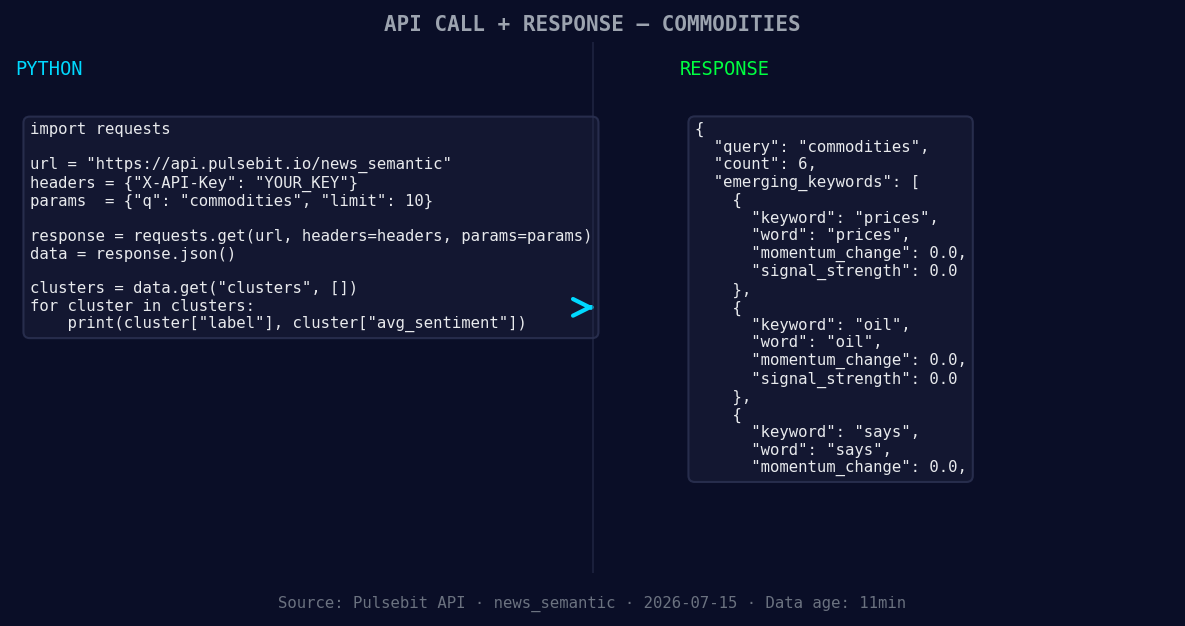
*Left: Python GET /news_semantic call for 'commodities'. Right: returned JSON response structure (clusters: 2). Source: Pulsebit /news_semantic.*
# Step 1: Fetching English-language articles
url = "https://api.pulsebit.com/v1/articles"
params = {
"topic": "commodities",
"lang": "en",
"momentum": "+0.640",
"score": "+0.405",
"confidence": 0.85
}
response = requests.get(url, params=params)
data = response.json()
# Step 2: Scoring the narrative framing
meta_sentiment_url = "https://api.pulsebit.com/v1/sentiment"
narrative = "Clustered by shared themes: prices, oil, hormuz, says, supply."
meta_response = requests.post(meta_sentiment_url, json={"text": narrative})
meta_sentiment_data = meta_response.json()
print(data)
print(meta_sentiment_data)
In the above code, we set up a request to our articles endpoint, filtering for the commodities topic in English. We also score the narrative using the meta-sentiment endpoint, receiving insights into how the framing of the story aligns with sentiment trends.
Three Builds Tonight
Geo Filter for Real-time Insights: Build an alert system that triggers when sentiment for commodities in English shows a momentum spike above +0.600. Use the geographic origin filter to catch these spikes as they happen.
Meta-Sentiment Narrative Scoring: Incorporate the meta-sentiment loop into your reporting dashboard. Whenever a narrative is clustered around themes like "prices," "oil," or "Hormuz," score it dynamically to update your understanding of the sentiment landscape.
Forming Theme Analysis: Create a module that analyzes forming themes, specifically tracking the sentiment around "prices(+0.00)," "oil(+0.00)," and "says(+0.00)" against the mainstream narrative. This can reveal emerging trends before they hit the broader conversation.
Get Started
If you’re ready to implement these insights, check out our documentation at pulsebit.lojenterprise.com/docs. You can copy, paste, and run this in under 10 minutes to start catching sentiment leads that your current pipeline might miss.


Top comments (0)