

Your Pipeline Is 29.3h Behind: Catching Finance Sentiment Leads with Pulsebit
We recently uncovered a fascinating anomaly in our sentiment analysis: a 24h momentum spike of +0.531. This spike indicates a significant shift in sentiment around finance, and it’s noteworthy that the leading language driving this sentiment is English, with a 29.3h lead. If you’re relying solely on traditional data pipelines, you might find yourself lagging behind, missing out on crucial insights while your models are stuck in the past.
The Problem
This 29.3-hour gap reveals a structural flaw in pipelines that fail to accommodate multilingual origins or entity dominance. Your model missed this by over 29 hours! With English as the leading language, you risk ignoring critical shifts in sentiment that could affect your decision-making. The dominance of a single language can skew your insights, ultimately leaving you behind when it comes to real-time market reactions. If you're not accounting for this, you could be basing your strategies on stale data.

English coverage led by 29.3 hours. Ca at T+29.3h. Confidence scores: English 0.85, Spanish 0.85, French 0.85 Source: Pulsebit /sentiment_by_lang.
The Code
To catch this momentum spike, let’s dive into some Python code that leverages our API effectively. We need to filter the data by language and process the sentiment of the clustered stories. Here’s how we can do it:
import requests
# Parameters for the API call
topic = 'finance'
score = +0.267
confidence = 0.85
momentum = +0.531
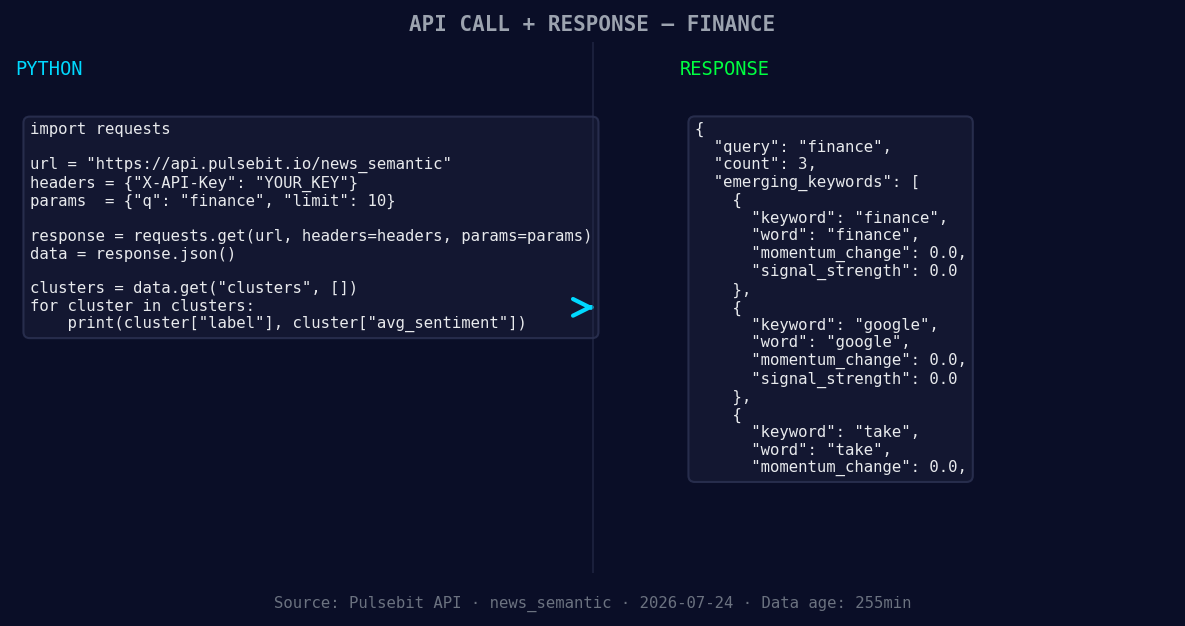
*Left: Python GET /news_semantic call for 'finance'. Right: returned JSON response structure (clusters: 3). Source: Pulsebit /news_semantic.*
# Geographic origin filter: query by language/country
url = "https://api.pulsebit.com/v1/sentiment"
params = {
"topic": topic,
"lang": "en"
}
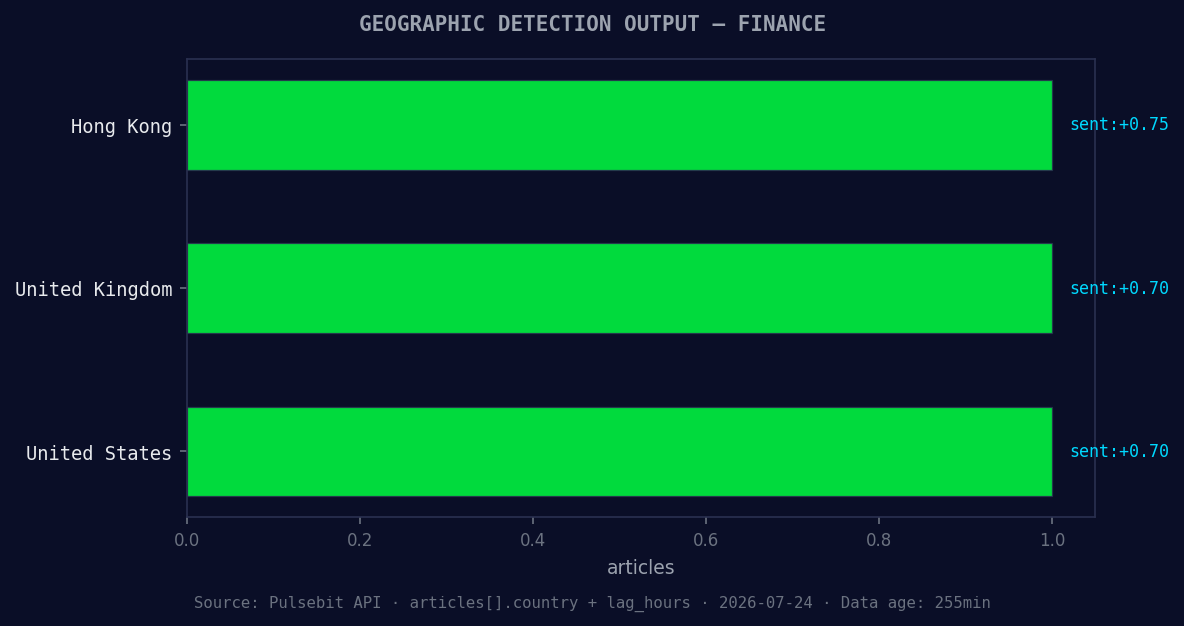
*Geographic detection output for finance. Hong Kong leads with 1 articles and sentiment +0.75. Source: Pulsebit /news_recent geographic fields.*
response = requests.get(url, params=params)
data = response.json()
# Now let's run the cluster reason string through POST /sentiment
cluster_reason = "Clustered by shared themes: finance, ‘strengthens, climate, resilience’, among."
sentiment_response = requests.post(url, json={"text": cluster_reason})
sentiment_data = sentiment_response.json()
print(sentiment_data)
In this snippet, we first filter our sentiment analysis by English language articles. Then, we run the narrative framing through our sentiment scoring endpoint to assess how the themes interact with each other. The insights we gain from this can dramatically shape our understanding of market sentiments.
Three Builds Tonight
Here are three specific builds we can implement with this newfound understanding:
Geo-Filtered Sentiment Analysis: Create an endpoint that triggers alerts when finance sentiment spikes in English-speaking regions. Set a threshold for momentum changes above +0.5 to ensure you're capturing significant shifts.
Meta-Sentiment Loop: Build a function that continuously feeds clustered narrative strings back into the sentiment API. Use the cluster reason string from your analysis to reassess how emerging themes like “strengthens” and “climate” impact the overall sentiment score. This dynamic feedback loop can provide real-time adjustments to your strategies.
Forming Themes Monitor: Develop a dashboard that visualizes forming themes such as finance(+0.00), google(+0.00), and take(+0.00) vs. mainstream sentiments. Set up alerts for when these themes diverge significantly, indicating potential market movements.
Get Started
You can explore these insights further at pulsebit.lojenterprise.com/docs. With our API, you can copy-paste this code and run it in under 10 minutes. Start leveraging these patterns to keep your models ahead of the curve!


Top comments (0)