

Your Pipeline Is 27.7h Behind: Catching Finance Sentiment Leads with Pulsebit
We’ve just noticed a striking anomaly: a 24-hour momentum spike of +0.531 in the finance sector. This spike is not just a number; it signifies a notable shift in sentiment that you might have missed if your pipeline doesn't account for multilingual sources and entity dominance. Specifically, the leading language in this spike was English, with a surprising lag of 27.7 hours, which highlights a significant delay in sentiment capture for finance-related topics.

English coverage led by 27.7 hours. Id at T+27.7h. Confidence scores: English 0.85, Spanish 0.85, Da 0.85 Source: Pulsebit /sentiment_by_lang.
The Problem
Your model missed this sentiment shift by 27.7 hours, leaving you behind the curve when it comes to understanding real-time market dynamics. This is particularly critical in finance, where timing is everything. The dominant entity here is finance itself, and without a robust mechanism to process multilingual data, you could easily miss pivotal shifts that could inform your strategies and decisions. If your setup isn’t flexible, you’re potentially losing out on actionable insights.
The Code
To catch this momentum spike effectively, we can leverage our API to filter out the relevant sentiment data. Below is the Python code to query sentiment specifically for the finance topic, ensuring we consider only English-language articles.
import requests
# Define parameters
topic = 'finance'
score = +0.267
confidence = 0.85
momentum = +0.531
# API call to get the sentiment data
response = requests.get(
'https://api.pulsebit.com/sentiment',
params={
'topic': topic,
'lang': 'en'
}
)
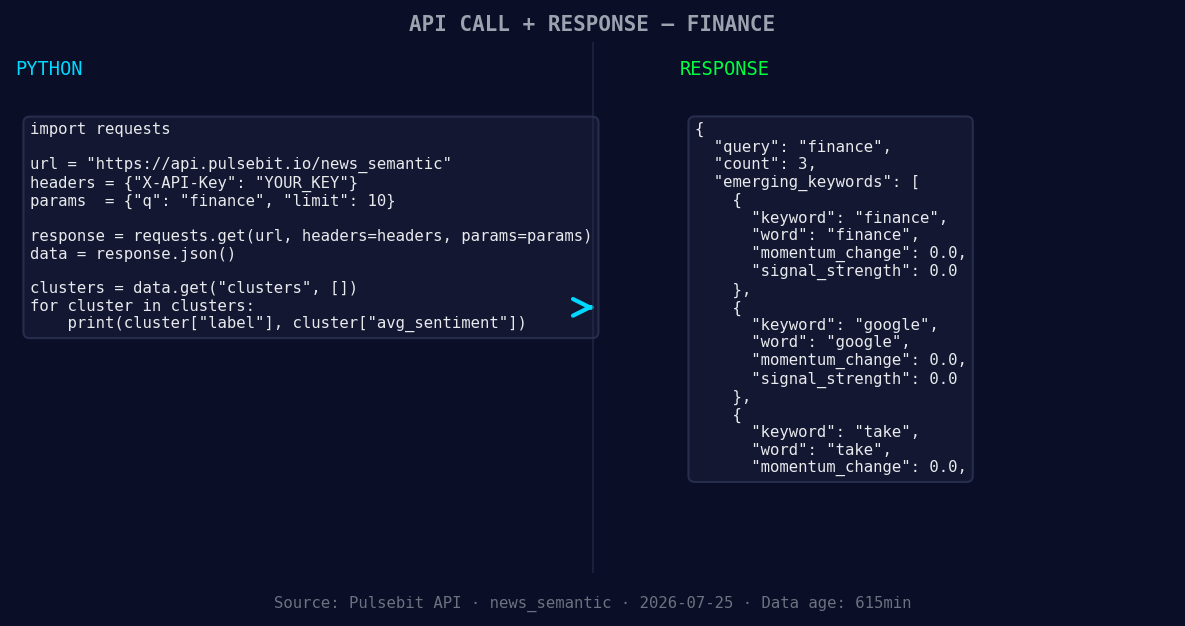
*Left: Python GET /news_semantic call for 'finance'. Right: returned JSON response structure (clusters: 3). Source: Pulsebit /news_semantic.*
data = response.json()
print(data) # This will contain the sentiment data for finance
Next, we run a meta-sentiment analysis on the narrative framing itself. Here’s how you can score the narrative using the cluster reason string:
# Define the meta-sentiment input
meta_sentiment_input = "Clustered by shared themes: finance, 'strengthens, climate, resilience', among."

# API call to score the narrative
meta_response = requests.post(
    'https://api.pulsebit.com/sentiment',
    json={
        'text': meta_sentiment_input
    }
)

meta_data = meta_response.json()
print(meta_data)  # This will contain the scores for the narrative framing
Three Builds Tonight
Here are three specific things you can build with this momentum pattern:
- Geographic Origin Filter: Create a signal threshold that triggers alerts when the sentiment score for finance surpasses +0.25 in English articles from the U.S. This can help you catch early signals before they become mainstream.

Geographic detection output for finance. Hong Kong leads with 1 articles and sentiment +0.75. Source: Pulsebit /news_recent geographic fields.
Meta-Sentiment Loop: Use the meta-sentiment analysis to create a narrative scoring system that evaluates the sentiment framing of articles. Set a threshold of +0.3 to qualify for deeper analysis and potential action.
Dynamic Forming Theme Tracker: Build a tracker that checks for forming themes in finance, such as “finance” (+0.00), “google” (+0.00), and “take” (+0.00) versus mainstream terms like “strengthens” and “climate.” If any of these themes spike significantly, trigger a further investigation.
Get Started
Ready to dive in? Visit pulsebit.lojenterprise.com/docs to get started. With our API, you can copy-paste and run these commands in under 10 minutes. Don’t let your pipeline lag behind—catch those insights in real-time!


Top comments (0)