

Your Pipeline Is 22.9h Behind: Catching Artificial Intelligence Sentiment Leads with Pulsebit
We just spotted a striking anomaly: a 24h momentum spike of -1.350 in sentiment surrounding artificial intelligence. This isn't just a number; it's a signal that your sentiment analysis pipeline might be lagging behind, particularly when it comes to understanding the nuanced discussions happening in leading English press. With a significant lead time at 22.9 hours, there's a clear opportunity to refine our approach to sentiment analysis.
The issue here is profound. If your pipeline doesn't account for multilingual origins or entity dominance, you might have missed this spike by a staggering 22.9 hours. This isn't just a minor oversight; it means you’re potentially disconnected from vital sentiment shifts, especially in the context of dominant entities like "AI Firms" and "Google." Without a robust strategy to capture these critical narratives, you're left reacting to trends instead of anticipating them.

English coverage led by 22.9 hours. Sw at T+22.9h. Confidence scores: English 0.90, Spanish 0.90, French 0.90 Source: Pulsebit /sentiment_by_lang.
To illustrate how we can capture this anomaly in real-time, let’s dive into the code. We'll use our API to filter sentiment data based on geographic origin and then analyze the narrative framing itself. Here’s how you can catch these insights programmatically.

Geographic detection output for artificial intelligence. India leads with 5 articles and sentiment +0.64. Source: Pulsebit /news_recent geographic fields.
import requests
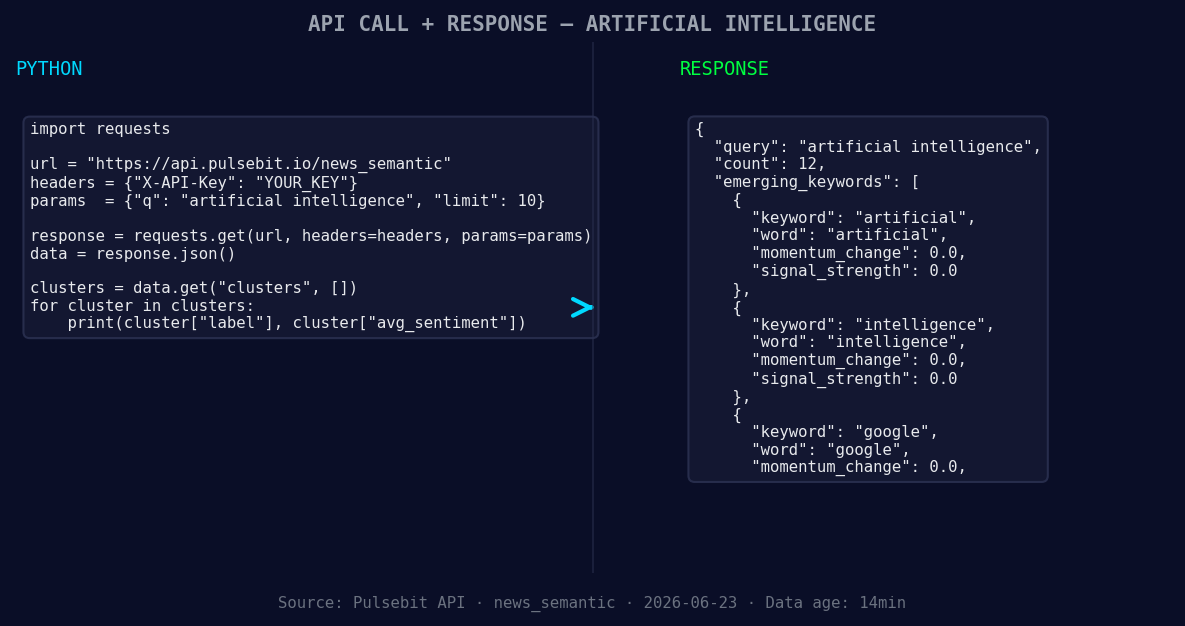
*Left: Python GET /news_semantic call for 'artificial intelligence'. Right: returned JSON response structure (clusters: 3). Source: Pulsebit /news_semantic.*
# Step 1: Geographic origin filter
url = "https://api.pulsebit.com/sentiment"
params = {
"topic": "artificial intelligence",
"score": 0.850,
"confidence": 0.90,
"momentum": -1.350,
"lang": "en" # Filter by English
}
response = requests.get(url, params=params)
data = response.json()
print(data) # Process the response as needed
# Step 2: Meta-sentiment moment
cluster_reason = "Clustered by shared themes: how, jobs, india, research, robot."
meta_response = requests.post(url, json={"text": cluster_reason})
meta_data = meta_response.json()
print(meta_data) # Output the meta sentiment analysis
In the first step, we query the sentiment data filtered by the English language. This ensures we’re capturing the most relevant insights without noise from other languages. The second step uses the cluster reason to evaluate the narrative framing itself, allowing us to understand how the themes are interconnected. This dual approach ensures that we’re not only catching the spike but also contextualizing it.
Now that we have a grasp of how to capture these insights, let’s explore three specific builds we could implement based on this signal.
Signal Detection Pipeline: Set a threshold for momentum spikes greater than -1.0 in the context of "artificial intelligence." When this threshold is crossed, trigger alerts or actions that help inform decisions or strategies based on this heightened sentiment analysis.
Geo-Filtered Insights: Use the geographic origin filter as part of a broader analytics dashboard. Allow users to visualize sentiment shifts in real-time across different regions, particularly focusing on English-speaking areas where AI discourse is most prevalent.
Meta-Sentiment Loop Integration: Integrate the meta-sentiment loop into your existing pipeline to enrich the narrative analysis of clustered themes. This could involve creating a separate endpoint that processes these cluster reason strings and updates sentiment scores accordingly.
By leveraging these builds, we can ensure we’re not just responding to the market but staying ahead by understanding the underlying narratives that drive sentiment. It’s all about being proactive rather than reactive, especially when it comes to emerging trends surrounding artificial intelligence.
For a deep dive into implementing these solutions, check out our documentation: pulsebit.lojenterprise.com/docs. You can copy, paste, and run this code in under 10 minutes to get started on enhancing your sentiment analysis capabilities.


Top comments (0)