

Your Pipeline Is 26.1h Behind: Catching Artificial Intelligence Sentiment Leads with Pulsebit
We recently uncovered an intriguing anomaly: a 24h momentum spike of -1.300 in sentiment around artificial intelligence. This spike highlights a critical gap in understanding how sentiment shifts, especially when considering multilingual contexts. The leading language in this instance was English, with a significant lag of 26.1 hours against the dominant discourse surrounding AI. A singular article titled, "India should ride AI wave to emerge as a product nation: Industry experts," encapsulated this shift, emphasizing the need for models to adapt quickly to emerging trends.

English coverage led by 26.1 hours. Da at T+26.1h. Confidence scores: English 0.90, Spanish 0.90, French 0.90 Source: Pulsebit /sentiment_by_lang.
If your pipeline isn't equipped to handle multilingual origins or entity dominance, you're already trailing behind. Imagine your model missing a pivotal sentiment shift by 26.1 hours just because it couldn't process the conversation emerging from Indian news sources. This isn't just an oversight; it's a structural gap that could lead to missed opportunities in rapidly evolving sectors like artificial intelligence.
Let's dive into how we can catch this type of anomaly using our API. Here’s a Python snippet that demonstrates the process:
import requests
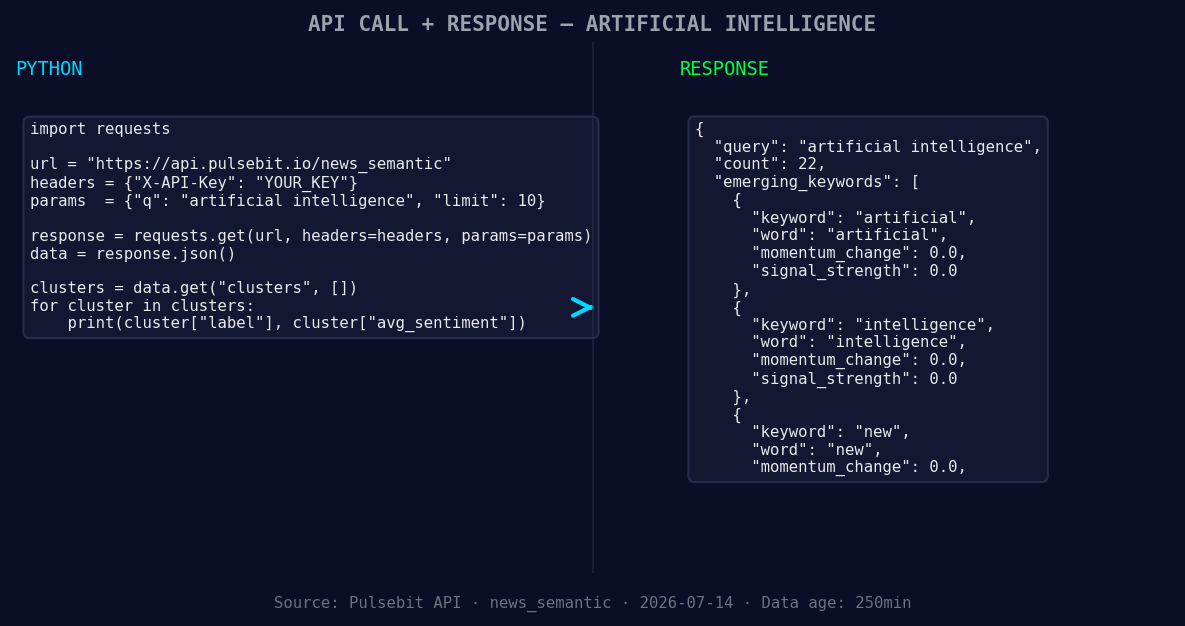
*Left: Python GET /news_semantic call for 'artificial intelligence'. Right: returned JSON response structure (clusters: 3). Source: Pulsebit /news_semantic.*
# Step 1: Geographic origin filter for English language
url = "https://api.pulsebit.com/v1/sentiment"
params = {
"topic": "artificial intelligence",
"lang": "en" # Filter by English
}
response = requests.get(url, params=params)
data = response.json()
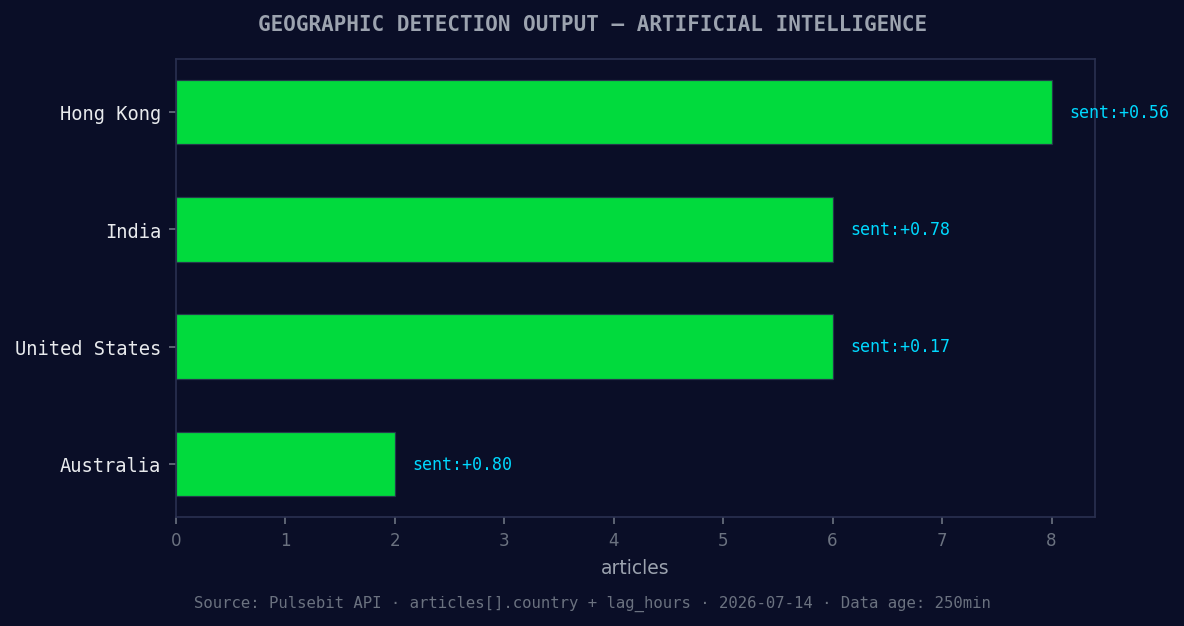
*Geographic detection output for artificial intelligence. Hong Kong leads with 8 articles and sentiment +0.56. Source: Pulsebit /news_recent geographic fields.*
# Displaying the sentiment data
print(data)
# Step 2: Meta-sentiment moment
meta_url = "https://api.pulsebit.com/v1/sentiment"
meta_input = "Clustered by shared themes: india, should, product, industry, experts."
meta_response = requests.post(meta_url, json={"text": meta_input})
meta_data = meta_response.json()
# Displaying the meta sentiment
print(meta_data)
In this code, the first part fetches sentiment data specifically for the topic of artificial intelligence while filtering for English language sources. The second part runs the cluster reason string back through our sentiment API to gauge how the narrative framing itself is scoring, which is crucial for understanding the context around emerging themes.
Here are three specific things we can build using this pattern:
Dynamic Sentiment Dashboard: Create a dashboard that updates in real-time based on the sentiment score of AI-related articles. Set a threshold to flag any articles with a momentum spike greater than -1.0. This allows you to catch significant changes before they become mainstream.
Entity Dominance Alert: Build an alert system that notifies you whenever the sentiment around a dominant entity, like "India" in this case, begins to diverge from the general narrative on artificial intelligence. Use the geo filter to ensure you're only looking at relevant articles from that region.
Cluster Analysis Tool: Develop a tool to assess the sentiment of articles clustered around specific themes. For example, monitor how sentiments like "new" and "intelligence" are forming against the mainstream narrative of "india," "should," and "product." Use our meta-sentiment loop to refine your understanding of how these narratives are evolving.
By leveraging these insights, you can stay ahead of the curve in sentiment analysis. If you want to get started, check out our documentation at pulsebit.lojenterprise.com/docs. You can copy-paste and run this in under 10 minutes—no fluff, just results.


Top comments (0)