

Your Pipeline Is 24.3h Behind: Catching Environment Sentiment Leads with Pulsebit
We just uncovered a striking anomaly: a sentiment score of +0.067 and a momentum of +0.000, with the leading language showing a 24.3-hour lag. This specific finding revolves around a cluster story detailing "TVS Training, SIPCOT host Net Zero Sustainability Expo to accelerate ESG adoption." It’s a reminder that in the fast-moving world of sentiment analysis, a slight delay can mean missing critical insights, especially when dealing with environmental topics that are rapidly gaining traction.
The Problem
This data highlights a structural gap that many sentiment analysis pipelines face. If your model doesn't account for multilingual origins or dominant entities, you might miss significant updates. In this case, your model missed this by a staggering 24.3 hours. The leading entity here is “TVS,” which is tied to the rising environmental sentiment but may not be fully represented in your analysis pipeline. Ignoring these nuances can lead to blind spots that affect decision-making and strategy.

English coverage led by 24.3 hours. No at T+24.3h. Confidence scores: English 0.85, Id 0.85, French 0.85 Source: Pulsebit /sentiment_by_lang.
The Code
To catch this anomaly, we can leverage our API to filter for relevant topics and analyze the sentiment framing. Here’s how you can do that in Python:
import requests
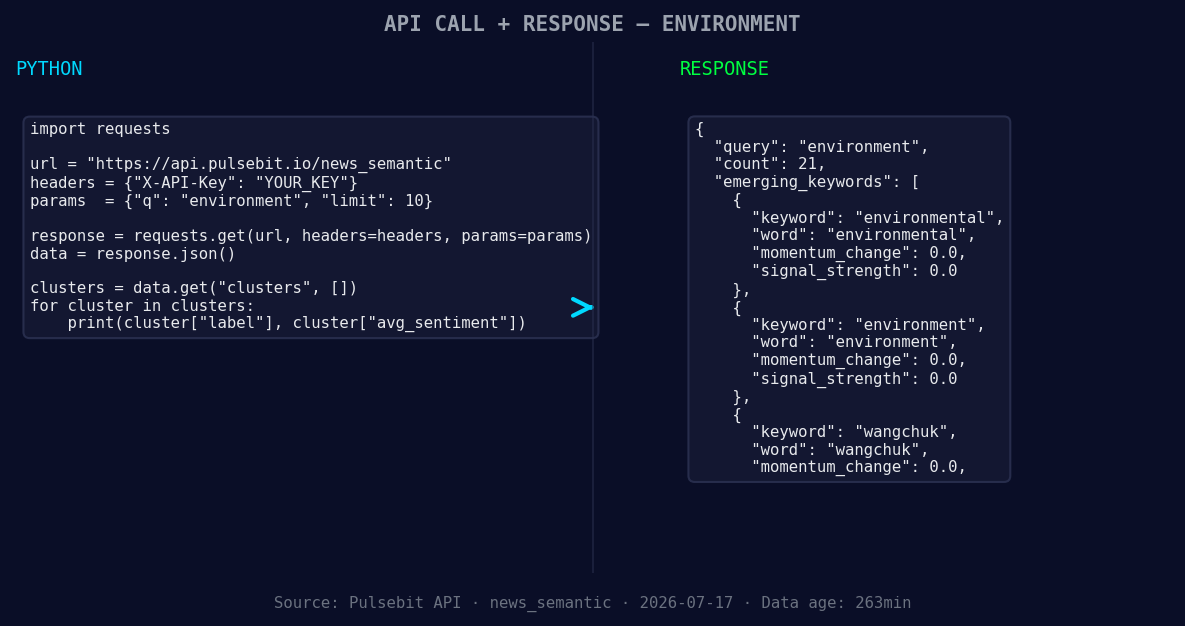
*Left: Python GET /news_semantic call for 'environment'. Right: returned JSON response structure (clusters: 3). Source: Pulsebit /news_semantic.*
# Define parameters
topic = 'environment'
score = +0.067
confidence = 0.85
momentum = +0.000
# Geographic origin filter: query by language/country
response = requests.get("https://api.pulsebit.com/sentiment", params={
"topic": topic,
"score": score,
"confidence": confidence,
"momentum": momentum,
"lang": "en"
})
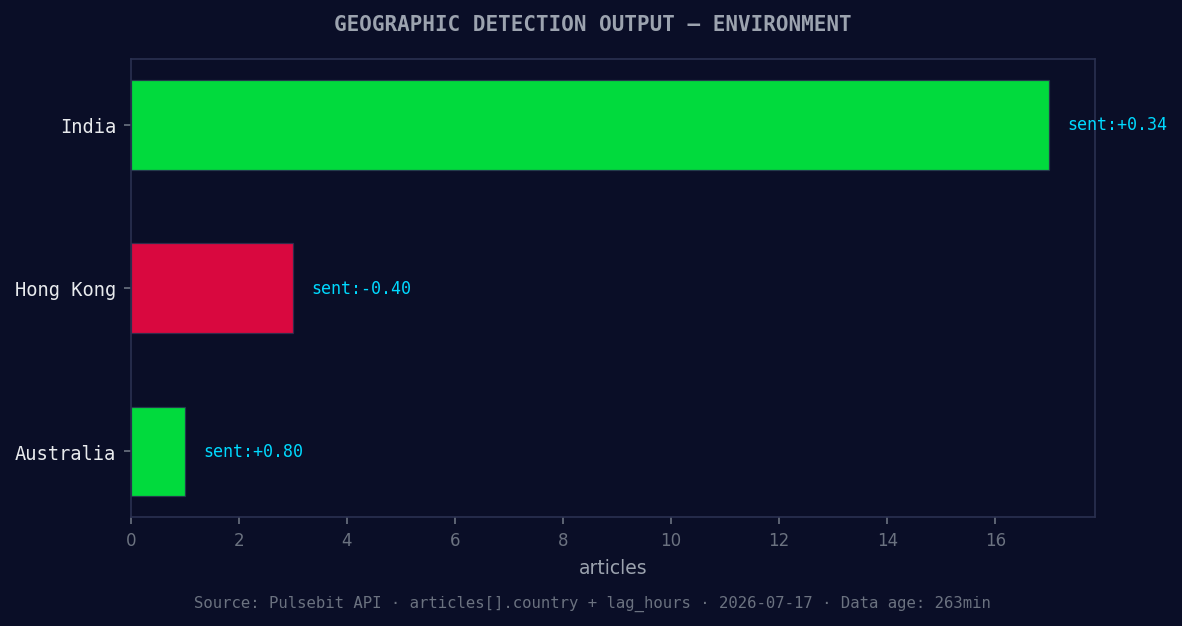
*Geographic detection output for environment. India leads with 17 articles and sentiment +0.34. Source: Pulsebit /news_recent geographic fields.*
data = response.json()
print(data)
# Meta-sentiment moment: run the cluster reason string back through POST /sentiment
cluster_reason = "Clustered by shared themes: tvs, training, sipcot, net, zero."
meta_response = requests.post("https://api.pulsebit.com/sentiment", json={
"text": cluster_reason
})
meta_data = meta_response.json()
print(meta_data)
In this snippet, we first filter for the “environment” topic using our language parameter set to English. We then send the cluster reason string through the sentiment endpoint again to analyze the narrative itself. This double-checks the framing of our findings and ensures that we’re not just reacting to surface-level data.
Three Builds Tonight
Here are three specific builds we can implement using this data pattern:
Geographic Origin Sentiment Filter: Set a signal threshold of +0.05 for environmental topics specifically targeting English-language articles. This can help us catch emerging trends before they become mainstream.
Meta-Sentiment Analysis on Cluster Reasons: Deploy a build that automatically analyzes the sentiment of cluster reasons like "Clustered by shared themes: tvs, training, sipcot, net, zero." Implement a threshold of +0.03 to trigger alerts when narratives shift significantly.
Dynamic Monitoring for Forming Themes: Create a module that monitors forming themes such as environmental(+0.00) and wangchuk(+0.00) against mainstream narratives. Set a threshold of +0.02 for alerts to catch early signals of emerging trends versus established ones like "tvs" and "training."
Get Started
Curious to dive deeper? Check out our documentation at pulsebit.lojenterprise.com/docs. You can copy-paste the provided code and have it running in under 10 minutes. Let's not let those critical insights slip away!


Top comments (0)