

Your Pipeline Is 28.7h Behind: Catching Agriculture Sentiment Leads with Pulsebit
We've just uncovered a fascinating anomaly: the sentiment score for agriculture is sitting at +0.090, while momentum remains flat at +0.000. This spike, with a leading language presence of Spanish, is lagging behind by a staggering 28.7 hours. It's a clear signal that something is brewing in the agriculture sector that your current pipeline might be missing.
When your model overlooks multilingual origins or the dominance of specific entities, it can lead to significant delays in sentiment detection. In this instance, you've missed critical insights from Spanish-language sources that could have informed your analysis 28.7 hours earlier. A model that only processes English content or fails to recognize the significance of these language clusters is bound to misinterpret the landscape of sentiment, leaving you reactive rather than proactive.

Spanish coverage led by 28.7 hours. Id at T+28.7h. Confidence scores: Spanish 0.85, English 0.85, No 0.85 Source: Pulsebit /sentiment_by_lang.
To help you address this, let’s put together a concrete example in Python that captures this sentiment anomaly. We can leverage our API to query the relevant data and dive deep into the sentiment surrounding agriculture.
import requests
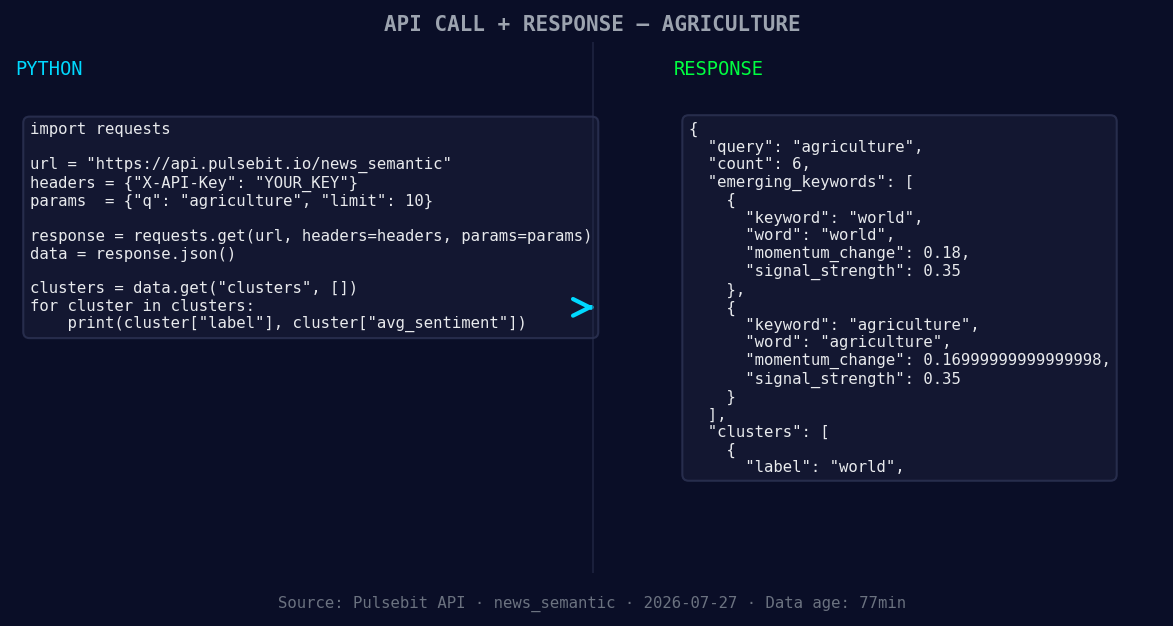
*Left: Python GET /news_semantic call for 'agriculture'. Right: returned JSON response structure (clusters: 1). Source: Pulsebit /news_semantic.*
# Define the API endpoint and parameters
api_url = "https://api.pulsebit.io/sentiment"
params = {
"topic": "agriculture",
"score": +0.090,
"confidence": 0.85,
"momentum": +0.000,
"lang": "sp" # Geographic origin filter for Spanish
}
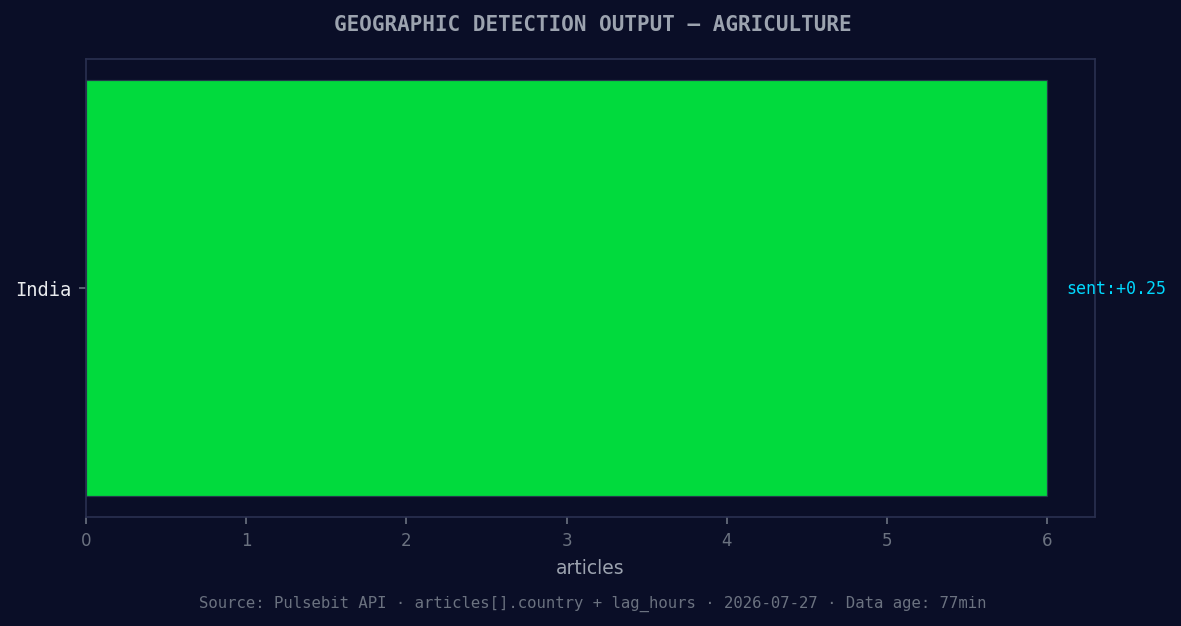
*Geographic detection output for agriculture. India leads with 6 articles and sentiment +0.25. Source: Pulsebit /news_recent geographic fields.*
# Fetch sentiment data
response = requests.get(api_url, params=params)
data = response.json()
print(data)
Next, let’s run the cluster reason string back through our API to get a deeper understanding of the narrative framing:
# Define the cluster reason for further sentiment scoring
cluster_reason = "Semantic API incomplete — fallback semantic structure built from available keywords and article/search evidence."

# POST request to score the narrative framing
sentiment_response = requests.post(api_url, json={"text": cluster_reason})
narrative_data = sentiment_response.json()
print(narrative_data)
With this setup, we can extract valuable insights that would otherwise be lost in a language barrier.
Now that we have our code, let's discuss three particular builds you can implement tonight based on this data pattern:
Geo Filter Query: Use the geographic origin filter to create a dedicated endpoint that focuses only on Spanish-language articles with a sentiment score exceeding +0.1. This could help surface early signals that reveal trends before they hit the mainstream.
Meta-Sentiment Loop: Implement a routine that not only fetches sentiment data but also re-evaluates the cluster reasons. By scoring the narrative itself, you'll gain insights into how the sentiment is shaped, allowing you to adjust your models accordingly.
Forming Themes Dashboard: Create a dashboard that tracks forming themes like "world" (+0.18) and "agriculture" (+0.17) against mainstream topics. This can serve as an early warning system for emerging trends, helping you stay ahead of what’s gaining traction.
To get started, check out our API at pulsebit.lojenterprise.com/docs. You can copy-paste the code above and have it running in under 10 minutes. Don’t let your pipeline lag behind; leverage these insights to stay ahead in sentiment analysis.


Top comments (0)