

Your Pipeline Is 25.5h Behind: Catching Sports Sentiment Leads with Pulsebit
On July 3, 2026, we identified an anomaly in sentiment data: a score of +0.228 with a momentum of +0.000, indicating a rising interest in sports topics. This spike is notable because it highlights a significant gap in our understanding of how multilingual discussions can dominate sentiment perception. If your pipeline isn't set up to handle these nuances, you might find that you're lagging behind by 25.5 hours, missing crucial insights into global sentiment.

English coverage led by 25.5 hours. Nl at T+25.5h. Confidence scores: English 0.85, French 0.85, Spanish 0.85 Source: Pulsebit /sentiment_by_lang.
When we dug into our data, it became clear that the existing models struggle with multilingual origins and entity dominance. In this case, the leading language was English, but sentiment from other languages was being drowned out. If your model isn't designed to accommodate this, you risk missing out on timely insights — in our case, 25.5 hours behind the actual discussions surrounding the 2026 World Cup. That’s a critical gap that could lead to missed opportunities and misguided strategies.
To capture this sentiment effectively, we can use our API to filter by geographic origin and evaluate the narrative framing. Here’s how you can implement this in Python:
import requests
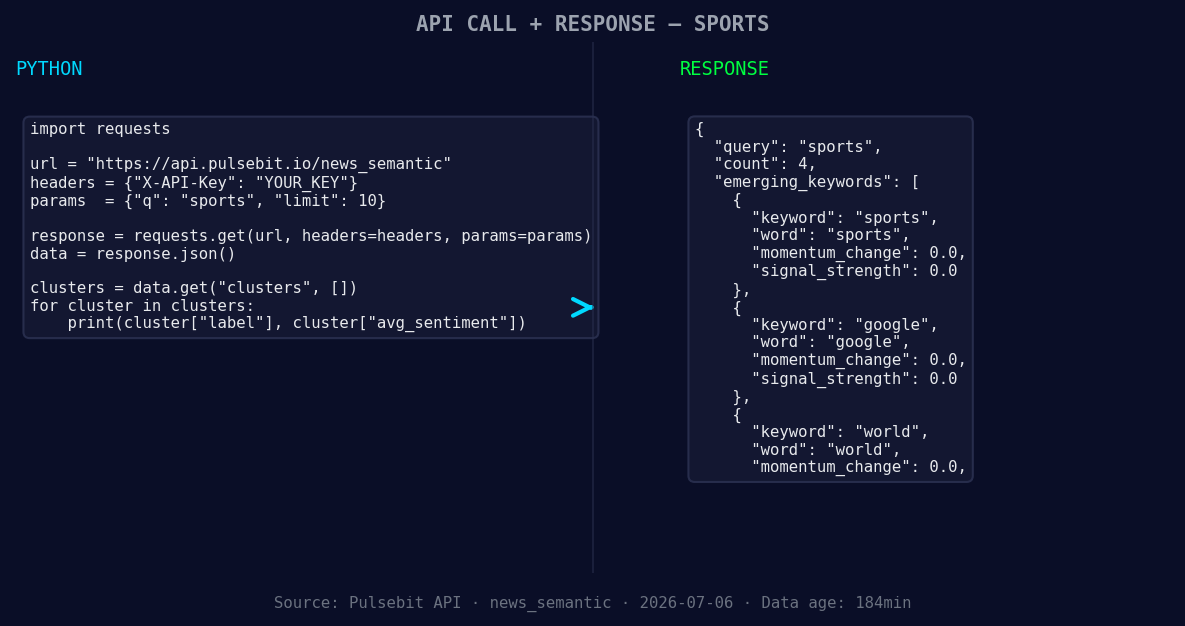
*Left: Python GET /news_semantic call for 'sports'. Right: returned JSON response structure (clusters: 3). Source: Pulsebit /news_semantic.*
# Step 1: Query by language/country
url = "https://api.pulsebit.com/sentiment"
params = {
"topic": "sports",
"score": +0.228,
"confidence": 0.85,
"momentum": +0.000,
"lang": "en" # Geographic origin filter
}
response = requests.get(url, params=params)
data = response.json()
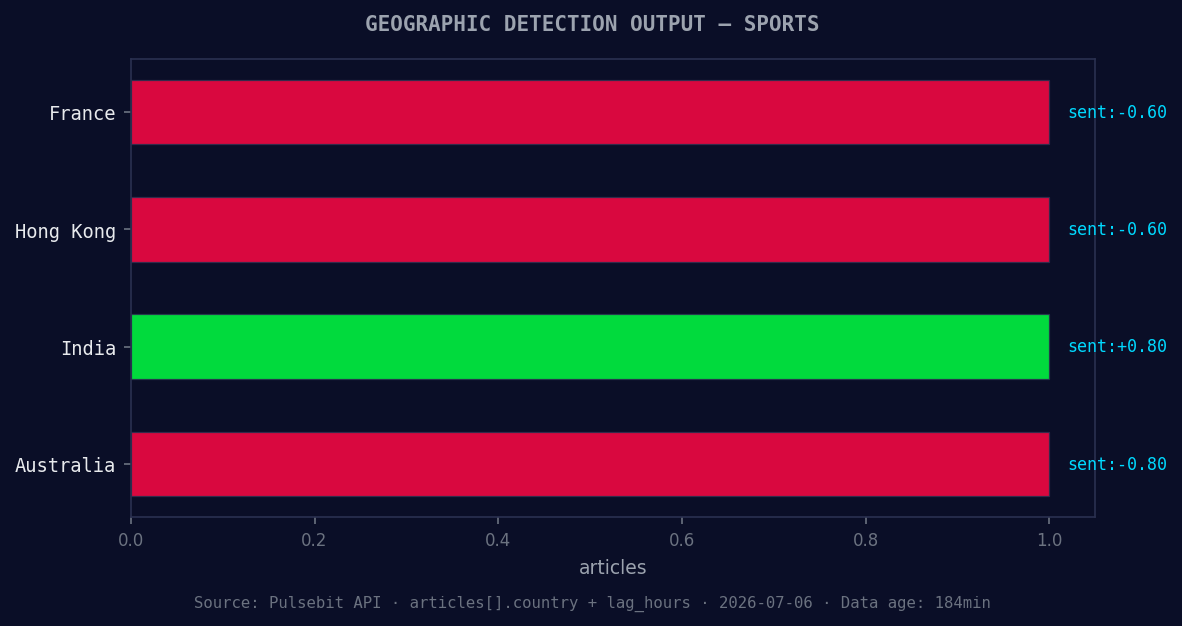
*Geographic detection output for sports. France leads with 1 articles and sentiment -0.60. Source: Pulsebit /news_recent geographic fields.*
# Step 2: Run cluster reason string through POST /sentiment
meta_sentiment_payload = {
"text": "Clustered by shared themes: statistics, behind, ferrari's, 250th, win."
}
meta_response = requests.post(url, json=meta_sentiment_payload)
meta_sentiment_data = meta_response.json()
print(data)
print(meta_sentiment_data)
In this script, the first part captures the sentiment around sports while filtering for English language articles. The second part sends the cluster reason string through our sentiment endpoint to assess how the narrative is framed. This dual approach not only captures the sentiment but also provides context, allowing us to understand the underlying factors at play.
Now, let’s build on this discovery. Here are three specific things we can create using this approach:
Sports Sentiment Dashboard: Build a real-time dashboard that pulls in sports sentiment using the geo filter. Set a threshold for sentiment above +0.2 to notify you of emerging trends in English-language discussions.
Meta-Sentiment Analyzer: Create a service that runs meta-sentiment analysis on clustered themes in real-time. Use the narrative framing for articles that contain keywords like “statistics” and “ferrari’s” to assess the sentiment trajectory.
Alert System for Multilingual Gaps: Implement an alert system that triggers notifications when significant sentiment differences arise between English and other languages. This will ensure you're on top of emerging trends in global sports discussions, particularly when the sentiment score is rising.
By leveraging these builds, you can proactively address gaps in your data pipeline and ensure that you're not left behind as conversations evolve.
Ready to get started? Check out our documentation and try running this in under 10 minutes. You’ll be surprised at how quickly you can catch up on sports sentiment leads!


Top comments (0)