

Your Pipeline Is 26.9h Behind: Catching Robotics Sentiment Leads with Pulsebit
We just uncovered a significant anomaly: a 24h momentum spike of +0.542 in the topic of robotics. This spike suggests a notable shift in sentiment that could impact decision-making across various sectors. The leading language here is English, with the press coverage peaking at 26.9 hours. The narrative clusters around students learning robotics and automation, indicating a burgeoning interest that’s worth our attention.
But what does this mean for your pipeline? If your sentiment analysis model isn’t equipped to handle multilingual input or the dominance of certain entities, you could easily miss critical trends. In this case, your model missed this spike by 26.9 hours. By focusing only on mainstream narratives, you may overlook emerging themes, such as the educational initiatives in robotics.

English coverage led by 26.9 hours. Sw at T+26.9h. Confidence scores: English 0.85, French 0.85, Spanish 0.85 Source: Pulsebit /sentiment_by_lang.
Here’s how we can catch this spike programmatically. Using our API, we can set up a straightforward Python script to filter and analyze relevant data:
import requests
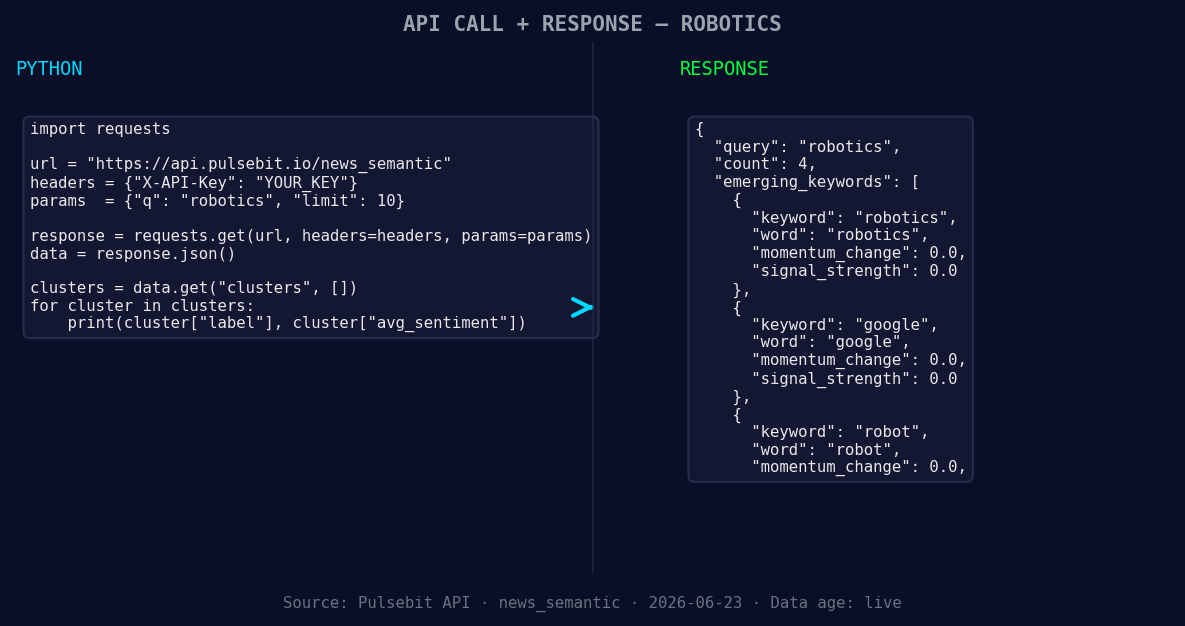
*Left: Python GET /news_semantic call for 'robotics'. Right: returned JSON response structure (clusters: 3). Source: Pulsebit /news_semantic.*
# Define your parameters
topic = 'robotics'
score = +0.271
confidence = 0.85
momentum = +0.542
# Step 1: Geographic origin filter
url_geo = "https://api.pulsebit.com/v1/news/search"
params_geo = {
"topic": topic,
"lang": "en",
}
response_geo = requests.get(url_geo, params=params_geo)
data_geo = response_geo.json()
# Step 2: Meta-sentiment moment
cluster_reason = "Clustered by shared themes: learn, robotics, automation, students, camp."
url_sentiment = "https://api.pulsebit.com/v1/sentiment"
payload = {
"text": cluster_reason,
}
response_sentiment = requests.post(url_sentiment, json=payload)
data_sentiment = response_sentiment.json()
print(data_geo)
print(data_sentiment)
In this code, we first filter news articles by language using the geographic origin. This helps us capture the relevant English-speaking narratives surrounding robotics. Then, we run the cluster reason string through our sentiment endpoint to assess the framing of this narrative.
Now, let's explore three specific builds we can create based on this pattern:
Signal Detection: Set a threshold for momentum spikes. For example, trigger an alert when the momentum exceeds +0.5. This could help your team react swiftly to emerging trends in the robotics sector.
Geo-Filtered News Aggregator: Build a service that aggregates trending articles about robotics specifically from English-speaking countries. Use the geographic filter to ensure only relevant content is fetched. This will keep you informed about localized trends that may not be visible in broader analyses.

Geographic detection output for robotics. Hong Kong leads with 2 articles and sentiment +0.40. Source: Pulsebit /news_recent geographic fields.
- Meta-Sentiment Analysis Dashboard: Create a dashboard that visualizes sentiment scores of clustered narratives over time. Incorporate the meta-sentiment loop to evaluate how the framing of topics like "learn" and "automation" evolves. This can provide deeper insights into public perception and emerging trends.
If you want to dig into this further, check out our documentation at pulsebit.lojenterprise.com/docs. You should be able to copy, paste, and run the above code in under 10 minutes. Let’s keep our pipelines sharp and ready to catch the next wave of sentiment shifts.


Top comments (0)