

Your Pipeline Is 24.2h Behind: Catching Business Sentiment Leads with Pulsebit
We recently discovered a striking 24h momentum spike of +1.500 in business sentiment, particularly around the narrative of “Small Businesses Sue Trump Administration Over Latest Tariffs.” This anomaly stood out not just for its vigor, but for its potential implications. We saw this reflected in the leading English press, which had a 24.2h lead over German coverage, indicating a significant delay in how traditional pipelines are processing and reacting to multilingual news.

English coverage led by 24.2 hours. German at T+24.2h. Confidence scores: English 0.85, French 0.85, Spanish 0.85 Source: Pulsebit /sentiment_by_lang.
The Problem
Your model missed this by 24.2 hours. If you’re not accounting for multilingual sources or the dominance of certain entities, you could be several hours behind on critical sentiment shifts. In this case, while the English press was already buzzing about the lawsuit against the Trump administration, many traditional sentiment pipelines may only have captured this story through a less timely German perspective. This structural gap could mean missed opportunities for you to act on emerging trends or risks.
The Code
To catch this spike effectively, we can leverage our API in a few strategic ways. First, we’ll write a Python function to filter by language and capture the relevant articles. Here's how to do that using the topic of "business":
import requests
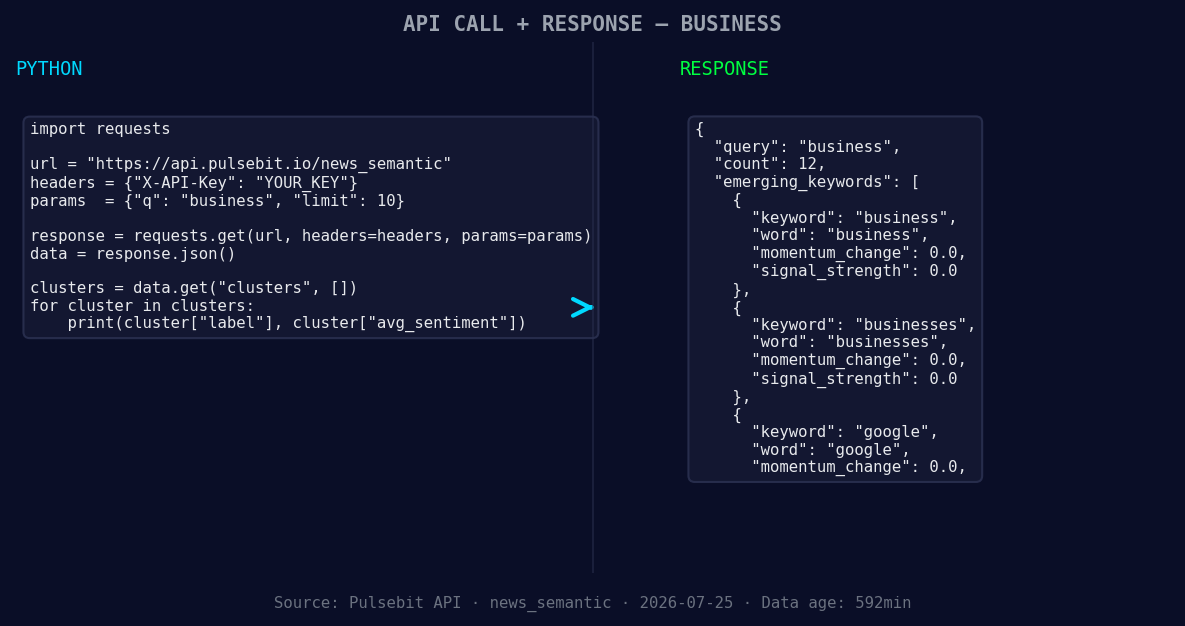
*Left: Python GET /news_semantic call for 'business'. Right: returned JSON response structure (clusters: 3). Source: Pulsebit /news_semantic.*
def fetch_business_sentiment():
url = "https://api.pulsebit.lojenterprise.com/v1/sentiment"
params = {
"topic": "business",
"score": -0.020,
"confidence": 0.85,
"momentum": +1.500,
"lang": "en" # Filtering by English
}
response = requests.get(url, params=params)
return response.json()
business_data = fetch_business_sentiment()
print(business_data)
Once we have the data, we can run the cluster reason string back through the sentiment analysis to evaluate how the narrative is framed. This step is crucial for understanding the implications of the spike:
def analyze_meta_sentiment(cluster_reason):
    url = "https://api.pulsebit.lojenterprise.com/v1/sentiment"
    payload = {
        "text": cluster_reason
    }

    response = requests.post(url, json=payload)
    return response.json()

meta_sentiment = analyze_meta_sentiment("Clustered by shared themes: businesses, small, sue, trump, administration.")
print(meta_sentiment)
Three Builds Tonight
Now that we’ve caught this spike, let’s talk about three specific things we can build from this data.
- Geo-Filtered Alerts: Set up a notification system for sentiment spikes in specific geographical areas. For instance, you can use the same geo filter to monitor business sentiment in the U.S. when it reaches a threshold of +1.500.

Geographic detection output for business. Hong Kong leads with 2 articles and sentiment +0.05. Source: Pulsebit /news_recent geographic fields.
Meta-Sentiment Analysis: Implement a routine to run narrative frames through our sentiment loop. For example, analyze sentiment around clusters that mention “business” and “tariffs,” tracking how the emotional tone shifts over time.
Forming Theme Dashboard: Build a dashboard that highlights forming themes like “business” and “google” against mainstream stories such as “Michigan” and “university.” This can help you visualize the narratives bubbling up within different sectors, giving you an edge in recognizing trends.
Get Started
You can dive into our API and set up these feeds in just a few minutes. Check out our documentation at pulsebit.lojenterprise.com/docs. With the right code snippets and endpoints, you can be up and running in under 10 minutes, capturing real-time sentiment data and staying ahead of the curve.


Top comments (0)