

Your pipeline just missed a significant 24h momentum spike of -0.380 related to blockchain sentiment. This anomaly reveals a critical gap in processing multilingual origins and entity dominance. While the leading language in this sentiment was English, the delay in your model means you were 28.2 hours behind in capturing this emerging narrative. If you had been monitoring the sentiment around topics like “SEC policy and blockchain trading opportunities,” you would have spotted the shift much earlier.

English coverage led by 28.2 hours. Da at T+28.2h. Confidence scores: English 0.85, Spanish 0.85, French 0.85 Source: Pulsebit /sentiment_by_lang.
The structural issue here is straightforward: your existing pipeline likely does not filter sentiment data by language or account for the dominance of specific entities. Consequently, while you were focused on mainstream narratives, the nuanced sentiment around blockchain was evolving in the English press. This lag can lead to missed trading opportunities or poor decision-making based on outdated information.
To address this gap, let's dive into the code that can help you catch these insights in real-time. Here’s how to set up a query that filters sentiment data by language:
import requests
# Define the parameters for the API call
url = "https://api.pulsebit.com/v1/sentiment"
params = {
"topic": "blockchain",
"lang": "en" # Filter by English language
}
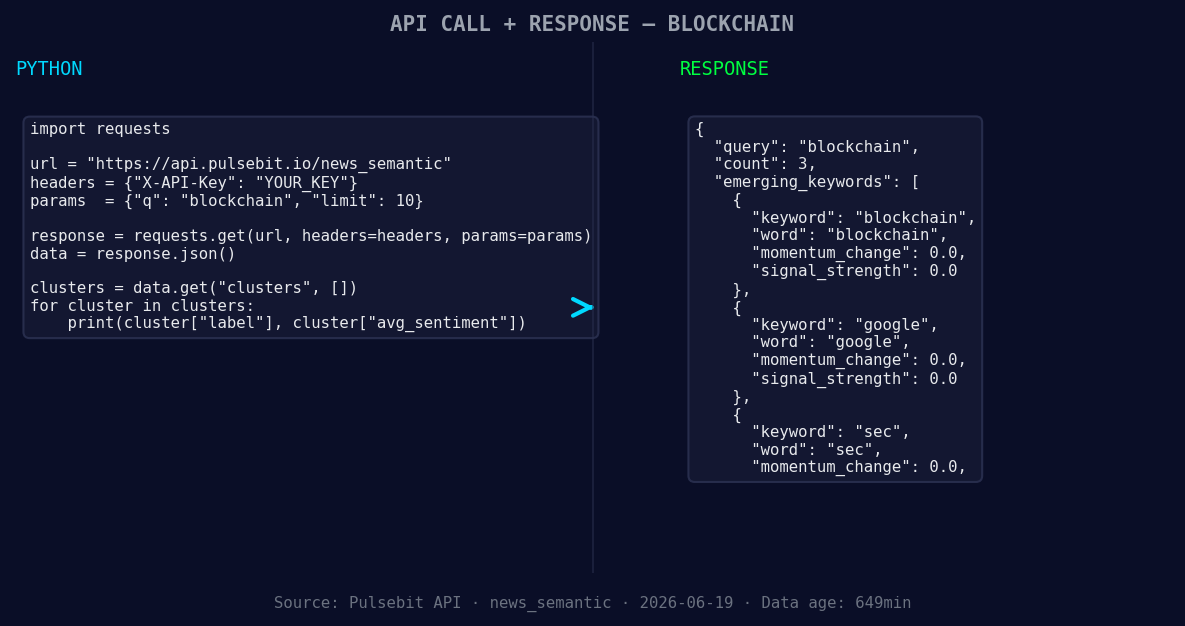
*Left: Python GET /news_semantic call for 'blockchain'. Right: returned JSON response structure (clusters: 3). Source: Pulsebit /news_semantic.*
# Make the API call to fetch sentiment data
response = requests.get(url, params=params)
data = response.json()
# Output the response data
print(data)
Now, to enhance our analysis, we need to run the cluster reason string through the sentiment scoring API to assess the narrative framing itself. Here’s how we can do that:
# Define the cluster reason string
cluster_reason = "Clustered by shared themes: sec, policy, could, open, door."

# Make the API call to score the narrative
sentiment_response = requests.post(url, json={"text": cluster_reason})
sentiment_data = sentiment_response.json()

# Output the sentiment scoring of the narrative
print(sentiment_data)
With these two API calls, you can identify both the emerging sentiment around blockchain and the underlying themes shaping it.
Here are three specific builds we could implement based on this momentum spike:
Geo-Filtered Sentiment Dashboard: Build a dashboard that visualizes sentiment trends on blockchain topics specifically filtered by English language articles. Set a signal threshold of +0.2 to trigger alerts when positive sentiment appears.
Meta-Sentiment Analysis: Create an endpoint that recalibrates your narrative framing based on the cluster reason outputs. You can set a threshold of +0.15 sentiment score to identify potential bullish trends in narrative shifts.
Anomaly Detection Module: Develop a module that flags significant momentum shifts (like the -0.380 spike) and correlates them with forming themes. This should include a comparison against mainstream keywords like 'SEC' and 'policy' to assess potential impacts on trading strategies.
By leveraging our API, you can turn real-time insights into actionable strategies that keep you ahead of the curve.
If you’re ready to get started, visit pulsebit.lojenterprise.com/docs. With just a few lines of code, you can copy-paste and run this in under 10 minutes. Let’s start catching those sentiment leads before they slip away!

Geographic detection output for blockchain. India leads with 2 articles and sentiment +0.08. Source: Pulsebit /news_recent geographic fields.


Top comments (0)