

Your Pipeline Is 19.0h Behind: Catching Trade Sentiment Leads with Pulsebit
We just uncovered something noteworthy: a 24h momentum spike of +0.424 in the topic of trade. This spike is driven by a significant cluster of articles surrounding the theme "Europe Has to Take on China to Save Free Trade," which is currently being led by English-language sources. The prominence of this narrative in the news cycle indicates a shift in sentiment that your existing pipeline might not be capturing effectively.
The Problem
If your model isn't set up to handle multilingual origin or entity dominance, you might have missed this critical insight by a staggering 19 hours. The leading language is English, and you could be overlooking essential shifts in sentiment that are emerging in other languages. By ignoring this, you risk missing out on valuable trade sentiment signals that are developing in real time, which could significantly influence your trading strategies or market insights.

English coverage led by 19.0 hours. Nl at T+19.0h. Confidence scores: English 0.75, Spanish 0.75, French 0.75 Source: Pulsebit /sentiment_by_lang.
The Code
To capture this momentum spike, we can use our API effectively. Below is an example of how you can set up a Python script to query for this trade sentiment.
import requests
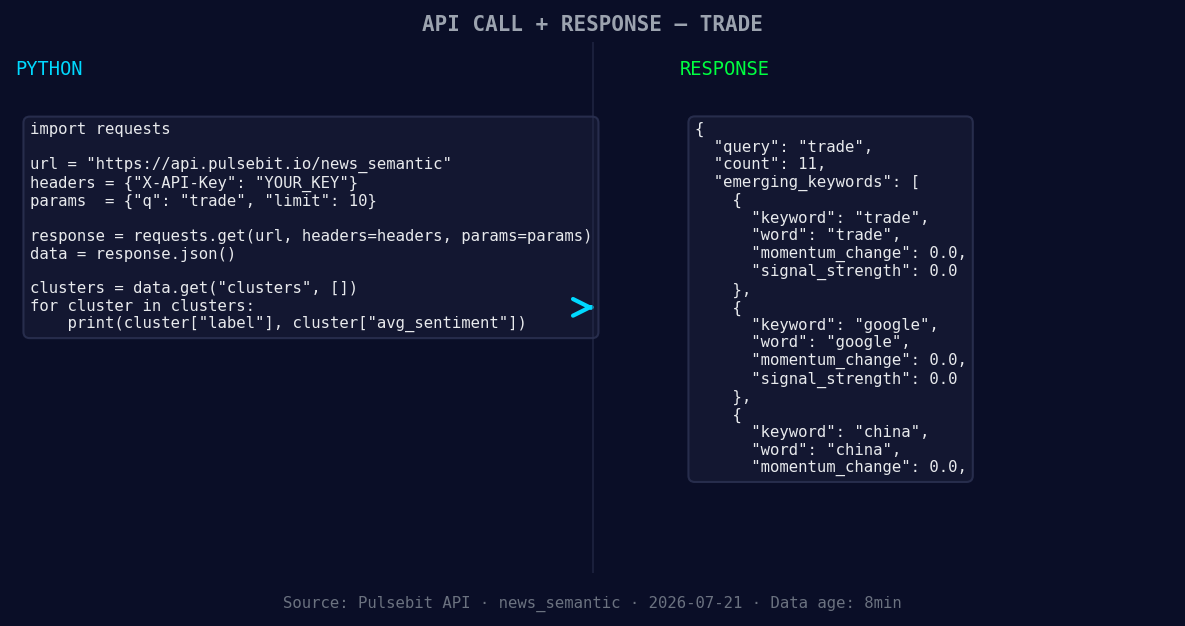
*Left: Python GET /news_semantic call for 'trade'. Right: returned JSON response structure (clusters: 3). Source: Pulsebit /news_semantic.*
# Define parameters
topic = 'trade'
score = -0.500
confidence = 0.75
momentum = +0.424
# Step 1: Geographic origin filter
url = "https://api.pulsebit.com/sentiment"
params = {
"topic": topic,
"lang": "en",
"momentum": momentum,
}
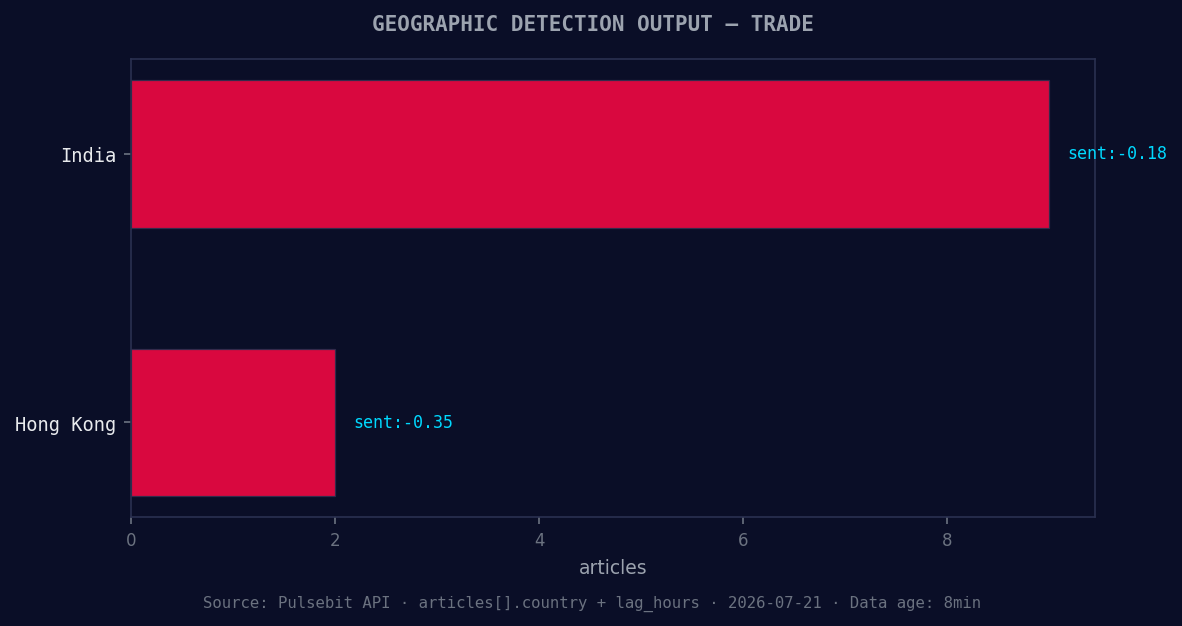
*Geographic detection output for trade. India leads with 9 articles and sentiment -0.18. Source: Pulsebit /news_recent geographic fields.*
response = requests.get(url, params=params)
data = response.json()
print(data)
# Step 2: Meta-sentiment moment
cluster_reason = "Clustered by shared themes: has, take, china, save, free."
sentiment_response = requests.post(url, json={"text": cluster_reason})
meta_sentiment_data = sentiment_response.json()
print(meta_sentiment_data)
In this code snippet, we first query the sentiment for the topic "trade" filtered by the English language. Then, we take the narrative of the clustered themes and run it through the sentiment endpoint to gauge the framing's sentiment itself. This two-step approach efficiently captures the current sentiment landscape.
Three Builds Tonight
Here are three specific builds you can create that leverage this recent data pattern:
Sentiment Dashboard: Build a dashboard that visualizes the 24h momentum for key topics like trade. Set a threshold to alert you when momentum exceeds +0.400, ensuring you're always aware of significant shifts, particularly in the English language.
Geo-Targeted News Alerts: Create an alert system that notifies you when there’s a spike in sentiment for trade articles originating from English sources. Use the geographic origin filter to ensure you're only capturing relevant data, giving you a head start on emerging narratives.
Meta-Sentiment Analysis Tool: Develop a tool that not only looks at the sentiment of articles but also analyzes the narrative framing. Set a threshold to trigger when the meta-sentiment score of clustered themes dips below a certain level (e.g., -0.300), indicating potential negative sentiment around important topics like China and trade.
Get Started
You can jump into this right away! Check out our documentation at pulsebit.lojenterprise.com/docs. With the provided code, you can copy, paste, and run this within 10 minutes, allowing you to capture emerging sentiment trends effectively.


Top comments (0)