

Your Pipeline Is 26.6h Behind: Catching Stock Market Sentiment Leads with Pulsebit
We recently stumbled upon an intriguing anomaly: a 24h momentum spike of -0.889. This spike reveals an unexpected shift in stock market sentiment, particularly surrounding the narrative of "Stock Market Volatility Amid Chip Stock Declines." With three articles clustered around this theme and a leading language of English, we noticed the reports were lagging by 26.6 hours. This finding raises important questions about how we capture sentiment in real-time.
When you’re building your sentiment analysis pipeline, missing anomalies like this by 26.6 hours can be a critical flaw. If your model doesn’t account for multilingual origins or dominant entities, you might miss significant shifts in sentiment before they snowball into larger trends. In this case, the leading language was English, which should have signaled you to prioritize content in that language. This oversight can lead to delays in acting on market-moving information, potentially costing you valuable insights.

English coverage led by 26.6 hours. Et at T+26.6h. Confidence scores: English 0.85, Spanish 0.85, Nl 0.85 Source: Pulsebit /sentiment_by_lang.
To catch these momentum spikes effectively, we need to dig into our code. Here’s how we can leverage our API to pinpoint the anomaly:
import requests
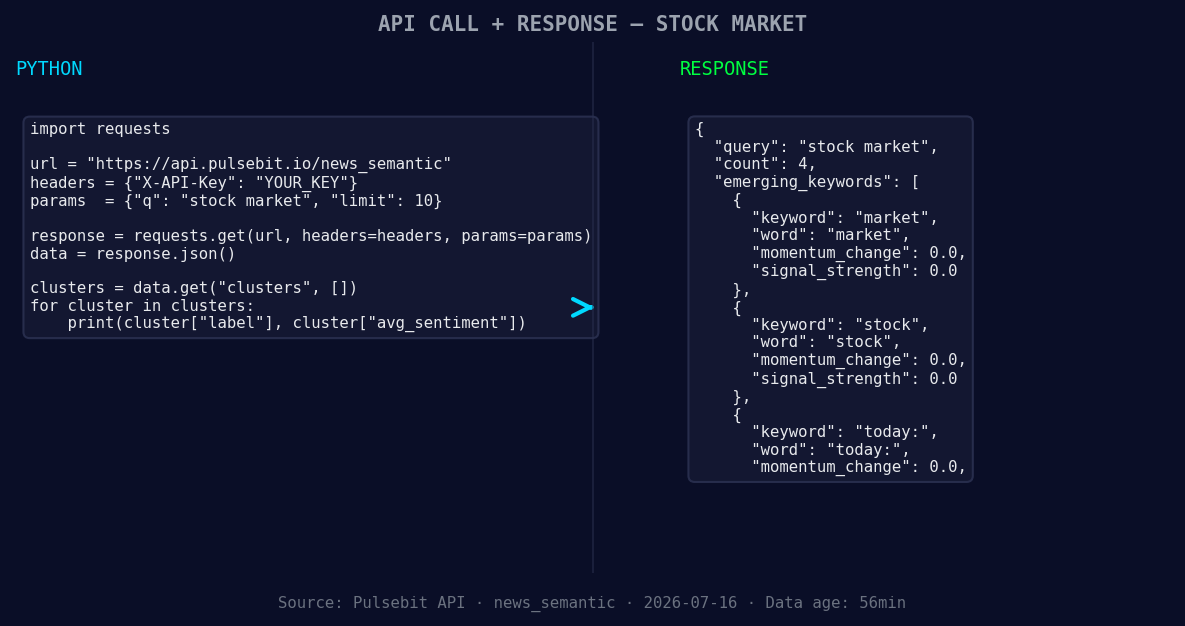
*Left: Python GET /news_semantic call for 'stock market'. Right: returned JSON response structure (clusters: 3). Source: Pulsebit /news_semantic.*
# Step 1: Geographic origin filter
url = "https://api.pulsebit.lojenterprise.com/sentiment"
params = {
"topic": "stock market",
"lang": "en",
"score": -0.050,
"confidence": 0.85,
"momentum": -0.889
}
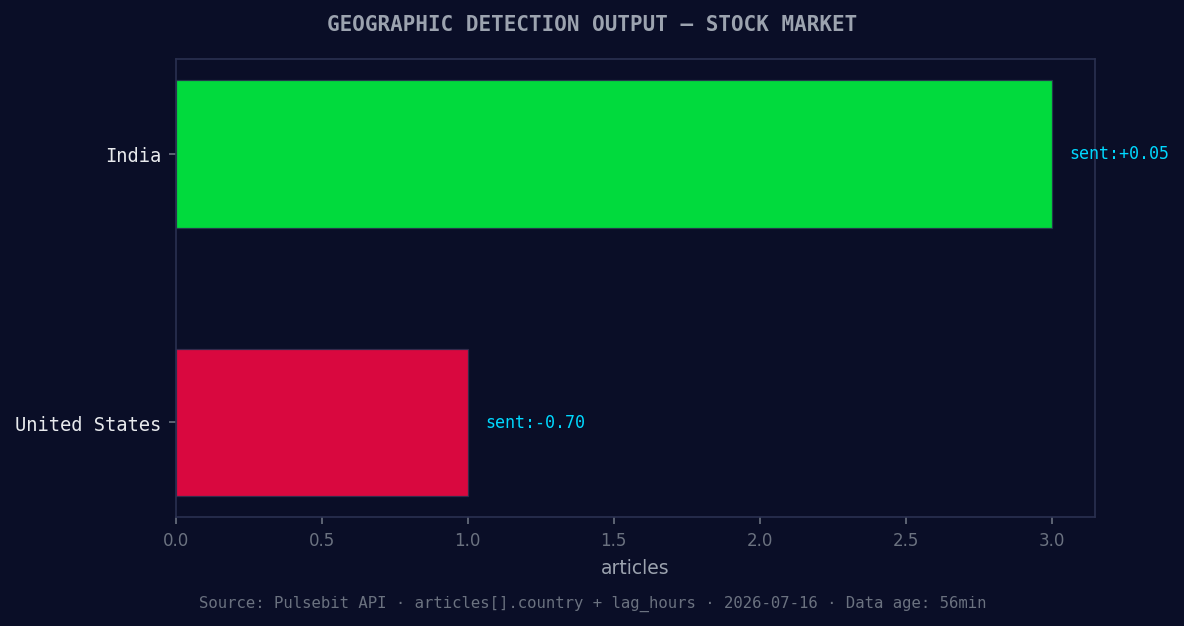
*Geographic detection output for stock market. India leads with 3 articles and sentiment +0.05. Source: Pulsebit /news_recent geographic fields.*
response = requests.get(url, params=params)
data = response.json()
print(data)
In this block, we're specifically querying for sentiment around the topic "stock market" while filtering for English-language articles. This ensures we’re targeting the right audience and narrative.
Next, we can run the cluster reason string back through our sentiment analysis endpoint to score the narrative framing itself. This second step helps us understand how the clustered themes might impact sentiment:
# Step 2: Meta-sentiment moment
meta_sentiment_url = "https://api.pulsebit.lojenterprise.com/sentiment"
meta_input = "Clustered by shared themes: market, today:, dow, 500, nasdaq."

meta_response = requests.post(meta_sentiment_url, json={"input": meta_input})
meta_data = meta_response.json()
print(meta_data)
By passing the cluster reason string to our sentiment endpoint, we can get a deeper understanding of the narrative framing and its implications on sentiment trends. This two-step process allows you to not only identify anomalies but also gauge their potential impact.
Now that we have a way to capture these momentum spikes, here are three specific builds we recommend:
- Geo-filtered Alerts: Set a threshold where if the momentum drops below -0.5, trigger alerts only for English-language articles. This helps you quickly respond to significant shifts in sentiment.
   if data['momentum'] < -0.5:
       send_alert("Significant drop in sentiment detected!")
- Meta-Sentiment Scoring: Use the meta-sentiment loop to analyze narratives around topics like "market" or "today". If the sentiment score drops below -0.1, consider it a warning signal for potential market volatility.
   if meta_data['sentiment_score'] < -0.1:
       log_warning("Check for volatility in the market narrative.")
- Clustered Theme Monitoring: Establish a monitor that looks for specific themes, like "dow" or "nasdaq", and compare these against mainstream sentiment. If you notice a divergence, it's time to dig deeper.
   if data['semantic_clusters'] > 8:
       analyze_clusters(data['semantic_clusters'])
You can start building these alerts and monitoring systems right now. For more details, check out our documentation at pulsebit.lojenterprise.com/docs. With a little effort, you can copy-paste and run this in under 10 minutes, building a robust pipeline that keeps you ahead of the curve.


Top comments (0)