

Your Pipeline Is 28.6h Behind: Catching Finance Sentiment Leads with Pulsebit
We recently discovered a significant anomaly in our sentiment analysis: a 24h momentum spike of +0.531 in the finance sector. This spike caught our attention, especially since it was led by English press articles, which had a curious 28.6-hour lead time over their German counterparts. With such a pronounced momentum shift, it’s crucial to recognize how this impacts our data pipelines and the insights we glean from them.
The structural gap here is stark: your model missed this opportunity by 28.6 hours. If your pipeline isn’t equipped to handle multilingual origins or prioritize dominant entities, you’re potentially sitting on critical data that could inform timely decisions. This lag can mean the difference between seizing a market opportunity and trailing behind. The leading language pointed to English articles, which were buzzing about the market fluctuations, while German articles lagged behind, further underlining the importance of language and regional sentiment in sentiment analysis.

English coverage led by 28.6 hours. German at T+28.6h. Confidence scores: English 0.90, Spanish 0.90, French 0.90 Source: Pulsebit /sentiment_by_lang.
Let’s dive into how we can catch this momentum spike using our API. Here’s the Python code that will help you identify and analyze the sentiment around the finance topic:
import requests
# Define the parameters for the query
params = {
"topic": "finance",
"score": +0.267,
"confidence": 0.90,
"momentum": +0.531,
"lang": "en" # Geographic origin filter
}
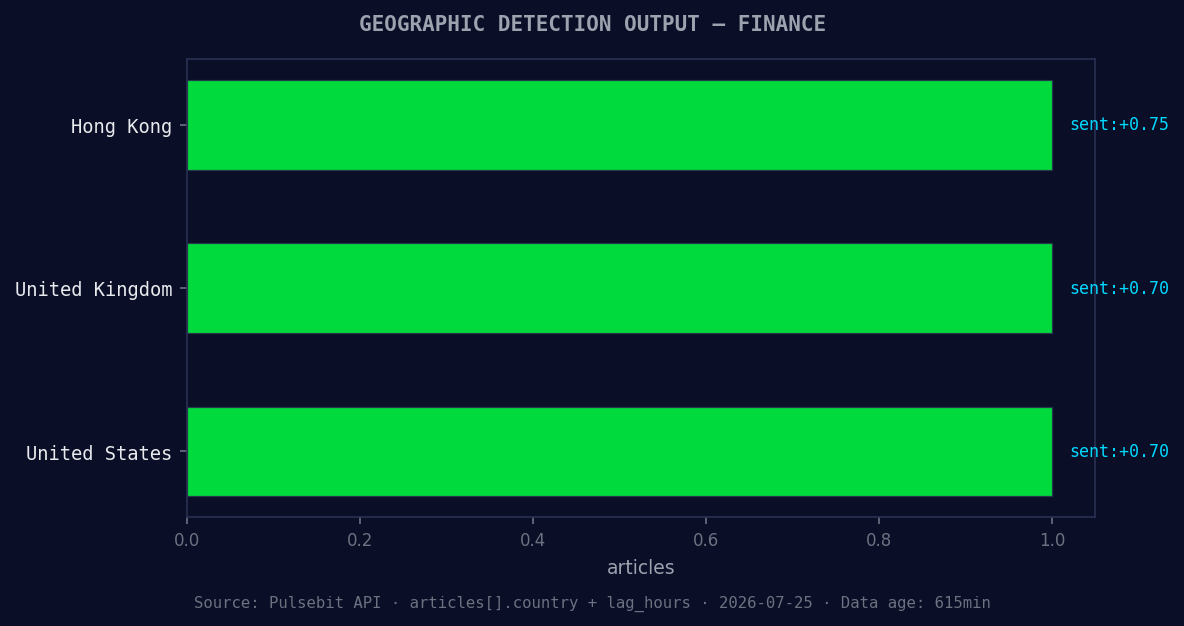
*Geographic detection output for finance. Hong Kong leads with 1 articles and sentiment +0.75. Source: Pulsebit /news_recent geographic fields.*
# API call to get sentiment data
response = requests.get("https://api.pulsebit.com/sentiment", params=params)
data = response.json()
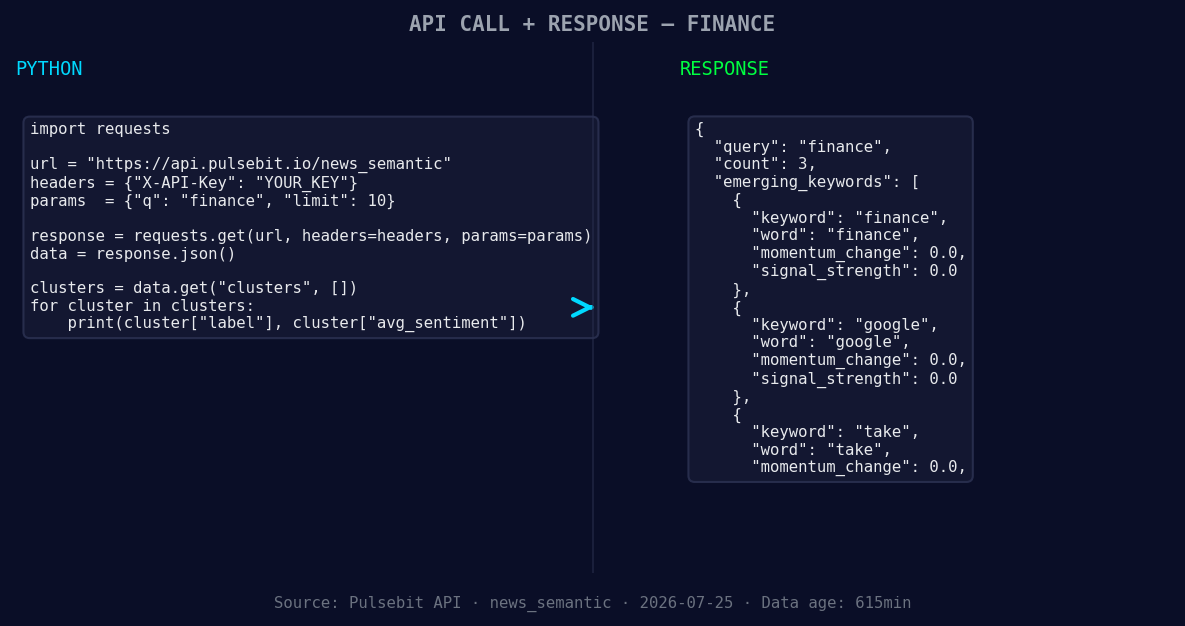
*Left: Python GET /news_semantic call for 'finance'. Right: returned JSON response structure (clusters: 3). Source: Pulsebit /news_semantic.*
# Example of the cluster reason string
cluster_reason = "Clustered by shared themes: finance, ‘strengthens, climate, resilience’, among."
# Meta-sentiment moment: run the cluster reason string through POST /sentiment
meta_sentiment_response = requests.post("https://api.pulsebit.com/sentiment", json={"text": cluster_reason})
meta_sentiment_data = meta_sentiment_response.json()
print("Sentiment Data:", data)
print("Meta-Sentiment Data:", meta_sentiment_data)
In this code, we’re filtering our sentiment analysis to focus on finance articles in English. The second part of the code runs the narrative framing of our cluster reason string through the sentiment analysis endpoint, allowing us to score the contextual framing itself. This dual approach gives us both the data we need and a deeper understanding of the themes driving the sentiment.
Now, let’s discuss three specific builds you can implement using this pattern:
Geographic Origin Filter: Create a real-time alert system that triggers when sentiment spikes above a certain threshold (e.g., +0.5) in specific languages. This way, you can react promptly to critical sentiment shifts. Use the geo filter to monitor finance topics in English-speaking markets.
Meta-Sentiment Loop: Build a dashboard that visualizes the meta-sentiment analysis alongside the main sentiment scores. This can help you understand how framing influences perceptions in real time. You can set up alerts when the meta-sentiment score exceeds a certain threshold, indicating a shift in narrative.
Forming Themes Analysis: Develop a comparative analysis tool that benchmarks emerging themes (like "finance, ‘strengthens, climate") against mainstream narratives. For instance, if the forming theme sentiment is positive but the mainstream remains neutral, it could signal an upcoming trend worthy of investigation.
By leveraging these insights, you can ensure that your pipeline is not only responsive but also anticipatory of sentiment trends.
Get started with our documentation at pulsebit.lojenterprise.com/docs. You can copy-paste this code and get it running in under 10 minutes. Don't let your pipeline fall behind—stay ahead of the sentiment curve.


Top comments (0)