

Your Pipeline Is 25.9h Behind: Catching Music Sentiment Leads with Pulsebit
We recently uncovered an intriguing anomaly in our sentiment data: a spike with a sentiment score of +0.286 and a momentum of +0.000, occurring 25.9 hours ago. This raised our eyebrows, especially as the leading language revealed a strong English press presence. The narrative behind this spike centers around the emerging trend of "silent discos" gaining traction across Australia, suggesting that there’s a unique cultural moment unfolding that your models might be missing.
The Problem
When your pipeline doesn’t account for multilingual origins or entity dominance, it can lead to significant blind spots. In this case, your model missed this valuable insight by a full 25.9 hours. With English as the leading language in the content, it’s clear that a specific cultural phenomenon is influencing sentiment and momentum. If you’re not processing sentiment across languages or identifying dominant entities, you risk lagging behind on crucial trends, particularly in culturally rich contexts like music.

English coverage led by 25.9 hours. Af at T+25.9h. Confidence scores: English 0.85, Spanish 0.85, French 0.85 Source: Pulsebit /sentiment_by_lang.
The Code
Let’s dive into how we can catch these kinds of insights using our API. First, we’ll filter for English-language articles that relate to our topic of interest, “music”. Here’s how you can do it:
import requests
# Define your parameters
topic = 'music'
sentiment_score = +0.286
confidence = 0.85
momentum = +0.000
# API call to filter by language
response = requests.get(
'https://api.pulsebit.com/v1/sentiment',
params={
'topic': topic,
'lang': 'en',
'sentiment_score': sentiment_score,
'confidence': confidence,
'momentum': momentum
}
)
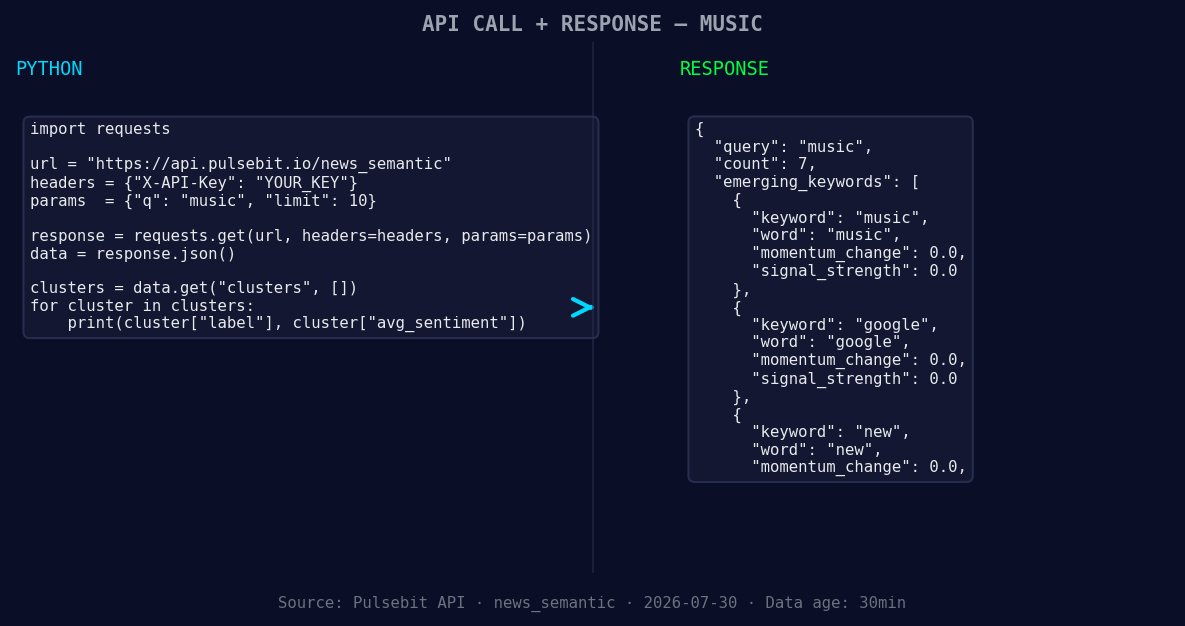
*Left: Python GET /news_semantic call for 'music'. Right: returned JSON response structure (clusters: 3). Source: Pulsebit /news_semantic.*
data = response.json()
print(data)
Next, to understand the narrative framing around this spike, we’ll take the cluster reason string and run it back through our sentiment analysis endpoint:
# Meta-sentiment moment
cluster_reason = "Clustered by shared themes: silent, discos, drawing, crowds, across."
meta_response = requests.post(
    'https://api.pulsebit.com/v1/sentiment',
    json={'text': cluster_reason}
)

meta_data = meta_response.json()
print(meta_data)
This second step helps us extract sentiment from the very themes that clustered around our initial discovery, ensuring we’re not just reacting but understanding the narrative itself.
Three Builds Tonight
Here are three actionable builds we can create off this sentiment spike:
- Geo-Filtered Music Trend Alert: Set a threshold for sentiment scores above +0.25 using the geographic filter. This can help you catch emerging trends like "silent discos" before they hit critical mass. Use the geo filter to pull in data specifically from Australia.

Geographic detection output for music. India leads with 3 articles and sentiment +0.27. Source: Pulsebit /news_recent geographic fields.
Meta-Sentiment Analysis Dashboard: Build a dashboard that runs cluster reasons through the sentiment analysis endpoint automatically. This will allow you to visualize how themes evolve over time and understand shifting narratives in real-time.
Forming Theme Watchlist: Create a watchlist for forming themes like “music,” “google,” and “new.” Set thresholds that trigger alerts when momentum shifts into positive territory, allowing you to stay ahead of mainstream conversations while also capitalizing on niche trends.
Get Started
We encourage you to explore our documentation at pulsebit.lojenterprise.com/docs. You can copy-paste these examples into your codebase and have them running in under 10 minutes. Don’t let your pipeline fall behind; leverage these insights to stay ahead of the curve!


Top comments (0)