

Your Pipeline Is 27.2h Behind: Catching Banking Sentiment Leads with Pulsebit
We recently observed a 24h momentum spike of +0.283 in banking sentiment, indicating a significant shift in public discourse around this topic. This spike, particularly led by Spanish press coverage, highlights an emerging trend that could easily slip under your radar if your pipeline isn't designed to handle multilingual content. Notably, the data suggests that the Spanish articles on "Open Banking Regulation and Data Sharing Focus" might be a precursor to larger trends in banking regulation.

Spanish coverage led by 27.2 hours. No at T+27.2h. Confidence scores: Spanish 0.85, English 0.85, French 0.85 Source: Pulsebit /sentiment_by_lang.
If your model is only focusing on English-language content or fails to account for dominant entities in other languages, you might have missed this crucial insight by a full 27.2 hours. The lag in understanding emerging themes like “regulation” and “banking” could mean losing out on early signals of market shifts, especially when banks are involved in significant regulatory discussions.
Let’s dive into how we can catch these insights with a simple Python implementation.
import requests
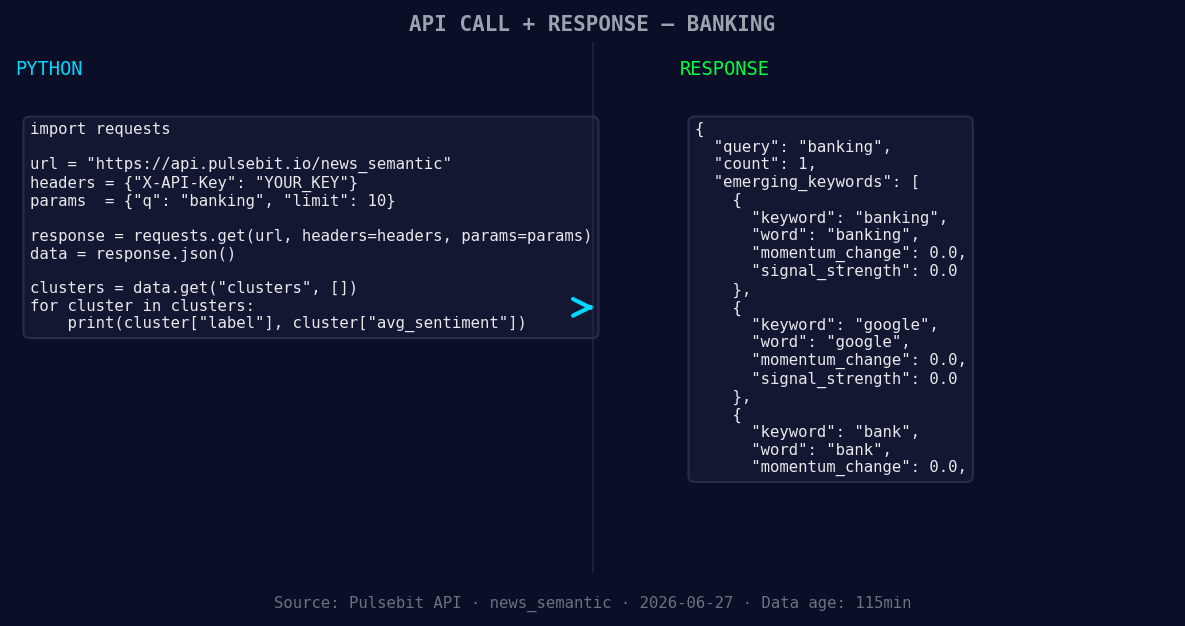
*Left: Python GET /news_semantic call for 'banking'. Right: returned JSON response structure (clusters: 3). Source: Pulsebit /news_semantic.*
# Set parameters for our query
topic = 'banking'
score = +0.000
confidence = 0.85
momentum = +0.283
# Geographic origin filter: Query by language (Spanish)
url = "https://api.pulsebit.com/v1/sentiment"
params = {
"topic": topic,
"lang": "sp",
"score": score,
"confidence": confidence,
"momentum": momentum
}
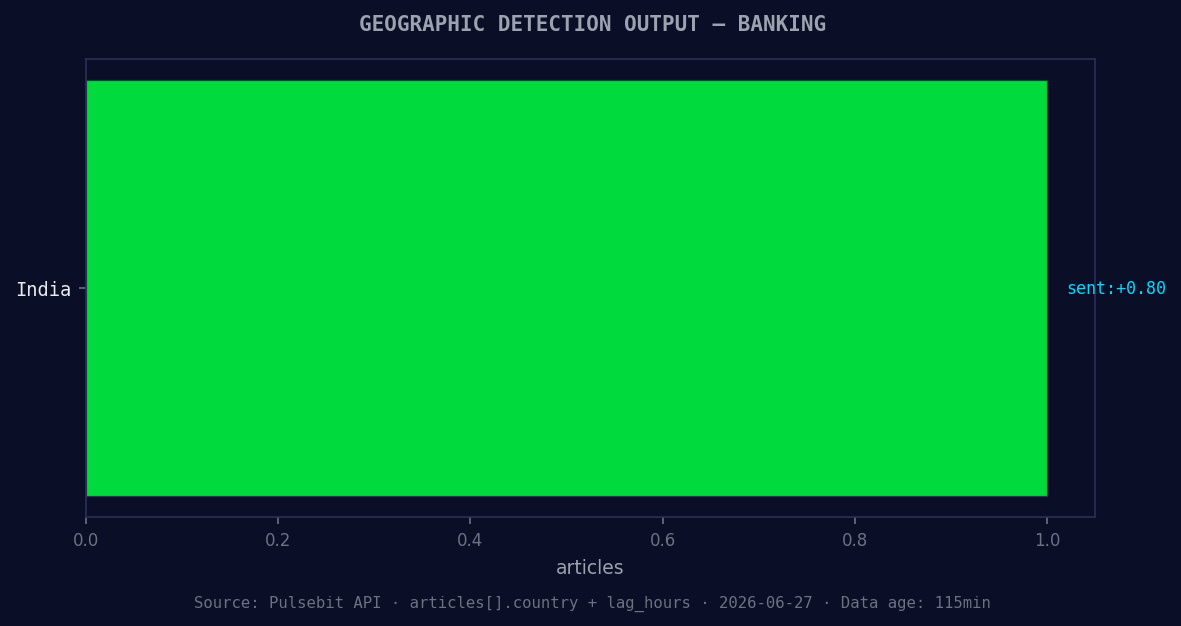
*Geographic detection output for banking. India leads with 1 articles and sentiment +0.80. Source: Pulsebit /news_recent geographic fields.*
response = requests.get(url, params=params)
data = response.json()
print(data)
# Running the cluster reason string through our sentiment API
cluster_reason = "Clustered by shared themes: regulation, banking, 2026:, federal, resurfaces."
sentiment_response = requests.post(url, json={"text": cluster_reason})
sentiment_data = sentiment_response.json()
print(sentiment_data)
In the code snippet above, we first query our API for sentiment data on the topic of banking, specifically filtering for Spanish language articles. This allows us to capture the nuances of sentiment that might be lost if we only analyzed English content. The second part of the code sends the narrative framing back through the sentiment API, providing additional context about the emerging trends in banking regulation and data sharing.
Now, let’s explore three specific builds you can implement based on this emerging sentiment pattern:
Geo-Filtered Alerts: Set up a notification system that triggers when a momentum spike above +0.25 occurs in the Spanish-speaking market. This ensures you’re alerted to significant developments in banking sentiment that might not yet be reflected in English-language articles.
Meta-Sentiment Analysis: Create a pipeline that analyzes the sentiment of clustered narratives. For instance, periodically run the meta-sentiment loop on emerging topics like "Open Banking Regulation" to gauge whether public sentiment is improving or deteriorating as new articles are published. This can inform your investment strategy or product development.
Competitive Analysis Dashboard: Build a dashboard that visualizes sentiment trends for entities like Google, banks, and regulatory bodies. Use the forming themes (e.g., banking, regulation, federal) to benchmark against competitors in real-time. This will help you understand not just sentiment but also how public discourse is evolving around these entities.
If you want to get started on this, head over to our documentation at pulsebit.lojenterprise.com/docs. You can copy-paste the code above and run it in under 10 minutes to start catching these leads. Don’t let your pipeline lag behind—leverage multilingual insights to stay ahead of the curve!


Top comments (0)