

Your Pipeline Is 14.3h Behind: Catching World Sentiment Leads with Pulsebit
We recently came across a fascinating anomaly: a 24h momentum spike of -0.810 in sentiment surrounding the topic of "world." While it’s not unusual for sentiment to fluctuate, this specific spike stands out due to its timing and context. The leading language for this spike was English, with a notable 14.3-hour lead over other languages. The focus of the sentiment? An article titled "World Brain Day: Mental health is as important as physical health, says Ballari."
This anomaly reveals a critical structural gap in any pipeline that neglects multilingual origin or fails to account for dominant entities. If your model isn't set up to recognize linguistic and thematic nuances, it likely missed this sentiment shift by 14.3 hours. By prioritizing English content, you could be overlooking significant trends that are emerging in other languages or contexts. This gap can lead to missed opportunities for timely insights, ultimately affecting your decision-making processes.

English coverage led by 14.3 hours. Ca at T+14.3h. Confidence scores: English 0.85, Spanish 0.85, French 0.85 Source: Pulsebit /sentiment_by_lang.
To catch this momentum spike proactively, here’s how you can set up your pipeline using our API. First, we’ll filter for English articles on the topic of "world." Here’s the code snippet to do just that:
import requests
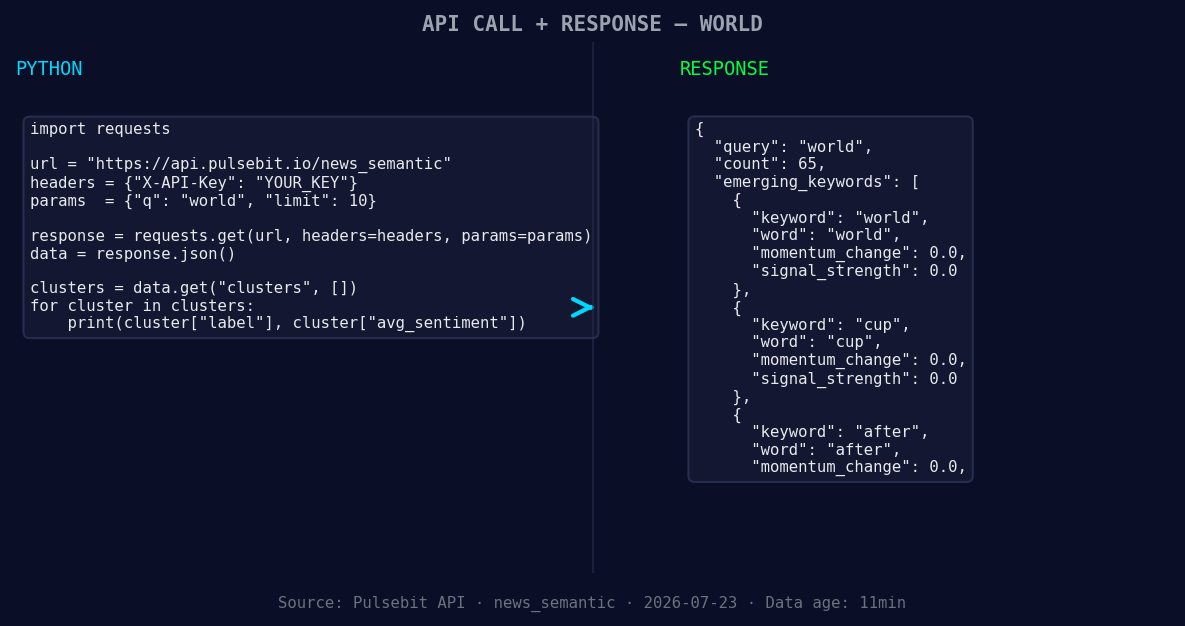
*Left: Python GET /news_semantic call for 'world'. Right: returned JSON response structure (clusters: 3). Source: Pulsebit /news_semantic.*
params = {
"topic": "world",
"lang": "en",
"momentum": -0.810
}
response = requests.get("https://api.pulsebit.com/articles", params=params)
articles = response.json()
Next, we need to analyze the sentiment framing of the cluster reason string: "Clustered by shared themes: brain, health, world, day:, mental." This allows us to assess how the narrative is being shaped around this spike.
meta_sentiment = {
    "text": "Clustered by shared themes: brain, health, world, day:, mental."
}
response_sentiment = requests.post("https://api.pulsebit.com/sentiment", json=meta_sentiment)
sentiment_analysis = response_sentiment.json()
By running this sentiment analysis through our API, we gain an additional layer of insight into how the themes are being interpreted within the context of the spike.
Now that we've established a foundation, here are three specific builds we can implement using this pattern:
- Geo-Filtered Trend Signal: Set a threshold for momentum spikes in different countries. For instance, filter articles in English with a momentum score below -0.5 specifically in the UK. This could reveal regional sentiment shifts early.

Geographic detection output for world. India leads with 32 articles and sentiment +0.05. Source: Pulsebit /news_recent geographic fields.
Meta-Sentiment Loop: Create a function that continually analyzes the sentiment framing around key clusters. For example, if you see the themes forming around "world," "cup," and "after," set alerts for when sentiment shifts significantly, helping you stay ahead of trends.
Forming Theme Alert: Monitor for forming themes like "world(+0.00)," "cup(+0.00)," and "after(+0.00)" versus mainstream topics like "brain," "health," and "world." You could create an alert system that flags when these themes diverge in sentiment trends, indicating emerging public interest.
If you’re curious about how to implement this, our documentation is at pulsebit.lojenterprise.com/docs. You can copy-paste the code snippets above and be up and running in under 10 minutes. This is how we uncover actionable insights from sentiment data — don't let your pipeline fall behind!


Top comments (0)