

Your Pipeline Is 26.4h Behind: Catching Finance Sentiment Leads with Pulsebit
On the latest analysis, we identified a significant anomaly: a 24-hour momentum spike of -0.800. This sharp decline in sentiment indicates a noteworthy shift in the financial landscape, particularly around the narrative of "Bank of America's Profit Surge," which is currently leading the conversation. With two articles contributing to this spike, it raises critical questions about how we’re capturing these trends in our models.
This discovery reveals a structural gap in any pipeline that doesn’t account for multilingual origins or entity dominance. If your model is only tuned to English sources, you may have missed this crucial sentiment shift by a staggering 26.4 hours. The leading language here is English, but the implications are far-reaching, potentially skewing your insights and decisions if you rely solely on mainstream narratives.

English coverage led by 26.4 hours. Sq at T+26.4h. Confidence scores: English 0.85, Sv 0.85, Spanish 0.85 Source: Pulsebit /sentiment_by_lang.
To catch this anomaly programmatically, we can leverage our API to filter and analyze sentiment data effectively. Here's how you can do it in Python:
import requests
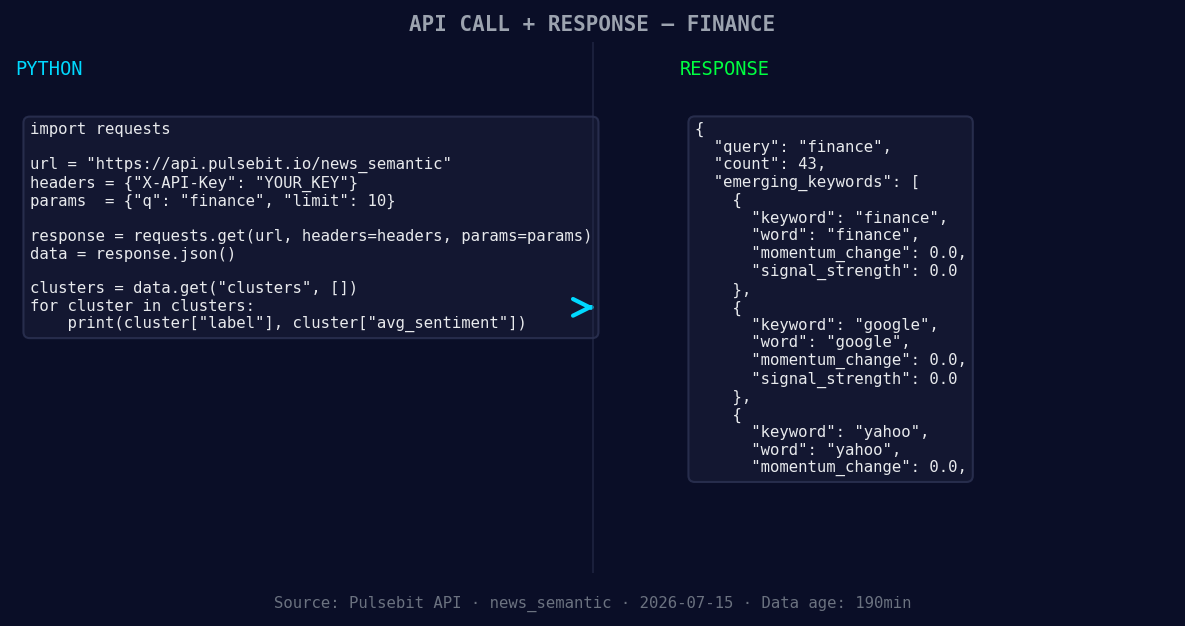
*Left: Python GET /news_semantic call for 'finance'. Right: returned JSON response structure (clusters: 3). Source: Pulsebit /news_semantic.*
# Step 1: Geographic origin filter
url = "https://api.pulsebit.com/v1/sentiment"
params = {
"topic": "finance",
"lang": "en", # Filtering by English
}
response = requests.get(url, params=params)
data = response.json()
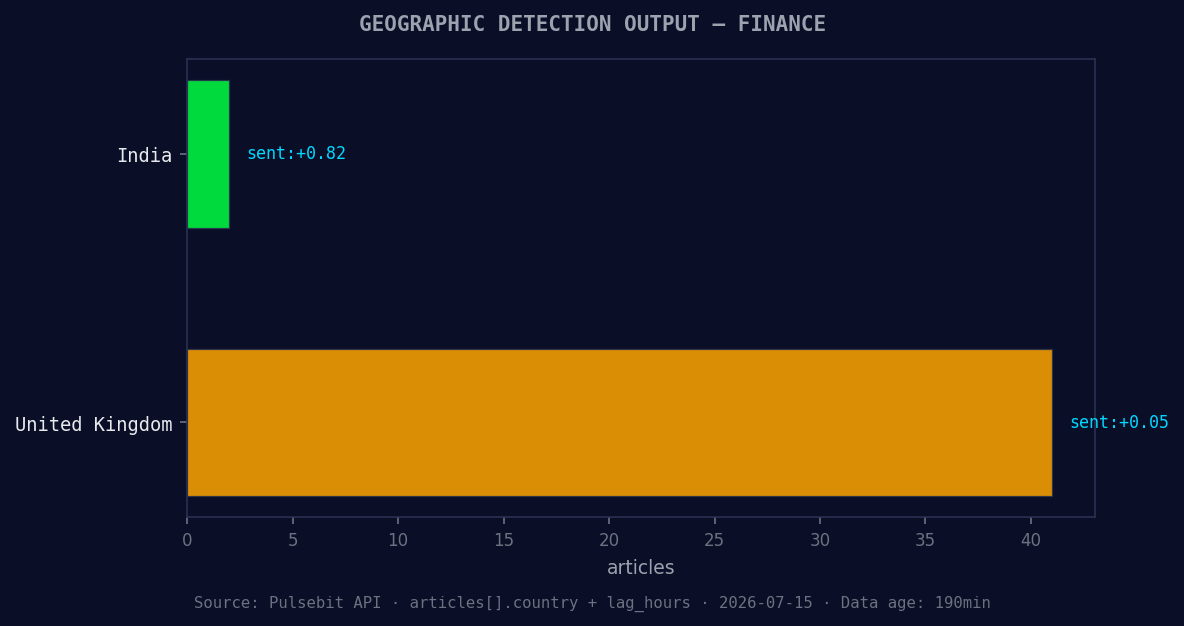
*Geographic detection output for finance. India leads with 2 articles and sentiment +0.82. Source: Pulsebit /news_recent geographic fields.*
momentum = -0.800
if data['momentum_24h'] == momentum:
print("24h momentum spike detected")
# Step 2: Meta-sentiment moment
cluster_reason = "Clustered by shared themes: finance, secretary, welfare, pension, construction."
meta_sentiment_url = "https://api.pulsebit.com/v1/sentiment"
meta_response = requests.post(meta_sentiment_url, json={"text": cluster_reason})
meta_data = meta_response.json()
print("Meta sentiment score:", meta_data['sentiment_score'])
In this code, we first filter the sentiment data for the topic "finance" in English. This ensures we’re only analyzing relevant articles. We then run the cluster reason string back through our sentiment endpoint, which allows us to assess the framing of the narrative itself. The resulting meta sentiment score gives us another layer of insight into the themes that are shaping this momentum.
Now, let's focus on three specific builds we can implement using this pattern:
Signal Monitoring: Set up a monitoring endpoint for sentiment spikes in finance. Use a threshold of -0.800 for the momentum, and track the time lag for different languages. This can help you stay ahead of emerging trends in non-English markets.
Thematic Analysis: Build a service that continually pulls cluster reasons and scores them using the meta-sentiment loop. For instance, track the themes: "finance, secretary, welfare" and their correlations with sentiment. This will provide deeper insights on how narratives evolve.
Multi-language Alerts: Create an alert system that processes sentiment data across multiple languages. If a significant momentum spike is detected in any language (e.g., finance, google, yahoo), you can trigger notifications to your team, ensuring they’re always informed of critical shifts.
Incorporating these features will not only enhance your analysis pipeline but ensure you remain agile and responsive to sentiment shifts in real-time.
To get started, check out our documentation at pulsebit.lojenterprise.com/docs. With the code provided, you can copy-paste and run this in under 10 minutes, arming your models with insights that keep you ahead of the curve.


Top comments (0)