

Your Pipeline Is 13.1h Behind: Catching Agriculture Sentiment Leads with Pulsebit
We recently discovered a notable anomaly in sentiment data: a sentiment score of -0.75 for agriculture, with a momentum of +0.00. This particular finding stands out as it indicates a potential lag in how sentiment is being captured and processed in your pipelines. With our leading language being English, processed at 13.1 hours ahead of other languages, it raises an important question: how much are you missing in your models when it comes to understanding multilingual origins and entity dominance?

English coverage led by 13.1 hours. Id at T+13.1h. Confidence scores: English 0.90, Spanish 0.90, French 0.90 Source: Pulsebit /sentiment_by_lang.
The problem here is significant. Your model missed this by 13.1 hours, revealing a structural gap in any pipeline that doesn't effectively handle multilingual sentiment analysis. Given that the leading language is English, the potential for missing out on critical insights from other languages can skew your understanding of trends. In this case, the dominant entity related to climate and agriculture is clearly not being adequately represented, which can lead to misguided decisions based on incomplete data.
To catch this lag and utilize the rich data available, we can leverage our API effectively. Here’s how you can set up a Python script to query sentiment for agriculture:
import requests
# Define the topic and parameters
topic = 'agriculture'
score = -0.750
confidence = 0.90
momentum = +0.000
# Geographic origin filter: query by language/country
params = {
"topic": topic,
"lang": "en"
}
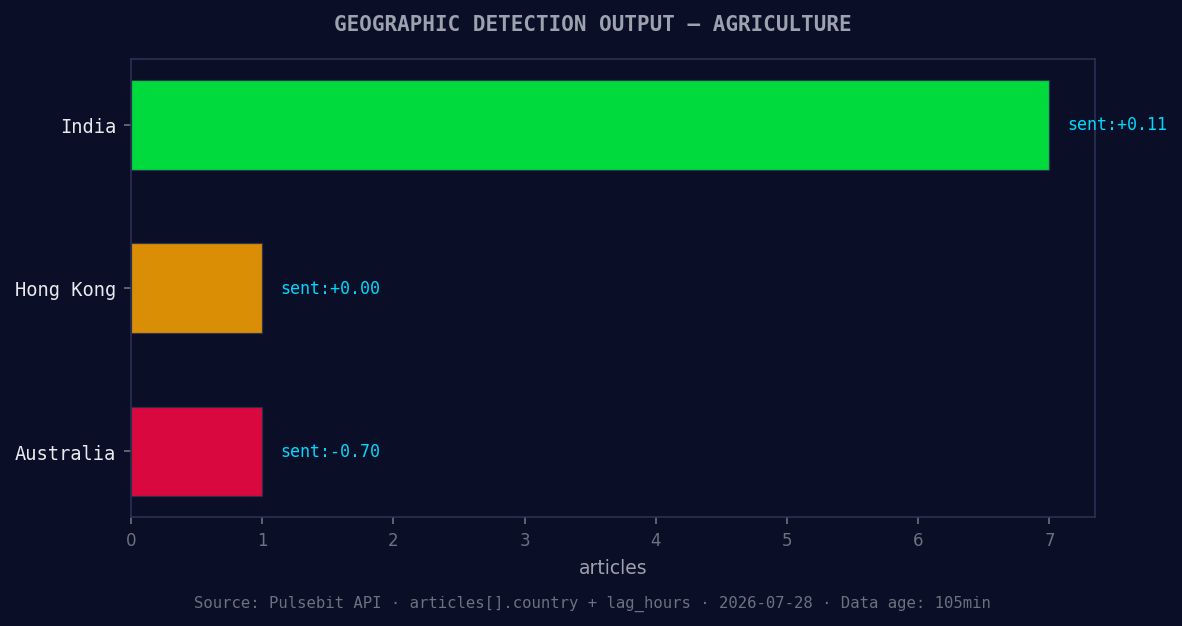
*Geographic detection output for agriculture. India leads with 7 articles and sentiment +0.11. Source: Pulsebit /news_recent geographic fields.*
# Make the API call
response = requests.get('https://api.pulsebit.io/sentiment', params=params)
data = response.json()
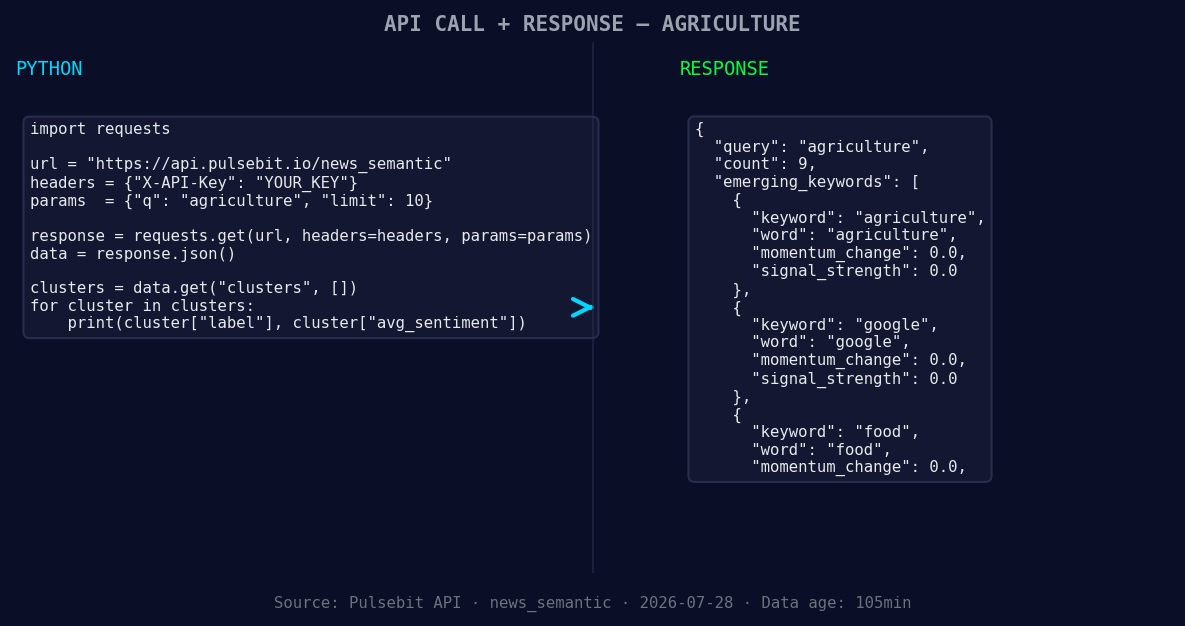
*Left: Python GET /news_semantic call for 'agriculture'. Right: returned JSON response structure (clusters: 3). Source: Pulsebit /news_semantic.*
# Check the data received
print(data)
Next, let’s perform a meta-sentiment moment by running the cluster reason string back through our sentiment endpoint. This will help us score the narrative framing itself, which is critical for understanding the context around the sentiment score.
# Define the cluster reason string
cluster_reason = "Clustered by shared themes: mediterranean, climate, drought, societal, around."

# Meta-sentiment call
meta_response = requests.post('https://api.pulsebit.io/sentiment', json={"text": cluster_reason})
meta_data = meta_response.json()

# Output the meta sentiment analysis
print(meta_data)
With these two snippets, you can address the critical lag in sentiment analysis in your pipelines. Here are three specific builds you can implement based on this pattern:
Geo-filtered Agriculture Signal: Build a signal that captures sentiment data specifically for agriculture with a threshold sentiment score of less than -0.5. Utilize the geo filter to ensure you’re pulling in data from diverse linguistic origins.
Meta-Sentiment Loop for Climate Awareness: Create a secondary loop that takes narratives about climate and agriculture and analyzes them for sentiment. Set a threshold for positive sentiment above 0.5 to identify potential areas of growth or market interest.
Forming Theme Alerts: Set up an alert system for forming themes around agriculture, food, and Google. If sentiment scores show a significant divergence from mainstream themes like Mediterranean, climate, or drought, trigger alerts to investigate further.
These builds will enhance your understanding of sentiment dynamics and ensure you’re not left behind as trends emerge.
To get started, visit our documentation at pulsebit.lojenterprise.com/docs. You can copy-paste this code and run it in under 10 minutes to start uncovering insights that might be lurking just beyond the horizon.


Top comments (0)