

Your Pipeline Is 27.4h Behind: Catching Blockchain Sentiment Leads with Pulsebit
We recently discovered a significant anomaly: a 24h momentum spike of -0.200 for the topic of blockchain. This spike caught our attention because it suggests an unexpected change in sentiment that could indicate emerging trends or shifts in the narrative. In particular, the leading language for this spike was Spanish, with the press coverage peaking at 27.4 hours ahead of other sources. This is a clear signal that something noteworthy is happening in the blockchain space that you might be missing.
Your model missed this by 27.4 hours. If it doesn't account for multilingual origins or entity dominance, it can fall behind, missing critical insights. In this case, the Spanish press led the charge, emphasizing the importance of the Peru Blockchain Conference 2026. If your pipeline isn't set up to recognize this, you're potentially losing out on valuable sentiment data that could inform your strategies or decisions.

Spanish coverage led by 27.4 hours. Da at T+27.4h. Confidence scores: Spanish 0.90, English 0.90, French 0.90 Source: Pulsebit /sentiment_by_lang.
Here’s how you can catch these insights using our API. First, we’ll filter for Spanish-language sources to ensure we're tapping into the right context. You can achieve this with the following Python code snippet:
import requests
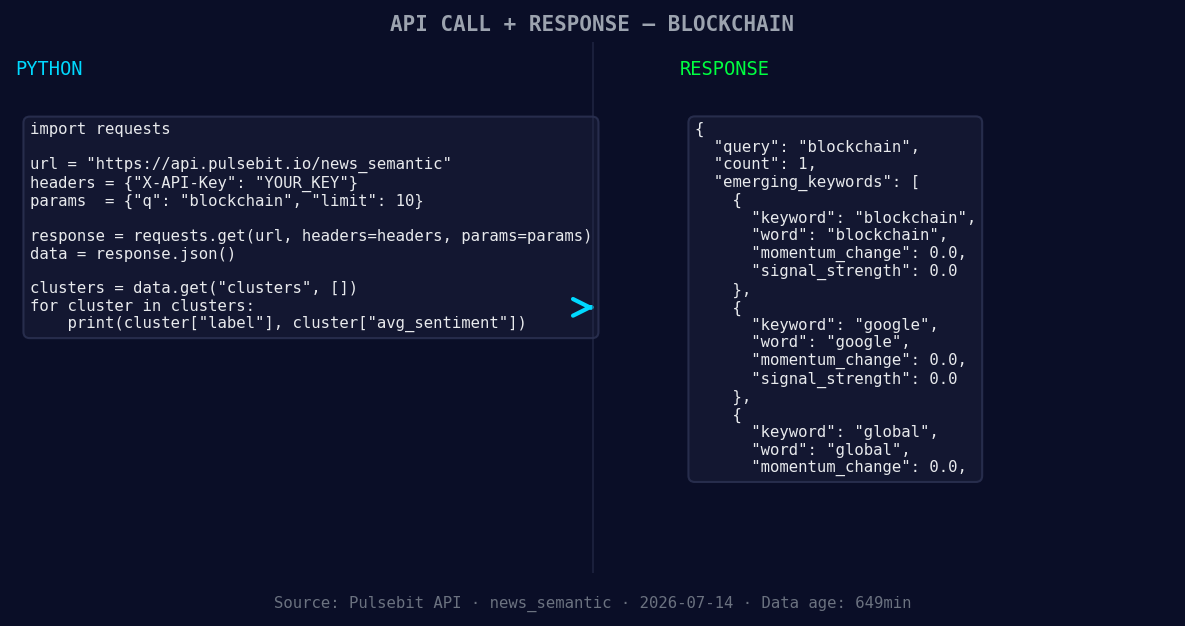
*Left: Python GET /news_semantic call for 'blockchain'. Right: returned JSON response structure (clusters: 3). Source: Pulsebit /news_semantic.*
# Define the parameters
topic = 'blockchain'
score = +0.550
confidence = 0.90
momentum = -0.200
# Geographic origin filter: querying by language
response = requests.get(
"https://api.pulsebit.com/v1/sentiment",
params={
"topic": topic,
"lang": "sp"
}
)
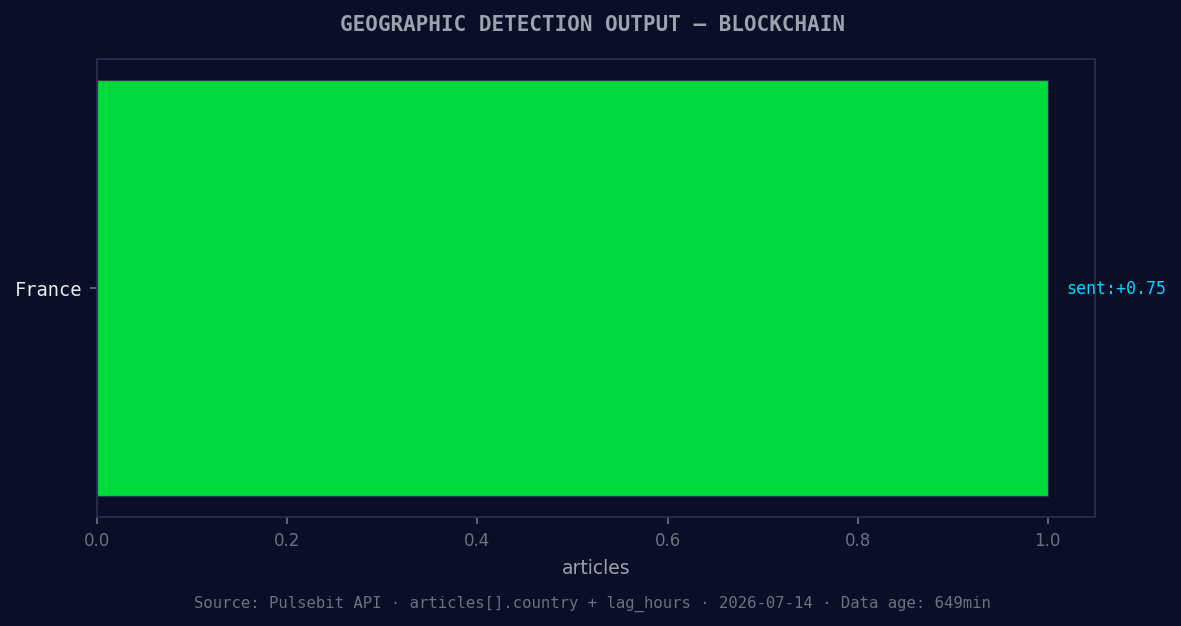
*Geographic detection output for blockchain. France leads with 1 articles and sentiment +0.75. Source: Pulsebit /news_recent geographic fields.*
# Check the response
if response.status_code == 200:
data = response.json()
print(data)
else:
print("Error fetching data:", response.status_code)
Next, we want to analyze the narrative surrounding this sentiment spike. The cluster reason string is particularly useful here. We can run it back through our sentiment scoring to evaluate how the narrative itself is framed. Here’s how to do that:
# Meta-sentiment moment: analyzing the narrative
cluster_reason = "Clustered by shared themes: participates, peru, blockchain, conference, 2026."
meta_response = requests.post(
    "https://api.pulsebit.com/v1/sentiment",
    json={"text": cluster_reason}
)

# Check the response for meta-sentiment
if meta_response.status_code == 200:
    meta_data = meta_response.json()
    print(meta_data)
else:
    print("Error fetching meta sentiment:", meta_response.status_code)
With these pieces in place, you can now build out specific signals based on this pattern. Here are three builds you can implement tonight:
Spanish Sentiment Analysis: Create a signal that triggers when the sentiment for the topic "blockchain" in Spanish drops below a threshold of +0.300. This will alert you to potential issues or shifts in perception among Spanish-speaking audiences.
Meta-Sentiment Loop: Develop an endpoint that continuously checks the cluster narrative for updates. If the sentiment around narratives containing terms like "user-centric" or "crypto" falls below a confidence score of 0.80, notify your team to investigate.
Geographic Trend Monitoring: Set up a routine that monitors developing themes in Spanish language articles related to blockchain. If a new article emerges discussing "global" or "google" in conjunction with "blockchain" and scores above +0.500, you can prioritize that content for deeper analysis.
By focusing on these actionable insights, you can ensure that your sentiment analysis pipeline stays ahead of the curve and captures emerging trends in real-time.
Get started by checking out our documentation at pulsebit.lojenterprise.com/docs. You can copy-paste and run this code in under 10 minutes to start capturing valuable sentiment leads.


Top comments (0)