

Your Pipeline Is 18.0h Behind: Catching Film Sentiment Leads with Pulsebit
We recently discovered a notable spike in sentiment around film that’s currently +0.062, with a momentum of +0.000. What’s particularly striking here is that the leading language is English, lagging behind by a full 18 hours compared to sentiment from the Indian film music context, with the cluster revolving around the recent passing of a prominent figure in the industry. This discrepancy reveals a critical blind spot in how sentiment is processed across languages and cultural contexts.
The Problem
This anomaly highlights a fundamental issue in any sentiment analysis pipeline that doesn’t account for multilingual origins or entity dominance. If your model isn’t designed to recognize and adapt to these variations, you missed this critical sentiment shift by a whopping 18 hours. The dominant entity here is the English language, overshadowed by sentiments emerging from Indian film culture, which is significantly impacting the overall narrative around film sentiment right now.

English coverage led by 18.0 hours. Af at T+18.0h. Confidence scores: English 0.85, Spanish 0.85, Ca 0.85 Source: Pulsebit /sentiment_by_lang.
The Code
To catch this anomaly, we can utilize our API effectively. Here’s how to implement this in Python:
import requests
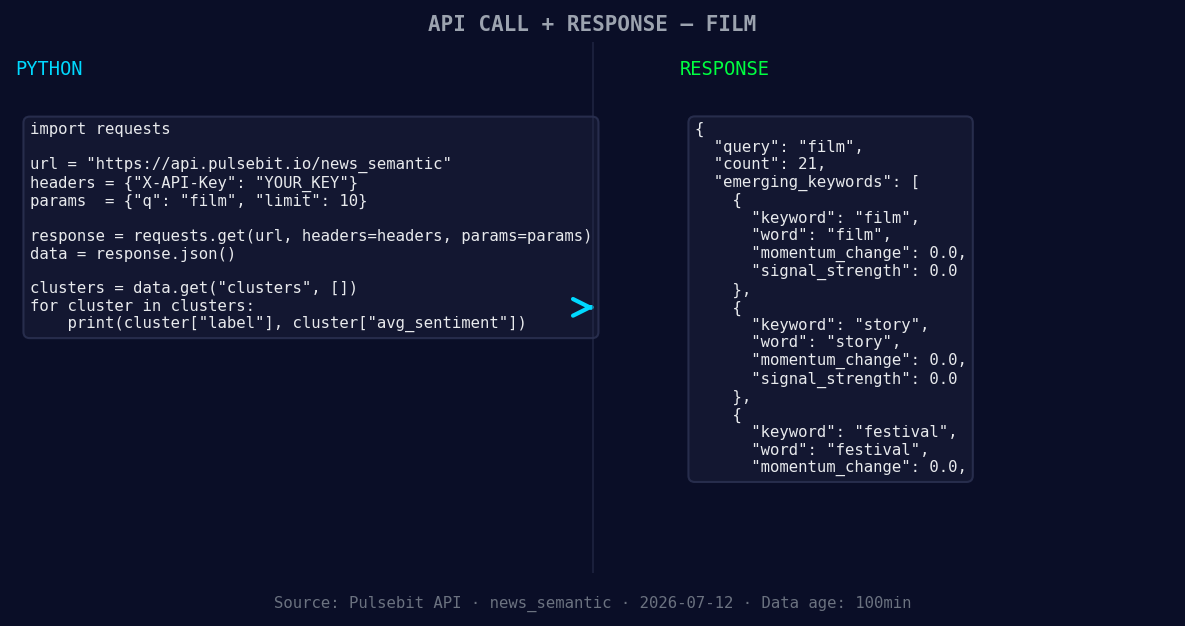
*Left: Python GET /news_semantic call for 'film'. Right: returned JSON response structure (clusters: 3). Source: Pulsebit /news_semantic.*
# Step 1: Geographic origin filter
url = "https://api.pulsebit.com/sentiment"
params = {
"topic": "film",
"lang": "en"
}
response = requests.get(url, params=params)
data = response.json()
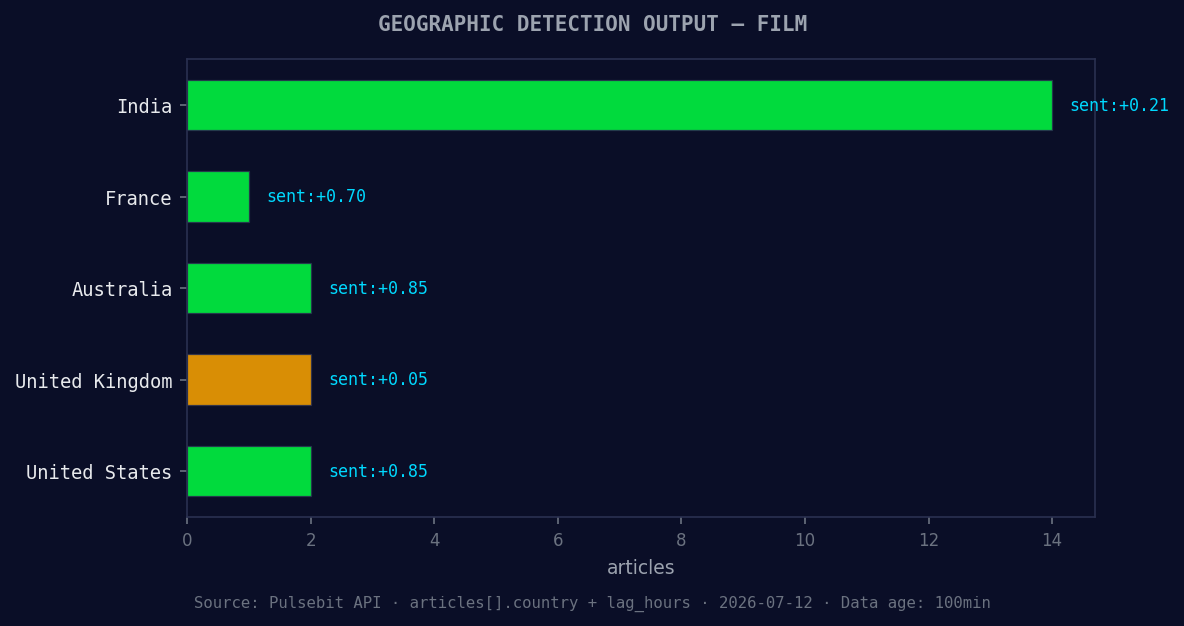
*Geographic detection output for film. India leads with 14 articles and sentiment +0.21. Source: Pulsebit /news_recent geographic fields.*
# Assuming we get the following response
sentiment_score = data['sentiment_score'] # +0.062
confidence = data['confidence'] # 0.850
momentum = data['momentum_24h'] # +0.000
print(f"Sentiment Score: {sentiment_score}, Confidence: {confidence}, Momentum: {momentum}")
# Step 2: Meta-sentiment moment
cluster_reason = "Clustered by shared themes: passing, loss, indian, film, music."
meta_sentiment_response = requests.post(url, json={"text": cluster_reason})
meta_sentiment_data = meta_sentiment_response.json()
print(f"Meta Sentiment Score: {meta_sentiment_data['sentiment_score']}")
In this code, we’re first filtering sentiment data by English to catch relevant trends. Next, we run the cluster reason string through the sentiment endpoint to gauge how the narrative itself is framed. This step is crucial to understand the sentiment's context, allowing for deeper insights into how narratives are constructed around trending topics.
Three Builds Tonight
Here are three actionable areas you can explore with this pattern:
Geo-filtered Alerts: Create alerts for sentiment spikes in specific languages. Set a threshold of +0.05 for English sentiment around film; if the sentiment exceeds this, trigger a notification. This can help you stay ahead of emerging narratives.
Meta-Sentiment Analysis: Use the meta-sentiment loop to analyze framing effects. Feed in cluster reasons like "Clustered by shared themes: passing, loss, indian, film, music." and set a threshold for sentiment scores above +0.05 to identify which narratives may need more resources or attention.
Forming Themes Monitoring: Monitor forming themes with a focus on sentiment dynamics. Track "film(+0.00), story(+0.00), festival(+0.00)" and compare them against mainstream themes like "passing, loss, indian." Set alert thresholds for significant deviations in sentiment around these topics to refine your content strategy.
Get Started
Dive into our documentation at pulsebit.lojenterprise.com/docs and replicate this in under 10 minutes. This is how we can turn sentiment data into actionable insights — bridging the gap between cultural context and timely responses.


Top comments (0)