

Your Pipeline Is 26.2h Behind: Catching Space Sentiment Leads with Pulsebit
We recently stumbled upon a fascinating anomaly: a 24h momentum spike of +0.163 related to space-themed content. This spike signals a significant uptick in sentiment, particularly in the Spanish press, which is leading this trend with a 26.2h lead over the Italian press. With only one article in play, titled "Immersive Space Station Experience," the metrics hint at a captivating narrative brewing in the public consciousness.
But here’s the kicker: your model might have overlooked this critical shift by a staggering 26.2 hours. If your pipeline doesn’t account for multilingual origins or entity dominance in sentiment analysis, you’re potentially missing out on vital insights. The leading language in this case is Spanish, and those insights could be instrumental in shaping timely responses or strategies.

Spanish coverage led by 26.2 hours. Italian at T+26.2h. Confidence scores: Spanish 0.85, English 0.85, French 0.85 Source: Pulsebit /sentiment_by_lang.
Let’s dive into how we can catch this momentum spike with our API. We’ll start by filtering for Spanish-language articles related to space, then analyze the sentiment of the narrative framing itself.
import requests
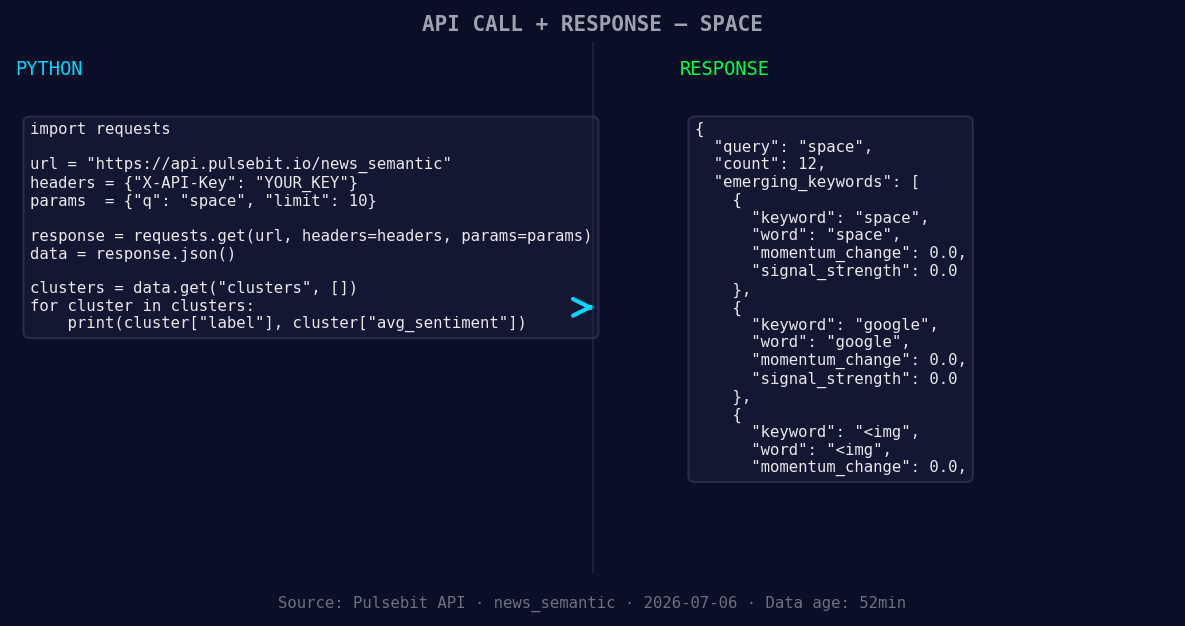
*Left: Python GET /news_semantic call for 'space'. Right: returned JSON response structure (clusters: 3). Source: Pulsebit /news_semantic.*
# Step 1: Geographic origin filter
url = "https://api.pulsebit.lojenterprise.com/articles"
params = {
"topic": "space",
"lang": "sp", # Spanish language filter
"momentum": "+0.163"
}
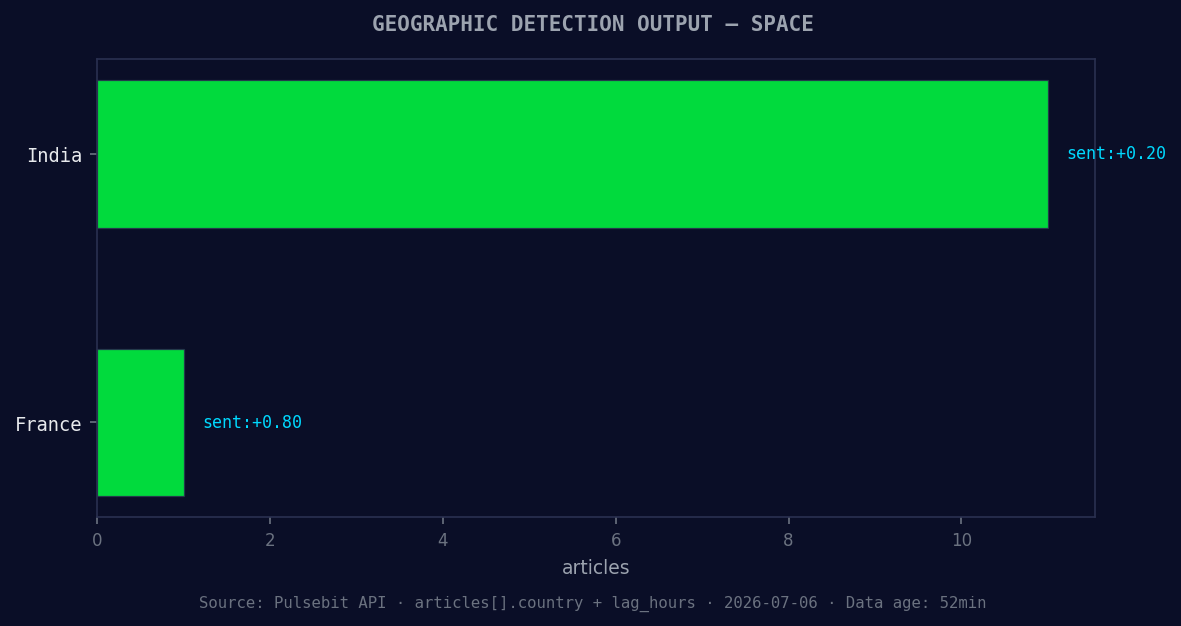
*Geographic detection output for space. India leads with 11 articles and sentiment +0.20. Source: Pulsebit /news_recent geographic fields.*
response = requests.get(url, params=params)
space_articles = response.json()
print(space_articles)
# Step 2: Meta-sentiment moment
cluster_reason = "Clustered by shared themes: life, aboard, international, space, station."
sentiment_url = "https://api.pulsebit.lojenterprise.com/sentiment"
sentiment_data = {
"text": cluster_reason
}
sentiment_response = requests.post(sentiment_url, json=sentiment_data)
sentiment_score = sentiment_response.json()
print(sentiment_score)
In this example, we filter articles discussing space in Spanish, allowing us to identify relevant narratives. Then, we send the cluster reason back to our sentiment endpoint to establish a score for the narrative itself. The sentiment score, plus the original metrics, gives us a comprehensive view of the story's framing.
Now that we've established how to catch this momentum spike, let’s explore three specific builds you can implement based on this pattern:
Sentiment Tracking Signal: Use our
/articlesendpoint with a threshold for momentum spikes above +0.150. This will allow you to capture articles that are trending in real-time, particularly in Spanish, ensuring you're always ahead of the curve.Meta-Sentiment Looping: Leverage the insights from the sentiment analysis of the cluster reason. By setting a flag for articles that score above +0.500, you can create alerts for narratives that resonate strongly with audiences, particularly around themes like “space” and “international.”
Geographic Influence: Build out a signal that tracks emerging sentiment trends in specific regions, using our geo filter. For example, look for spikes in articles about space that mention “life” or “international” themes, and flag these for further analysis.
By implementing these signals and aligning them with the forming themes of space, Google, and media imagery, you can ensure you're not just reactive but proactively engaging with the narratives that matter.
If you're ready to get started, check our documentation at pulsebit.lojenterprise.com/docs. You can copy-paste the code above and run it in under 10 minutes to start capturing these insights.


Top comments (0)