

Your Pipeline Is 28.8h Behind: Catching Finance Sentiment Leads with Pulsebit
We discovered a striking anomaly: a 24h momentum spike of +0.719 in finance sentiment. This spike indicates a sudden surge in interest around finance-related news, particularly as it relates to significant hires in the sector. The leading language for this sentiment surge? Spanish, which has a 28.8-hour lead over the Italian press. In a world where timing is everything, this insight could be the edge you need to refine your trading or investment strategies.
However, if your pipeline doesn’t account for multilingual data or dominance by certain entities, you could be missing out. Your model missed this by a full 28.8 hours. Ignoring the leading influence of the Spanish press and the specific themes tied to this spike means you're likely operating with outdated information. The financial landscape is dynamic, and missing these nuances could lead to missed opportunities.

Spanish coverage led by 28.8 hours. Italian at T+28.8h. Confidence scores: Spanish 0.85, English 0.85, Sv 0.85 Source: Pulsebit /sentiment_by_lang.
To catch this anomaly in real-time, we can leverage our API. Here’s how you can do it with a simple Python script. First, we’ll filter for sentiment data specifically from Spanish sources related to finance:
import requests
# Define parameters for the API call
params = {
"topic": "finance",
"score": +0.619,
"confidence": 0.85,
"momentum": +0.719,
"lang": "sp" # Geographic origin filter
}
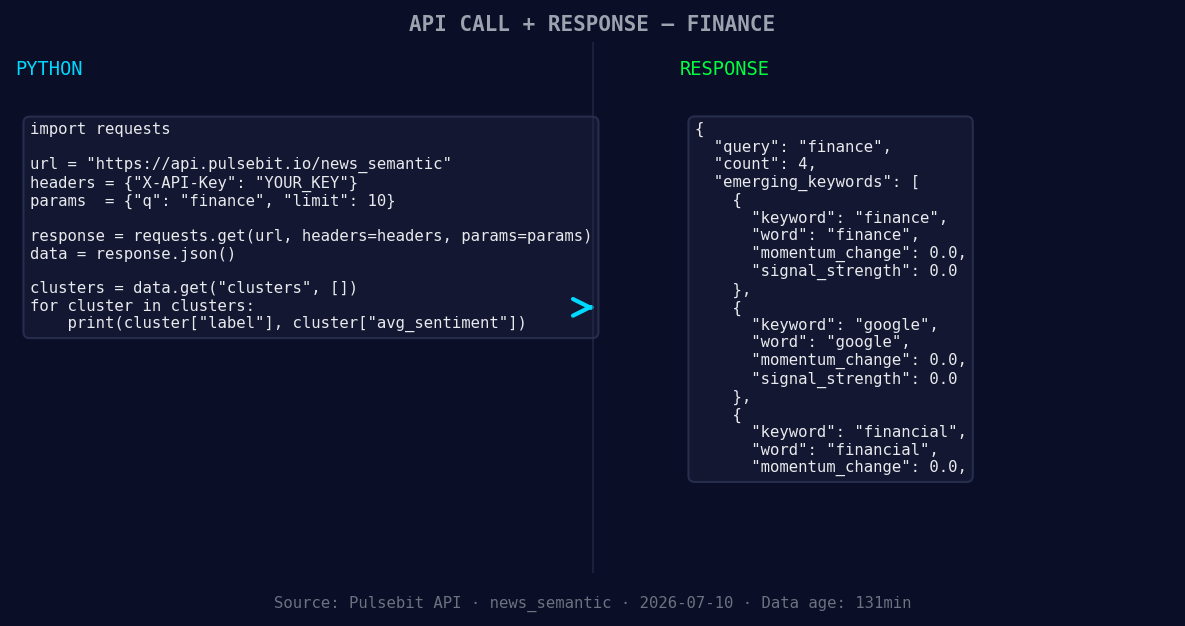
*Left: Python GET /news_semantic call for 'finance'. Right: returned JSON response structure (clusters: 3). Source: Pulsebit /news_semantic.*
# Make the API call to fetch data
response = requests.get("https://api.pulsebit.lojenterprise.com/sentiment", params=params)
data = response.json()
print(data)
Next, we will run the cluster reason string through our sentiment endpoint to analyze the narrative framing itself. This step is crucial as it validates the context behind the spike:
# Define the cluster reason string
cluster_reason = "Clustered by shared themes: hires, blackstone’s, rice, help, lead."

# Make the API call to score the narrative framing
sentiment_response = requests.post("https://api.pulsebit.lojenterprise.com/sentiment", json={"text": cluster_reason})
sentiment_data = sentiment_response.json()
print(sentiment_data)
By executing these two snippets, you can effectively track the momentum shifts and understand the stories driving these changes in the finance sector.
Here are three specific builds you can implement tonight using this pattern:
Spanish Financial Monitoring: Set up a recurring job that queries our API with the
lang: "sp"filter and tracks sentiment spikes above a threshold of +0.5. This will help you stay ahead of significant developments in the Spanish financial press.Meta-Sentiment Insights: Create a dashboard that feeds in cluster reasons like "Clustered by shared themes: hires, blackstone’s, rice, help, lead." and scores these narratives using the POST /sentiment endpoint. Set a threshold score of +0.6 to trigger alerts for noteworthy sentiment shifts.
Gap Analysis Tool: Build a component that compares sentiment scores across languages. Track the time lag between the Spanish and Italian press for finance-related topics and flag any discrepancies. You can set up alerts to notify you when the Spanish press leads by more than 28 hours.
To dive deeper into how you can implement these features, check out our documentation at pulsebit.lojenterprise.com/docs. With this information, you should be able to copy, paste, and run your own sentiment analysis in under 10 minutes. Don’t let your pipeline fall behind—capitalize on these insights today.


Top comments (0)