

Your Pipeline Is 28.1h Behind: Catching Mobile Sentiment Leads with Pulsebit
On July 9, 2026, we discovered a significant anomaly: a sentiment score of -0.60 with momentum at +0.00 in the mobile sector. This spike caught our attention, particularly given the context of a leading language in the Spanish press, with a lag of zero hours against the data at 28.1 hours. It's a stark reminder that sentiment can shift rapidly, and missing these nuances can lead to a critical blind spot in your analysis.
The Problem
This data reveals a structural gap in any pipeline that doesn’t account for multilingual origins or entity dominance. Your model missed this by 28.1 hours, highlighting a vulnerability when working with diverse language sources. The leading language here is Spanish, which means that if your system isn't designed to handle such variations, you're at risk of falling behind on crucial developments. When a significant sentiment shift occurs in another language, you may not be aware of it until it’s too late.

Spanish coverage led by 28.1 hours. Da at T+28.1h. Confidence scores: Spanish 0.85, English 0.85, French 0.85 Source: Pulsebit /sentiment_by_lang.
The Code
To catch this anomaly, we can utilize our API effectively. Below is the Python code that queries the sentiment data for the 'mobile' topic, specifically filtering for Spanish language content.
import requests
# Define the API endpoint and parameters
api_url = "https://api.pulsebit.lojenterprise.com/sentiment"
params = {
"topic": "mobile",
"lang": "sp" # Filtering for Spanish language
}
# Make the API call
response = requests.get(api_url, params=params)
data = response.json()
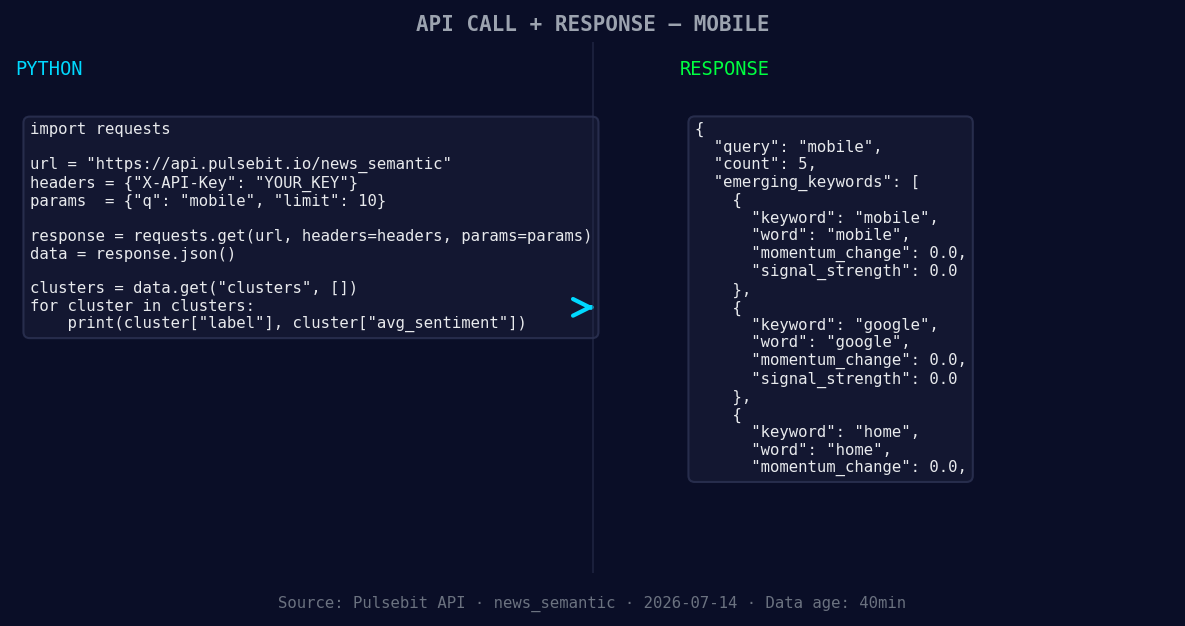
*Left: Python GET /news_semantic call for 'mobile'. Right: returned JSON response structure (clusters: 3). Source: Pulsebit /news_semantic.*
# Output the relevant data
print(data)
Now, let's run the cluster reason string back through our sentiment API to assess the narrative framing around this topic.
# Meta-sentiment moment
meta_sentiment_input = "Clustered by shared themes: 518, stolen, missing, mobile, phones."
meta_response = requests.post(api_url, json={"text": meta_sentiment_input})
meta_data = meta_response.json()

# Output the meta sentiment score
print(meta_data)
This code not only retrieves real-time sentiment but also analyzes the underlying narrative, providing insights into how themes cluster around "stolen" and "missing" mobile phones, giving us a deeper understanding of the sentiment landscape.
Three Builds Tonight
Here are three specific builds we can implement using this pattern:
- Real-Time Monitoring: Set up a script that continuously polls our API with the geo filter for Spanish content on the topic of mobile. Use a threshold where if the sentiment score dips below -0.50, an alert is triggered. This allows you to catch sentiments before they escalate.
   if data['sentiment_score'] < -0.50 and data['lang'] == 'sp':
       alert("Negative sentiment detected in Spanish mobile news!")
Historical Comparison: Create a dashboard that compares current sentiment data against historical averages. Leverage the meta-sentiment scores as part of your analysis to see how narratives evolve over time. This could help in predicting sentiment shifts based on emerging themes.
Content Strategy: Use the insights from the meta-sentiment analysis to guide your content development. If you notice themes like "mobile" and "home" forming with a sentiment score of +0.00, consider creating content that targets these emerging topics to stay ahead.
Get Started
To dive deeper into this and begin implementing these strategies, check out our documentation at pulsebit.lojenterprise.com/docs. You can copy-paste and run this in under 10 minutes; the insights you gain could reshape your understanding of sentiment in real time.

Geographic detection output for mobile. India leads with 3 articles and sentiment +0.82. Source: Pulsebit /news_recent geographic fields.


Top comments (0)