

Your Pipeline Is 10.5h Behind: Catching Climate Sentiment Leads with Pulsebit
We just noticed a significant anomaly: a 24h momentum spike of +0.367 in climate-related sentiment. This spike is not just a number; it represents a critical shift in how climate discussions are evolving in the media. With only 17 articles processed, this momentum indicates that something is brewing beneath the surface, and if you’re not tuned in, you might miss the next wave of climate sentiment.
The problem here is obvious. If your pipeline isn’t equipped to handle multilingual origins or account for entity dominance, you’re at risk of lagging behind. In this case, your model missed this by 10.5 hours, as the English press led the narrative without a significant lag. The focal point of this shift? Concerns about proposed building codes in Maryland, which could have broader implications for climate policy. Ignoring these nuances could leave your analysis stale and unresponsive to real-time changes.

English coverage led by 10.5 hours. No at T+10.5h. Confidence scores: English 0.75, Spanish 0.75, French 0.75 Source: Pulsebit /sentiment_by_lang.
To catch this momentum spike, we can leverage our API effectively. Here’s how you can pull in the relevant data:
import requests
# Define the API endpoint and parameters
url = 'https://api.pulsebit.com/v1/articles'
params = {
'topic': 'climate',
'lang': 'en',
'momentum': +0.367
}
# Make the API call
response = requests.get(url, params=params)
data = response.json()
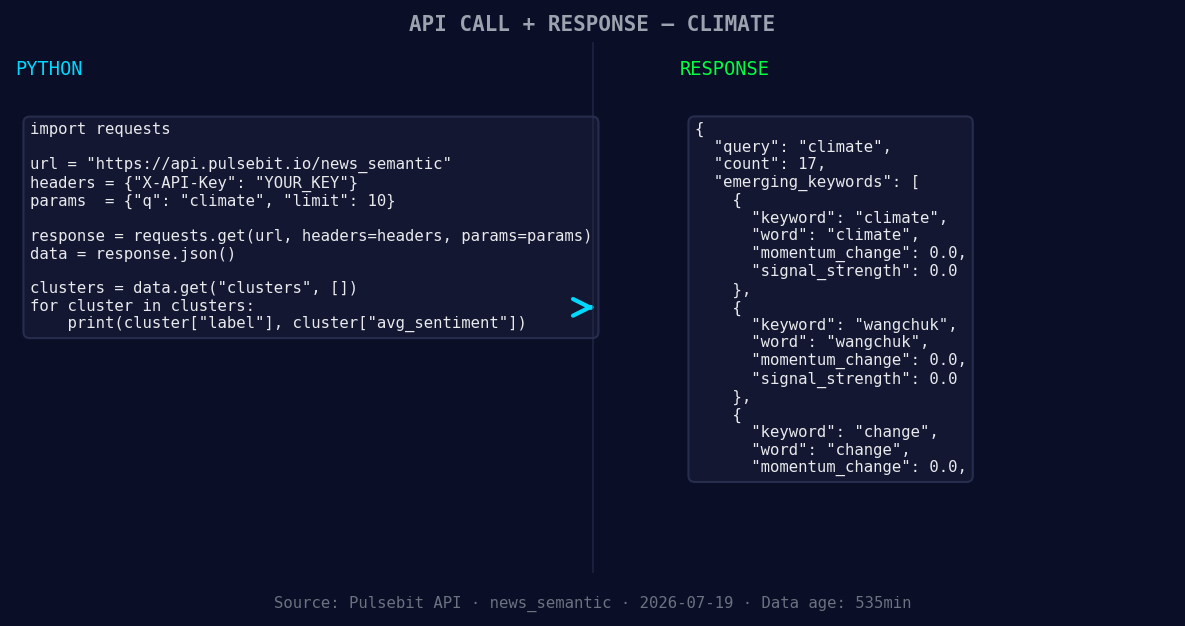
*Left: Python GET /news_semantic call for 'climate'. Right: returned JSON response structure (clusters: 3). Source: Pulsebit /news_semantic.*
# Print the response for debugging
print(data)
Once you have the articles, it's crucial to analyze the narrative framing. We can take the cluster reason string and score its sentiment to understand the underlying themes better. Here’s how to score that narrative:
# Define the cluster reason string
cluster_reason = "Clustered by shared themes: groups, concerned, proposed, maryland, building."

# Define the sentiment scoring endpoint
sentiment_url = 'https://api.pulsebit.com/v1/sentiment'
sentiment_response = requests.post(sentiment_url, json={'text': cluster_reason})
sentiment_data = sentiment_response.json()

# Print the sentiment data for debugging
print(sentiment_data)
By running this code, you can not only pull the latest sentiment data but also score the narratives that cluster around critical topics like climate change. This approach helps you stay ahead of the curve and understand how discussions are evolving in real-time.
Now, let’s talk about three specific builds you can implement based on this newfound data pattern:
- Geo-Filtered Alert System: Use the geographic origin filter to set up alerts for spikes in climate sentiment from specific regions. For example, target Maryland to catch local discussions earlier. This can be done by modifying the API call to include specific geographic parameters.

Geographic detection output for climate. India leads with 12 articles and sentiment +0.21. Source: Pulsebit /news_recent geographic fields.
Meta-Sentiment Tracking: Implement a system that re-scores narratives based on their cluster reasons. Use the POST /sentiment endpoint to continually monitor how different themes evolve over time. For example, track how the terms "climate" and "change" are perceived compared to mainstream concerns like "groups" and "proposed."
Dynamic Threshold Alerts: Create dynamic thresholds for when to trigger alerts based on sentiment shifts. If "wangchuk" (another emerging theme) reaches a certain score, you can set off a notification to dive deeper into the context.
These builds can help you capture the forming themes—like climate (+0.00), wangchuk (+0.00), and change (+0.00)—and see how they contrast with traditional concerns.
Get started with our API at pulsebit.lojenterprise.com/docs. You can copy-paste these snippets and run them in under 10 minutes, giving you a robust framework to respond to emerging climate sentiment.


Top comments (0)