

Your Pipeline Is 28.0h Behind: Catching Climate Sentiment Leads with Pulsebit
We just uncovered a striking anomaly: a 24-hour momentum spike of +0.391 in climate-related sentiment. This spike indicates a significant shift in sentiment towards climate issues, particularly reflected in English press coverage. The leading language is English, with a notable 28.0-hour lead time. This suggests that if your pipeline isn’t equipped to handle multilingual origins or entity dominance, you're lagging behind.

English coverage led by 28.0 hours. Ro at T+28.0h. Confidence scores: English 0.75, Spanish 0.75, French 0.75 Source: Pulsebit /sentiment_by_lang.
Your model missed this by 28.0 hours — a substantial gap given how rapidly sentiment can evolve, especially around pressing topics like climate change. With the leading article focusing on "A roadmap for Kerala’s agricultural transformation," it's clear that localized discussions can shift sentiment in ways that broader models might overlook.
To catch this spike, we can use our API to filter sentiment data efficiently. Here's how you can code it up in Python:
import requests
# Define parameters for the API call
topic = 'climate'
momentum = +0.391
score = +0.750
confidence = 0.75
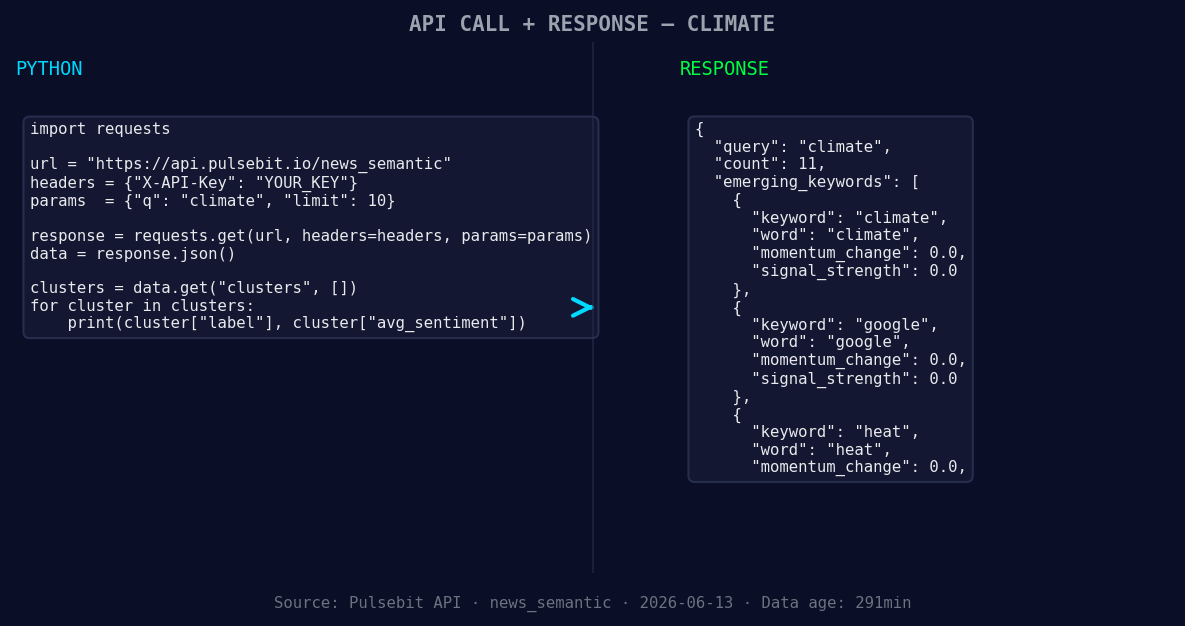
*Left: Python GET /news_semantic call for 'climate'. Right: returned JSON response structure (clusters: 3). Source: Pulsebit /news_semantic.*
# Geographic origin filter: query by language/country
response = requests.get('https://api.pulsebit.io/v1/sentiment', params={
"topic": topic,
"momentum": momentum,
"lang": "en" # Filter for English articles
})
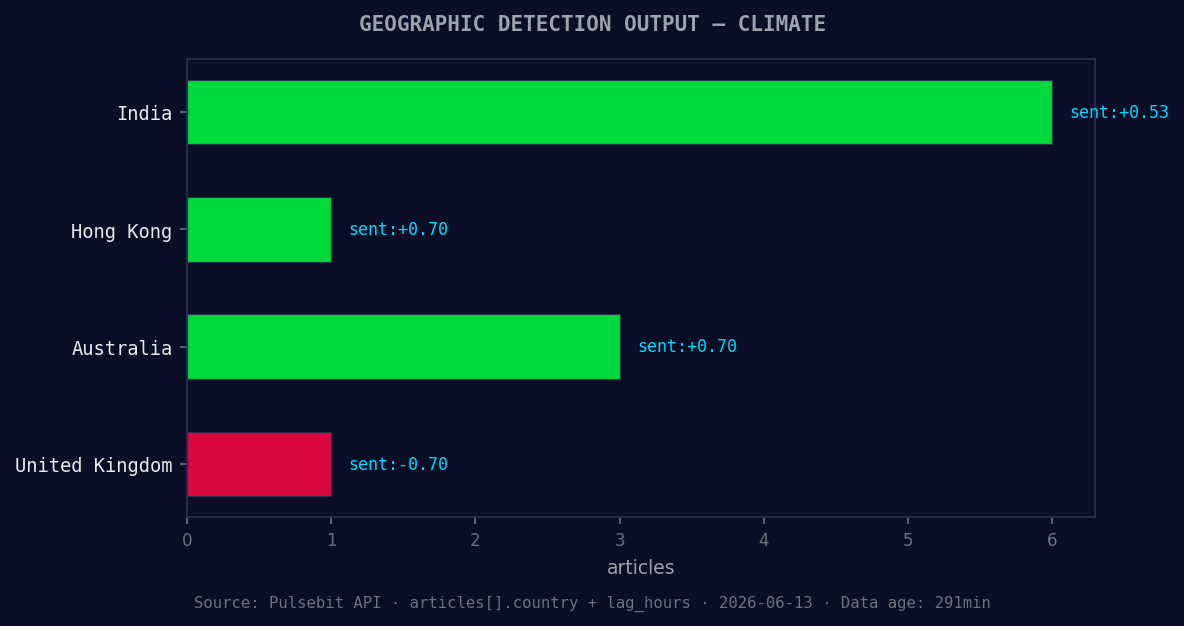
*Geographic detection output for climate. India leads with 6 articles and sentiment +0.53. Source: Pulsebit /news_recent geographic fields.*
# Print the response
print(response.json())
Now that we’ve gathered the relevant sentiment data, we need to assess how the narrative around this spike is framed. We’ll run the cluster reason string back through our sentiment scoring endpoint:
# Meta-sentiment moment
cluster_reason = "Clustered by shared themes: roadmap, agricultural, kerala’s, transformation, ker"
meta_response = requests.post('https://api.pulsebit.io/v1/sentiment', json={
    "text": cluster_reason
})

# Print the sentiment score of the cluster reason
print(meta_response.json())
This extra step not only validates the sentiment around climate discussions but also gives us a deeper understanding of how such themes are interlinked, particularly in the context of localized agricultural transformations.
Here are three specific builds you can undertake using this newfound pattern:
Geographic Sentiment Filter: Set a signal threshold, say +0.400, and filter results using the geographic origin parameter. This will help you catch emerging sentiments in specific regions before they become mainstream. Just change the
momentumparameter in the first code snippet to+0.400.Meta-Sentiment Analysis: Use the cluster reason analysis as a continuous feedback loop. Set a threshold of confidence (e.g., 0.80) and implement routine checks against the sentiment score of your identified narratives. This can help you refine your messaging based on the evolving sentiment landscape.
Forming Theme Detection: Monitor forming themes like climate, google, and heat by setting up alerts for sentiment spikes above 0.200. This will keep you ahead of the curve in identifying trends that could impact related projects or investments.
Dive into our documentation to get started: pulsebit.lojenterprise.com/docs. You can copy-paste and run these snippets in under 10 minutes, putting you back in the lead on climate sentiment analysis.


Top comments (0)