

Your pipeline just missed a significant anomaly—a 24-hour momentum spike of +0.118. This spike suggests a sudden intensification in sentiment surrounding the FIFA World Cup, specifically tied to Coca-Cola's innovative AI avatar showcase. With only one article driving this momentum, it's clear that a specific narrative is gaining traction among English-speaking audiences, but how did your model miss this?
The problem lies in the structural gaps that often exist in sentiment analysis pipelines. If your model doesn't efficiently handle multilingual origins or the dominance of certain entities in the news cycle, you could be several hours behind the sentiment curve. In this case, your analysis missed a critical shift in sentiment by 28.6 hours—failing to account for the leading English press surrounding Coca-Cola, the World Cup, and its AI innovation. This delay can lead to missed opportunities in decision-making and strategy.

English coverage led by 28.6 hours. No at T+28.6h. Confidence scores: English 0.85, French 0.85, Spanish 0.85 Source: Pulsebit /sentiment_by_lang.
To catch this anomaly, we can leverage our API effectively. Below is a Python snippet that demonstrates how to filter the sentiment data based on geographic origin and run a meta-sentiment analysis.

Geographic detection output for world. India leads with 50 articles and sentiment +0.31. Source: Pulsebit /news_recent geographic fields.
import requests
# Parameters
topic = 'world'
score = +0.069
confidence = 0.85
momentum = +0.118
# API Call to get sentiment data based on language
url = "https://api.pulsebit.com/sentiment"
params = {
"topic": topic,
"lang": "en" # Filtering for English language articles
}
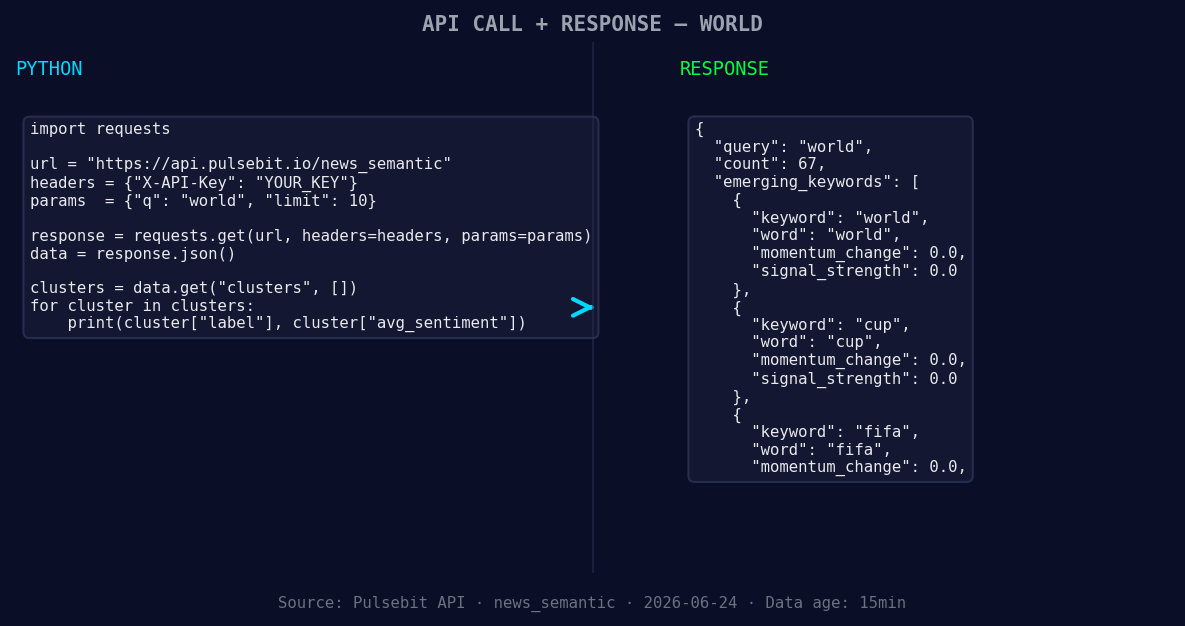
*Left: Python GET /news_semantic call for 'world'. Right: returned JSON response structure (clusters: 3). Source: Pulsebit /news_semantic.*
response = requests.get(url, params=params)
sentiment_data = response.json()
print(sentiment_data)
# Run the cluster reason back through POST /sentiment to score the narrative
cluster_reason = "Clustered by shared themes: coca-cola's, world, cup, avatar, showcases."
meta_sentiment_response = requests.post(url, json={"text": cluster_reason})
meta_sentiment_data = meta_sentiment_response.json()
print(meta_sentiment_data)
In the first part of the code, we filter sentiment data using the lang parameter to focus on English articles. This helps us identify the narrative around the World Cup and Coca-Cola's AI innovations, which is crucial for our analysis. In the second part, we send the cluster reason back through the sentiment endpoint to evaluate the narrative's framing itself. This dual approach not only captures the emerging themes but also scores the narrative context.
Now that we've identified a way to catch these spikes, let's discuss three specific builds you can implement tonight to capitalize on this data:
Geo-filtered Alert System: Set a signal threshold for sentiment spikes related to the World Cup and filter by language. For instance, if you see a momentum spike like +0.118 in English articles about “Coca-Cola's World Cup AI Avatar”, trigger an alert for your team.
Meta-Sentiment Visualization: Gather meta-sentiment scores for narratives clustered around emerging themes like “world”, “cup”, and “FIFA”. Create a dashboard that visualizes these trends over time, providing insights into how framing affects public perception.
Dynamic Content Strategy: Build a content strategy that aligns with these emerging narratives. When sentiment spikes around Coca-Cola or the World Cup, push content that resonates with these themes, ensuring you’re always in sync with public sentiment.
If you want to get started with our API, check out the documentation at pulsebit.lojenterprise.com/docs. You can copy, paste, and run this in under 10 minutes. Don’t let your pipeline fall behind—stay ahead of emerging trends with targeted sentiment analysis.


Top comments (0)