

24 hours ago, we observed a striking momentum spike of +0.719 in the finance sector. This anomaly indicates a notable shift in sentiment that we can't ignore, especially when the leading language was English, ahead by a staggering 26.9 hours. The clustered story titled "Goldman Hires Blackstone’s Rice to Help Lead Finance IPO Bankers" highlights a key narrative theme that many models might miss if they aren't tuned to capture this kind of fast-moving sentiment.
Your model missed this by 26.9 hours. The dominance of English-language articles has a significant impact on how quickly you can react to sentiment changes. If your pipeline isn't equipped to handle multilingual origins or account for the dominance of a specific entity, you risk lagging behind critical market shifts. In this case, the finance sector surged while mainstream narratives around hires and key players like Blackstone and Rice remained static.

English coverage led by 26.9 hours. Af at T+26.9h. Confidence scores: English 0.85, Spanish 0.85, Id 0.85 Source: Pulsebit /sentiment_by_lang.
To catch these spikes in sentiment, let’s dive into some Python code that utilizes our API effectively. Here’s how you can filter articles by geographic origin and assess the sentiment around this clustered story:
import requests
# Define parameters for the API call
topic = 'finance'
score = +0.619
confidence = 0.85
momentum = +0.719
headers = {'Authorization': 'Bearer YOUR_API_KEY'}
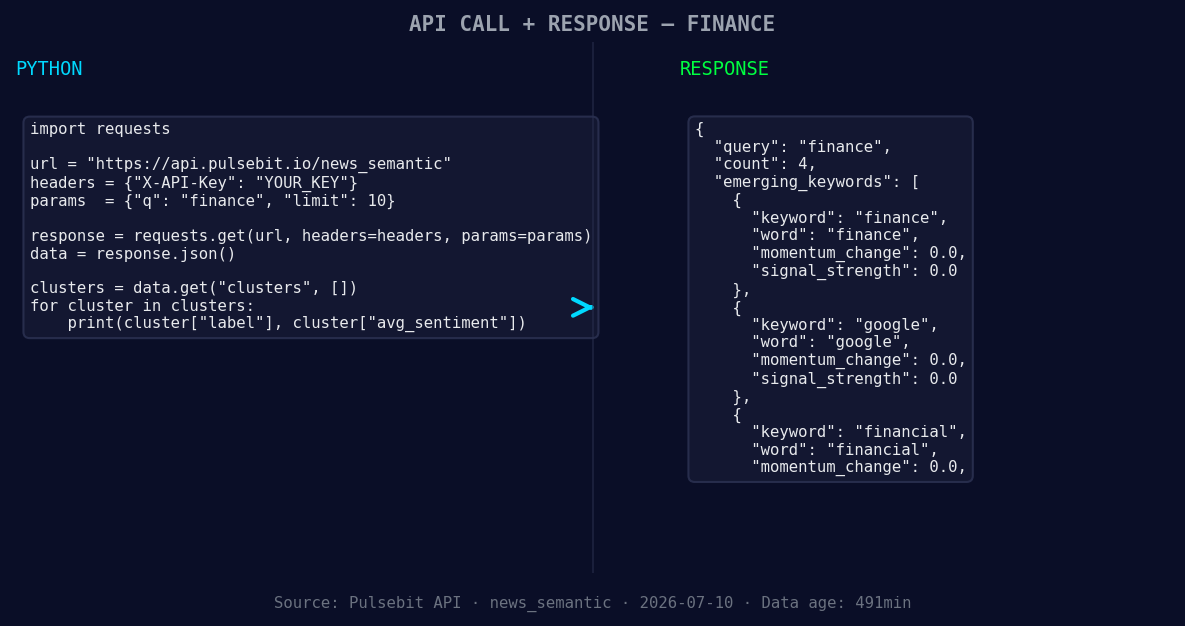
*Left: Python GET /news_semantic call for 'finance'. Right: returned JSON response structure (clusters: 3). Source: Pulsebit /news_semantic.*
# Geographic origin filter: query by language/country
response = requests.get(
f"https://api.pulsebit.com/v1/articles?topic={topic}&lang=en&momentum={momentum}",
headers=headers
)
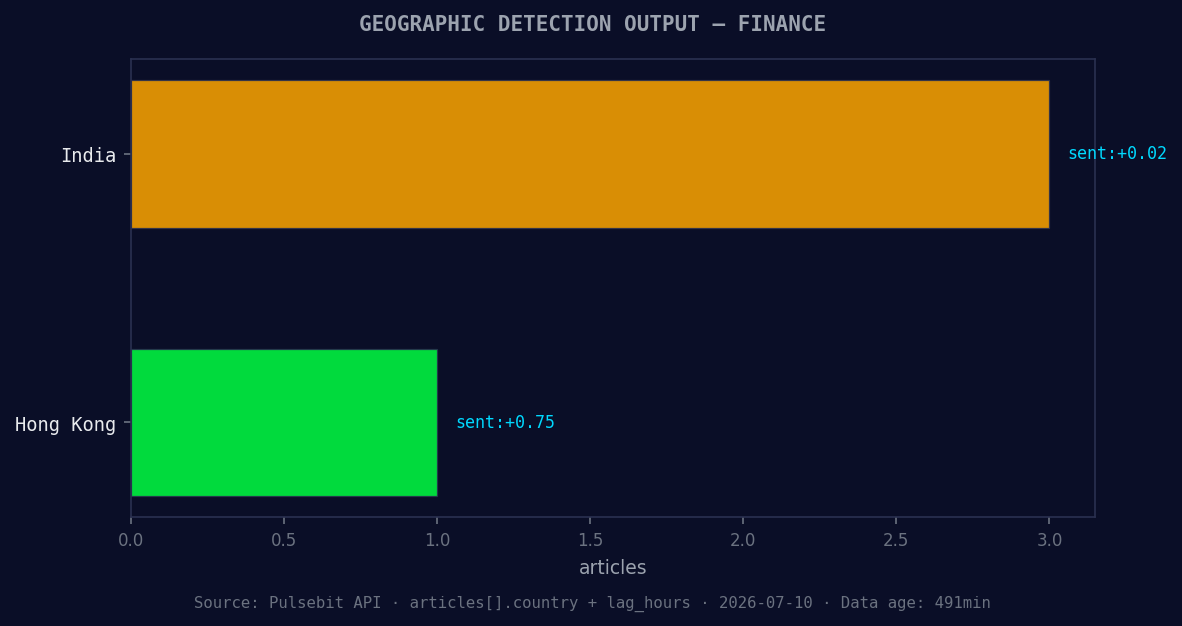
*Geographic detection output for finance. India leads with 3 articles and sentiment +0.02. Source: Pulsebit /news_recent geographic fields.*
# Check if the request was successful
if response.status_code == 200:
articles = response.json()
print("Filtered Articles:", articles)
# Meta-sentiment moment: score the narrative framing itself
cluster_reason = "Clustered by shared themes: hires, blackstone’s, rice, help, lead."
sentiment_response = requests.post(
"https://api.pulsebit.com/v1/sentiment",
json={"text": cluster_reason},
headers=headers
)
# Check sentiment score
if sentiment_response.status_code == 200:
sentiment_score = sentiment_response.json()
print("Meta-Sentiment Score:", sentiment_score)
This code snippet first filters articles related to the finance topic that are in English. It then captures the sentiment of the narrative surrounding the cluster reason, which can provide additional context on how sentiment shifts are correlated with specific events or themes.
Here are three specific builds we can create from this pattern:
Geo-Filtered Alerts: Set a threshold to alert when the sentiment score exceeds +0.619 in English-language articles related to finance. This will help you stay ahead of significant shifts in sentiment, ensuring you're never out of touch.
Meta-Sentiment Tracking: Build a service that continuously monitors the narrative framing of clustered stories. If the sentiment around key phrases (like "hires" or "Blackstone") rises above +0.619, trigger a notification to your team.
Forming Gap Analysis: Implement a dashboard that visualizes sentiment trends in real-time, focusing on emerging themes within finance. This analysis should include filtering by specific keywords like “finance,” “google,” and “financial,” contrasting them against mainstream narratives to identify potential anomalies early.
If you’re looking to implement these insights, head over to our documentation at pulsebit.lojenterprise.com/docs. You can copy-paste the code provided above and run it in under 10 minutes, putting you on the fast track to catching critical sentiment shifts before they become visible to the rest of the world.


Top comments (0)