

Your Pipeline Is 28.9h Behind: Catching Real Estate Sentiment Leads with Pulsebit
We just uncovered a fascinating anomaly: a 24-hour momentum spike of +0.289 in real estate sentiment. This spike is particularly intriguing because it coincides with a cluster story titled "Tamil Nadu's Commercial Property Boom Driven by Jewellery Retailers." With the leading language being English, this insight underscores the significance of timely sentiment analysis, especially with a 28.9-hour lag in the data processing pipeline.
When your model does not account for multilingual origins or the dominance of certain entities, it risks missing vital insights. Imagine your pipeline has a 28.9-hour delay; that's a significant gap. This is not just a theoretical issue—it's practical. If you're relying on a single language perspective, you may overlook emerging narratives like the one we're seeing in Tamil Nadu's commercial real estate driven by the jewellery sector.

English coverage led by 28.9 hours. Sv at T+28.9h. Confidence scores: English 0.85, Spanish 0.85, French 0.85 Source: Pulsebit /sentiment_by_lang.
To catch this sentiment shift, we can leverage our API to create a more responsive pipeline. Here’s a Python snippet that demonstrates how to query for this specific anomaly:
import requests
# Define the parameters for the API call
topic = 'real estate'
score = -0.079
confidence = 0.85
momentum = +0.289
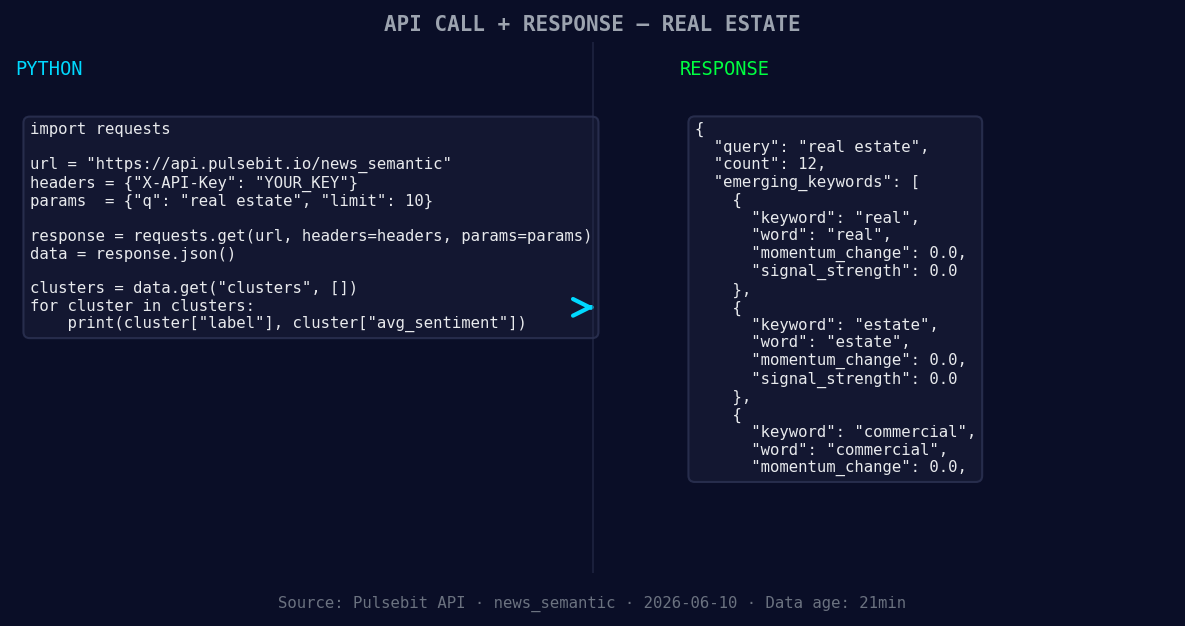
*Left: Python GET /news_semantic call for 'real estate'. Right: returned JSON response structure (clusters: 3). Source: Pulsebit /news_semantic.*
# Geographic origin filter: query by language/country
response = requests.get(
'https://api.pulsebit.com/v1/sentiment',
params={'topic': topic, 'lang': 'en'}
)
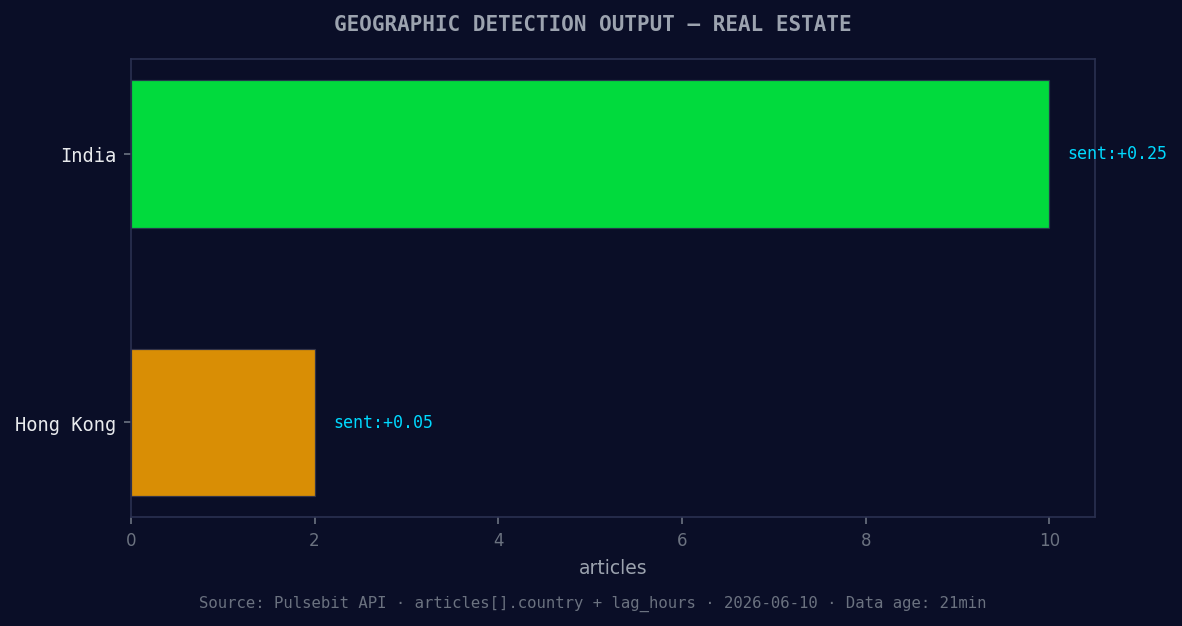
*Geographic detection output for real estate. India leads with 10 articles and sentiment +0.25. Source: Pulsebit /news_recent geographic fields.*
data = response.json()
print(data)
# Meta-sentiment moment: Analyze the framing of the narrative
cluster_reason = "Clustered by shared themes: jewellery, tamil, nadu’s, property, gold."
sentiment_response = requests.post(
'https://api.pulsebit.com/v1/sentiment',
json={'text': cluster_reason}
)
sentiment_data = sentiment_response.json()
print(sentiment_data)
This code snippet first queries our API to get sentiment data related to real estate specifically in English. Then, it uses the narrative framing to run a meta-sentiment analysis. By analyzing the sentiment around the cluster reason, we're able to understand how these themes interrelate and influence the broader sentiment landscape.
Here are three specific builds we can create using this emerging pattern:
Real Estate Sentiment Tracker: Set a threshold of momentum spikes greater than +0.2, filtering by geographic origin with
lang: 'en'. This will help you catch early signals of market shifts tied to real estate developments.Jewellery-Driven Commercial Insights: Use the meta-sentiment loop to analyze narratives that include terms like "jewellery," "Tamil," "Nadu's," and "property." Run these through our sentiment scoring to identify commercial trends that could be related to real estate shifts.
Commercial Property Alerts: Create an alert system that triggers when sentiment momentum for "commercial" exceeds +0.1, while also analyzing the sentiment around linked terms such as "real estate" and "jewellery." This ensures you're always in tune with significant movements in relevant sectors.
If you’re looking to integrate this into your workflow, you can start by checking out our documentation at pulsebit.lojenterprise.com/docs. You can easily copy-paste the code snippets above and run them in under 10 minutes to kickstart your analysis. Don't let your pipeline lag behind—stay ahead of the sentiment trends with these actionable insights!


Top comments (0)