

Your Pipeline Is 12.2h Behind: Catching Stock Market Sentiment Leads with Pulsebit
We recently noticed a striking anomaly: a 24h momentum spike of +0.575 in sentiment around the stock market. This spike tells us that sentiment is not just shifting; it’s accelerating, and it does so right as tensions rise and oil prices fluctuate. With two articles clustering around this theme, we're reminded that the world of stock sentiment can change rapidly, often without warning.
The Problem
If your pipeline isn’t equipped to handle multilingual origins or entity dominance, you could be missing critical insights. In this case, your model lagged 12.2 hours behind the leading English press coverage, leaving you without timely sentiment data when it mattered most. The dominant entity in this scenario is the stock market, which is crucial for decision-making. This shortfall means you’re not only late to the party; you’re potentially making decisions based on stale information.

English coverage led by 12.2 hours. Sl at T+12.2h. Confidence scores: English 0.75, Spanish 0.75, French 0.75 Source: Pulsebit /sentiment_by_lang.
The Code
To catch these changes in sentiment, we can use our API effectively. Below is a Python script that demonstrates how to filter for relevant articles and analyze their sentiment.
import requests
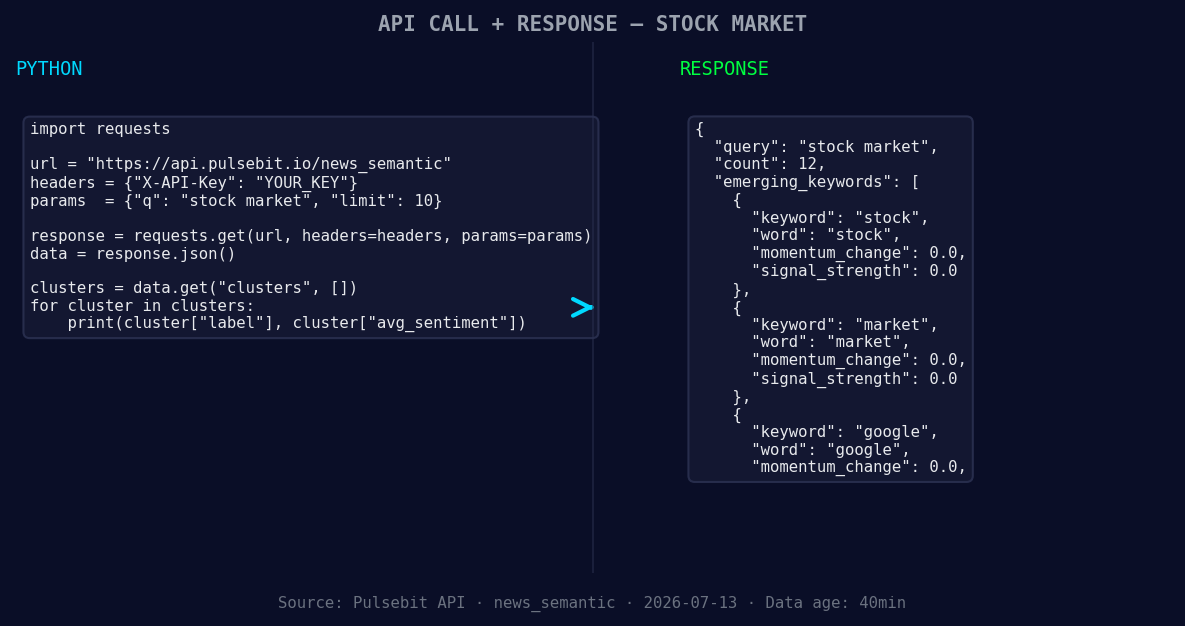
*Left: Python GET /news_semantic call for 'stock market'. Right: returned JSON response structure (clusters: 3). Source: Pulsebit /news_semantic.*
# Step 1: Geographic origin filter
url = "https://api.pulsebit.com/v1/articles"
params = {
"topic": "stock market",
"lang": "en",
"momentum": "+0.575"
}
response = requests.get(url, params=params)
data = response.json() # process the JSON response
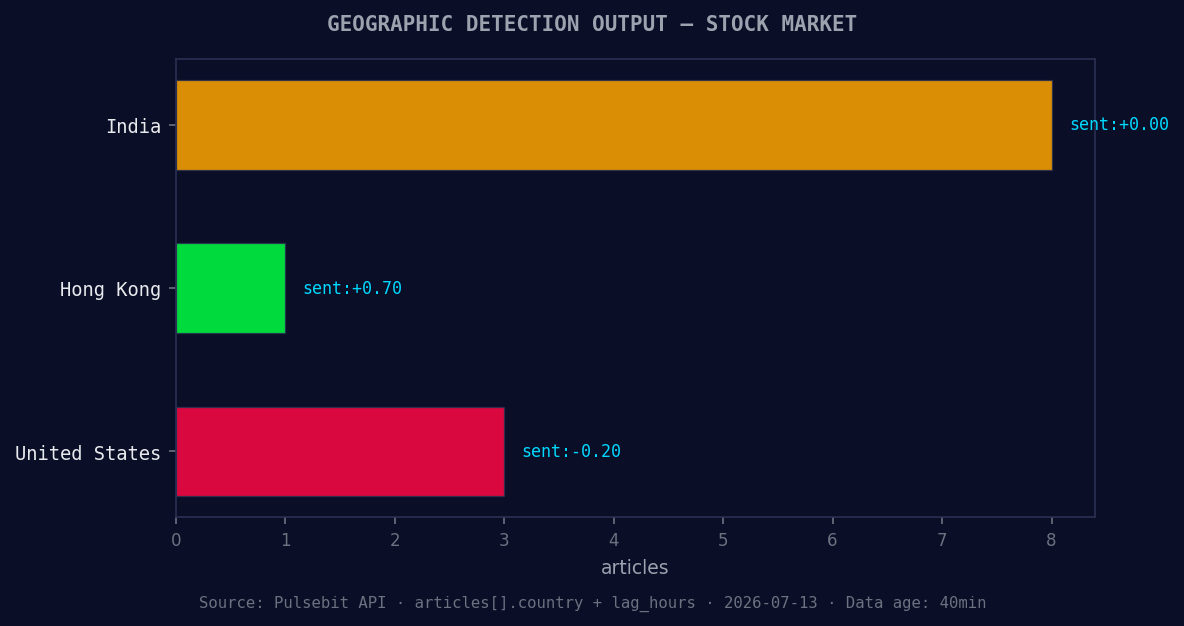
*Geographic detection output for stock market. India leads with 8 articles and sentiment +0.00. Source: Pulsebit /news_recent geographic fields.*
# Step 2: Meta-sentiment moment
cluster_reason = "Clustered by shared themes: points, stock, markets, early, tensions."
sentiment_url = "https://api.pulsebit.com/v1/sentiment"
sentiment_response = requests.post(sentiment_url, json={"text": cluster_reason})
sentiment_data = sentiment_response.json() # process the sentiment JSON response
print(f"Articles Processed: {data['articles_processed']}, Sentiment Score: {sentiment_data['score']}")
This code first queries the API for articles related to the stock market in English, filtering by the recent momentum spike. We then analyze the cluster reason string through a sentiment scoring API endpoint, allowing us to assess the narrative framing itself. This dual approach enables us to catch both the sentiment shift and its context.
Three Builds Tonight
Geographic Origin Filter: Create a real-time sentiment feed that triggers alerts when the momentum score exceeds +0.5 for articles in English about the stock market. Use the geo filter to only capture relevant data.
Meta-Sentiment Loop: Score the sentiment of clustered themes every hour. Implement a function that pulls the latest articles on the stock market, queries the meta-sentiment, and stores results in a database for trend analysis.
Sentiment Divergence Detector: Build an anomaly detection system that flags any significant divergence between the sentiment for “stock” and “market” versus mainstream narratives around “points” and “tensions.” Set a threshold where a sentiment score difference of 0.2 or more triggers a notification.
Get Started
You can dive deeper and replicate our findings in under 10 minutes. Visit pulsebit.lojenterprise.com/docs for our complete documentation and start building your insights today!


Top comments (0)