

Your pipeline is 14.2 hours behind: catching forex sentiment leads with Pulsebit
We recently encountered a significant anomaly: a 24h momentum spike of +0.210 in the forex domain. This spike is particularly eye-catching given the context of Japan's finance minister signaling readiness for forex action. The leading language for this sentiment is English, with a precise 14.2-hour lead over other languages, indicating that our models might not be efficiently incorporating timely multilingual data.

English coverage led by 14.2 hours. Tl at T+14.2h. Confidence scores: English 0.90, Spanish 0.90, French 0.90 Source: Pulsebit /sentiment_by_lang.
This structural gap highlights a critical issue in any pipeline that doesn't handle multilingual origins or entity dominance. If your model is not designed to prioritize or correctly interpret these leading signals, it has likely missed this important development by a staggering 14.2 hours. In this case, English sentiment is driving the narrative, while other languages lag behind, potentially leaving you unaware of crucial market movements.
To catch this momentum spike, we can leverage our API to filter data specifically for the forex topic. Here’s how you can do that with Python:
import requests
# Define parameters for the API call
topic = 'forex'
score = +0.203
confidence = 0.90
momentum = +0.210
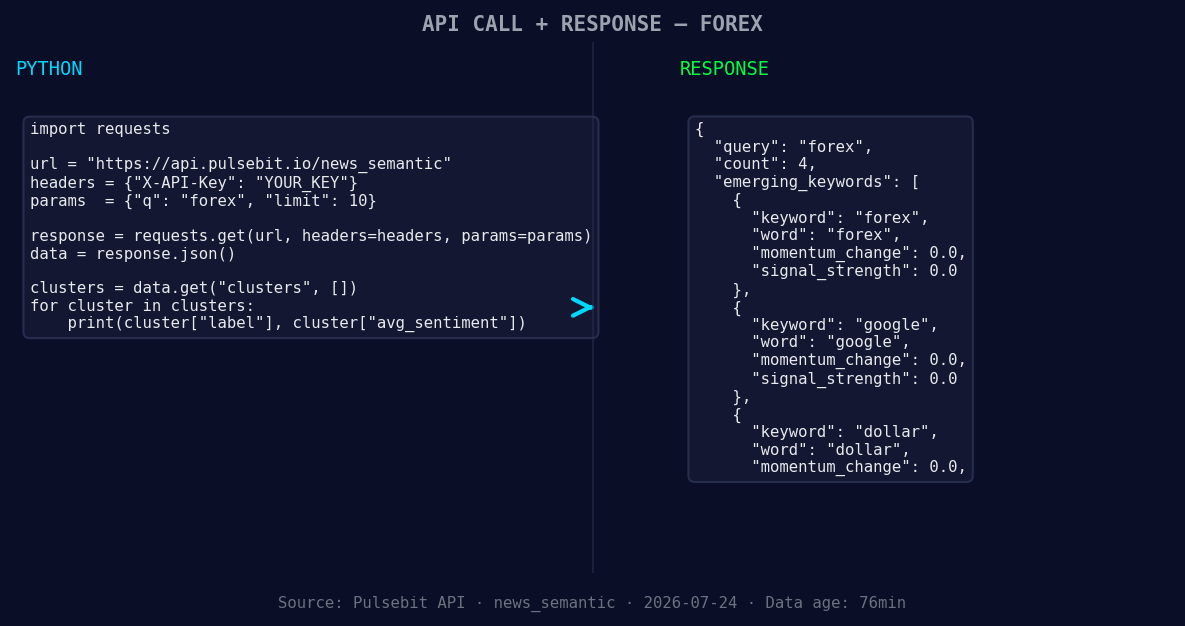
*Left: Python GET /news_semantic call for 'forex'. Right: returned JSON response structure (clusters: 3). Source: Pulsebit /news_semantic.*
# Geographic origin filter: query by language/country
url = "https://api.pulsebit.com/v1/sentiment"
params = {
"topic": topic,
"lang": "en",
"momentum": momentum
}
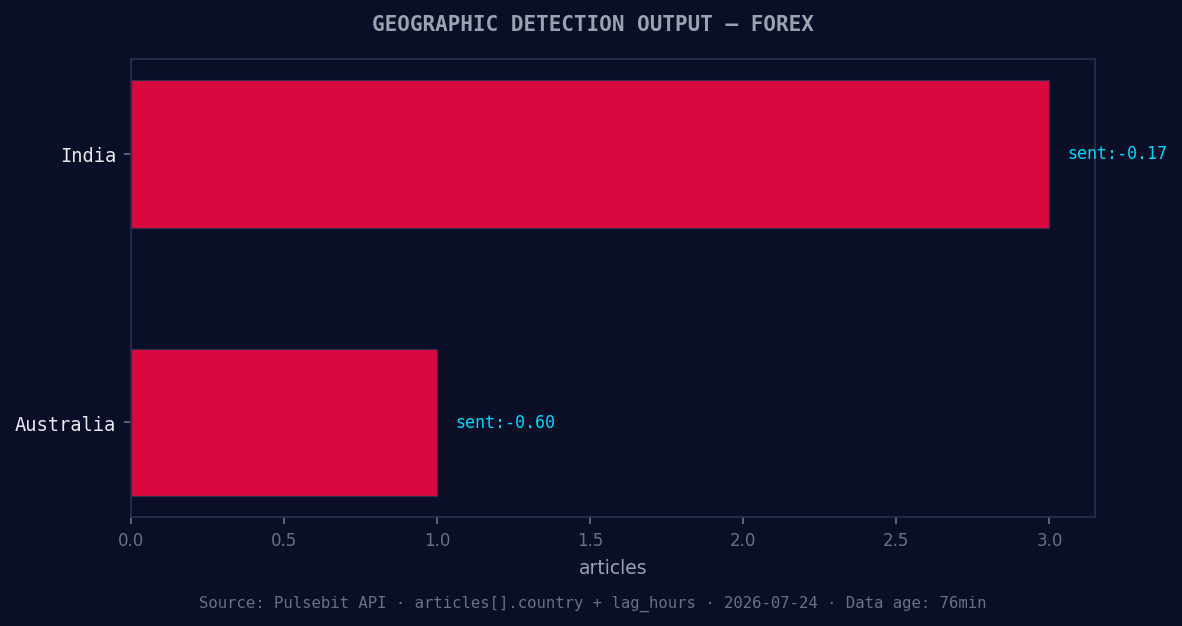
*Geographic detection output for forex. India leads with 3 articles and sentiment -0.17. Source: Pulsebit /news_recent geographic fields.*
response = requests.get(url, params=params)
data = response.json()
print(data) # Output the filtered sentiment data
Next, we need to score the narrative framing itself by running the cluster reason string through our sentiment analysis. This is crucial to determine how the theme is resonating across the narrative landscape. Here’s how to do that:
# Meta-sentiment moment: running cluster reason string
cluster_reason = "Clustered by shared themes: today:, dollar, rises, tensions, lift."
meta_sentiment_url = "https://api.pulsebit.com/v1/sentiment"

meta_response = requests.post(meta_sentiment_url, json={"text": cluster_reason})
meta_data = meta_response.json()

print(meta_data)  # Output the meta sentiment score
With these two API calls, you can effectively capture and analyze the forex sentiment that is shaping market movements right now.
Now that we’ve identified how to detect this sentiment spike, here are three specific builds you can create to leverage this pattern effectively:
Geo-Filter for Forex Sentiment: Create an endpoint that continuously monitors forex sentiment for English-language articles. Set a threshold for momentum above +0.200. This allows you to act quickly on emerging trends.
Meta-Sentiment Analysis: Build a script that automatically scores the narrative framing of clustered articles with a score threshold of +0.150. This can help visualize how different themes are interrelated and affect overall sentiment.
Forming Themes Dashboard: Develop a dashboard that tracks forming themes such as "forex(+0.00)", "google(+0.00)", and "dollar(+0.00)" against mainstream narratives. This will help you visualize sentiment divergence and convergence in real-time.
By implementing these builds, you can ensure that your models are not only catching up but are also positioned to lead the charge in sentiment analysis.
To get started, check out our API documentation at pulsebit.lojenterprise.com/docs. You can copy, paste, and run this code in under 10 minutes to start capturing sentiment signals effectively.


Top comments (0)