

Your Pipeline Is 24.1h Behind: Catching Forex Sentiment Leads with Pulsebit
We just noticed an interesting anomaly: a 24h momentum spike of -0.554 in the forex topic. This spike suggests a significant sentiment shift that you might have missed if your pipeline isn’t tuned to catch these nuances in real-time. The leading language here is English, primarily sourced from press articles, clustered around the theme "Indian Banks Benefit from RBI Forex Facility". With such specific data, it’s crucial to ensure your system can keep pace.
When your model isn’t designed to handle multilingual sources or recognize dominant entities like the RBI in this context, you may find yourself lagging behind by as much as 24.1 hours. This means that while you’re still analyzing a rising rupee narrative, a negative sentiment trend around the dollar is already taking shape. Your model missed this by a significant margin. The leading articles are painting a picture that your system didn't capture in time.

English coverage led by 24.1 hours. Af at T+24.1h. Confidence scores: English 0.85, Spanish 0.85, French 0.85 Source: Pulsebit /sentiment_by_lang.
Let’s dive into how we can leverage our API to catch these critical signals effectively. The first step is to filter our queries by language to ensure we’re only looking at English press. Here’s how you can do that:
import requests
# Define parameters for the API call
params = {
"topic": "forex",
"lang": "en", # Geographic origin filter
"score": +0.194,
"confidence": 0.85,
"momentum": -0.554
}
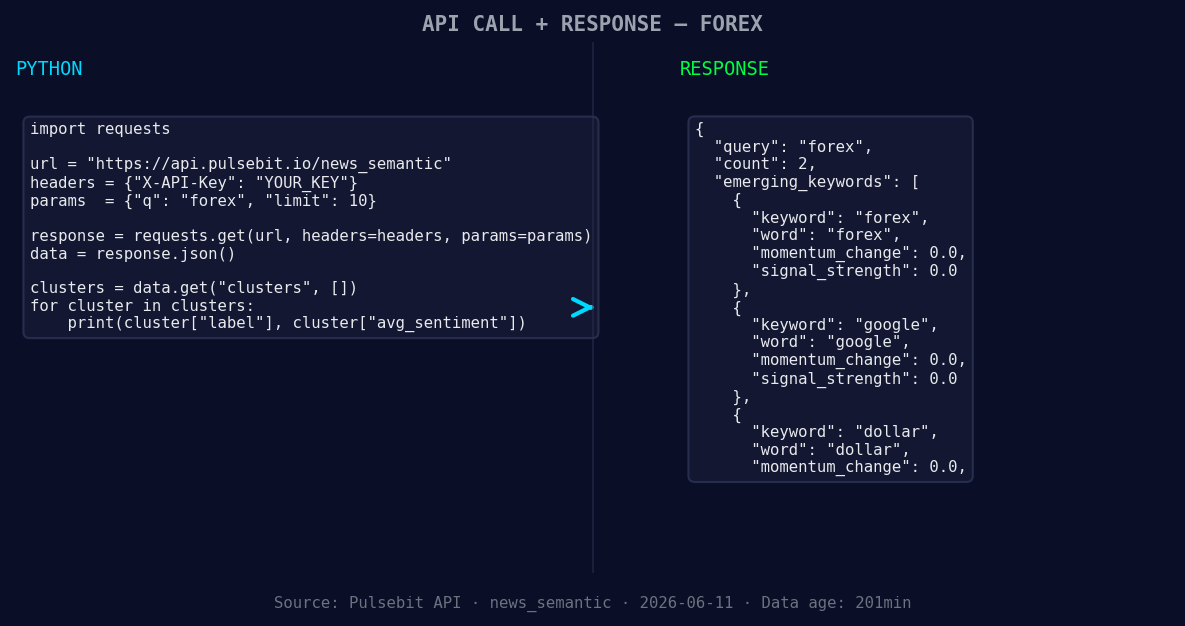
*Left: Python GET /news_semantic call for 'forex'. Right: returned JSON response structure (clusters: 3). Source: Pulsebit /news_semantic.*
# Make the API call
response = requests.get('https://api.pulsebit.com/v1/sentiment', params=params)
data = response.json()
print(data)
Next, we need to run the cluster reason string back through our scoring system to assess the narrative framing surrounding this anomaly. Here’s how to do that:
# Cluster reason string
cluster_reason = "Clustered by shared themes: rupee, dollar, rises, paise, close."
sentiment_response = requests.post('https://api.pulsebit.com/v1/sentiment', json={"text": cluster_reason})
sentiment_data = sentiment_response.json()
print(sentiment_data)
This code allows us to analyze the sentiment of the contextual narrative itself, giving us a more robust understanding of how these themes interact.
Now, what can we build using this newfound insight? Here are three specific applications you could implement tonight:
Geo-Specific Alert System: Set a threshold for sentiment scores in the forex topic. For example, trigger alerts when sentiment dips below -0.5 in the English press. Use the geographic origin filter to isolate relevant articles.
Dynamic Sentiment Dashboard: Create a visualization tool that constantly updates sentiment around forex topics. Use the meta-sentiment loop to refresh the narrative framing every hour, ensuring you’re always on top of the evolving sentiment landscape.
Cluster Story Analysis Tool: Build a feature that automatically analyzes the frequency and sentiment of clustered themes over time. For instance, track "forex" vs. mainstream terms like "rupee" and "dollar" to identify emerging patterns before they become obvious.
These applications leverage the forming themes around forex (+0.00), Google (+0.00), and the dollar (+0.00) while contrasting them against mainstream discussions. Catching these signals ensures you’re not just reacting to the trends but anticipating them.
To get started with our API, head over to pulsebit.lojenterprise.com/docs. You can copy-paste the code snippets provided and run them in under 10 minutes to see these insights live in your environment. Don't let your pipeline lag behind; adapt and catch these crucial sentiment shifts!


Top comments (0)