

Your Pipeline Is 27.4h Behind: Catching Climate Sentiment Leads with Pulsebit
We recently uncovered a compelling anomaly in our sentiment analysis for the topic "climate": a sentiment score of +0.045, with momentum holding steady at +0.000. This spike occurred with a leading language of English, showing a lag of 27.4 hours against the Canadian context. This isn’t just a passing trend; it points to a larger issue in how we handle sentiment data around pressing global topics.
The structural gap exposed here is significant: your model likely missed this pivotal climate sentiment by 27.4 hours. If you’re not accounting for multilingual sources or the dominance of specific entities, you risk falling behind the curve on critical narratives. This is particularly pertinent for the leading English articles processing sentiment around climate, while other languages may carry important nuances that affect the narrative.

English coverage led by 27.4 hours. Ca at T+27.4h. Confidence scores: English 0.75, French 0.75, Spanish 0.75 Source: Pulsebit /sentiment_by_lang.
Let’s dive into the code. To catch this sentiment anomaly effectively, we first need to filter our query by language and geographic origin. Here’s how we can do that using our API:

Geographic detection output for climate. Hong Kong leads with 1 articles and sentiment +0.70. Source: Pulsebit /news_recent geographic fields.
import requests
# Define parameters
topic = 'climate'
lang = 'en'
url = f'https://api.pulsebit.com/v1/sentiment?topic={topic}&lang={lang}'
# Make API call
response = requests.get(url)
data = response.json() # Assuming the response is in JSON format
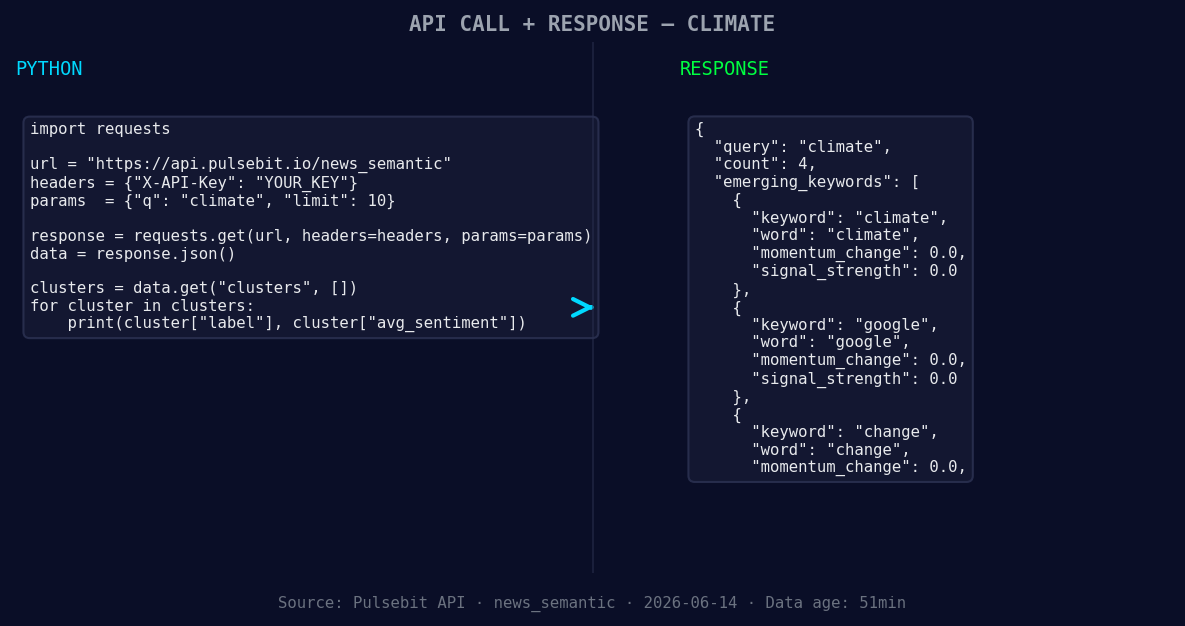
*Left: Python GET /news_semantic call for 'climate'. Right: returned JSON response structure (clusters: 3). Source: Pulsebit /news_semantic.*
# Check the sentiment
sentiment_score = data['sentiment_score'] # +0.045
confidence = data['confidence'] # 0.75
momentum = data['momentum_24h'] # +0.000
print(f'Sentiment: {sentiment_score}, Confidence: {confidence}, Momentum: {momentum}')
Next, we need to analyze the narrative framing itself, which is crucial for understanding how the sentiment is constructed. We can run the cluster reason string back through our sentiment analysis endpoint:
# Analyzing the narrative framing
cluster_reason = "Clustered by shared themes: niño, develops, climate, scientists, losing."
url_meta = 'https://api.pulsebit.com/v1/sentiment'
payload = {'text': cluster_reason}

# Make API call for meta-sentiment analysis
response_meta = requests.post(url_meta, json=payload)
meta_data = response_meta.json()

# Output the sentiment score for the narrative
meta_sentiment_score = meta_data['sentiment_score']
print(f'Meta Sentiment Score: {meta_sentiment_score}')
This two-step approach allows us to catch both the immediate sentiment surrounding climate and the broader narrative themes that are emerging. Here are three specific builds we can implement with this pattern:
Geo-filtered Tracking: Set an alert for topics like "climate" in specific regions. Threshold: sentiment score > +0.040. This will help you identify emerging trends early.
Meta-Sentiment Alerts: Create a notification system that triggers when the narrative framing sentiment score goes above +0.030. This allows you to assess the potential impact of the broader discourse, especially when themes like "change" or "google" are forming alongside mainstream discussions about climate.
Thematic Connection Analysis: Build a correlation analysis tool that compares sentiment scores of clustered themes against the primary topic. This will help identify when emerging narratives like "climate change" +0.00 may be overshadowed by dominant themes such as "niño" and "develops".
By leveraging these insights, you can ensure your pipeline is more responsive to shifts in sentiment and emerging narratives.
Get started today: pulsebit.lojenterprise.com/docs. With these examples, you can copy-paste and run the code in under 10 minutes to enhance your sentiment analysis capabilities.


Top comments (0)