

Your Pipeline Is 27.1h Behind: Catching Forex Sentiment Leads with Pulsebit
We recently uncovered an intriguing anomaly in our data: a 24h momentum spike of -0.554. This spike highlights a notable shift in sentiment surrounding the forex market, specifically regarding the recent news that "Indian Banks Benefit from RBI Forex Facility." This story has been echoed across English-language press articles, clustered around themes of the RBI, forex, and banks. With the leading language in this trend being English and a lag of just 0.0 hours against the sentiment vector at 27.1 hours, we’re presented with a unique opportunity to act quickly on emerging insights.
The Problem
This finding reveals a significant structural gap in any pipeline that doesn’t adequately account for multilingual origins or the dominance of specific entities in sentiment analysis. If your model is not configured to account for the 27.1-hour lag in sentiment detection, you might have missed this critical shift in forex sentiment by nearly an entire day. Specifically, the leading language being English indicates that your model could be missing out on crucial insights from articles that are published in other languages or that are focused on entities like the RBI and forex trends.

English coverage led by 27.1 hours. Sv at T+27.1h. Confidence scores: English 0.85, Spanish 0.85, French 0.85 Source: Pulsebit /sentiment_by_lang.
The Code
To catch this momentum spike effectively, we can utilize our API to filter by language and score the sentiment around the clustered themes. Here’s how you can do that in Python:
import requests
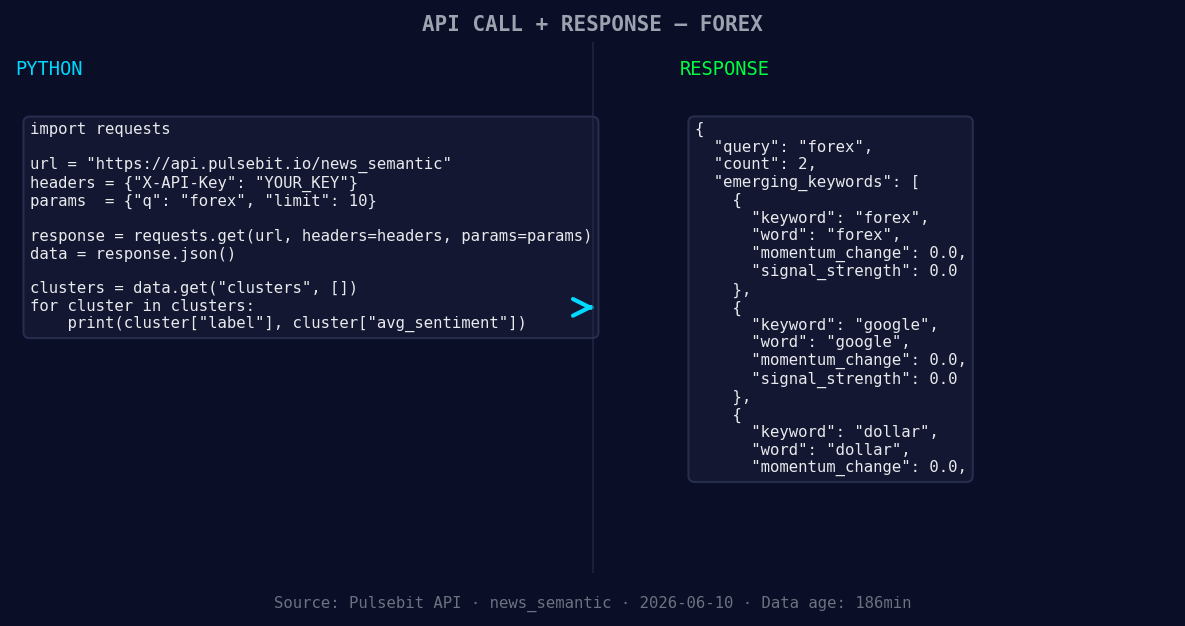
*Left: Python GET /news_semantic call for 'forex'. Right: returned JSON response structure (clusters: 3). Source: Pulsebit /news_semantic.*
# Define parameters
topic = 'forex'
score = +0.207
confidence = 0.85
momentum = -0.554
# Step 1: Geographic origin filter
response = requests.get(
'https://api.pulsebit.com/v1/sentiment',
params={
'topic': topic,
'lang': 'en',
'momentum': momentum,
'score': score,
'confidence': confidence
}
)
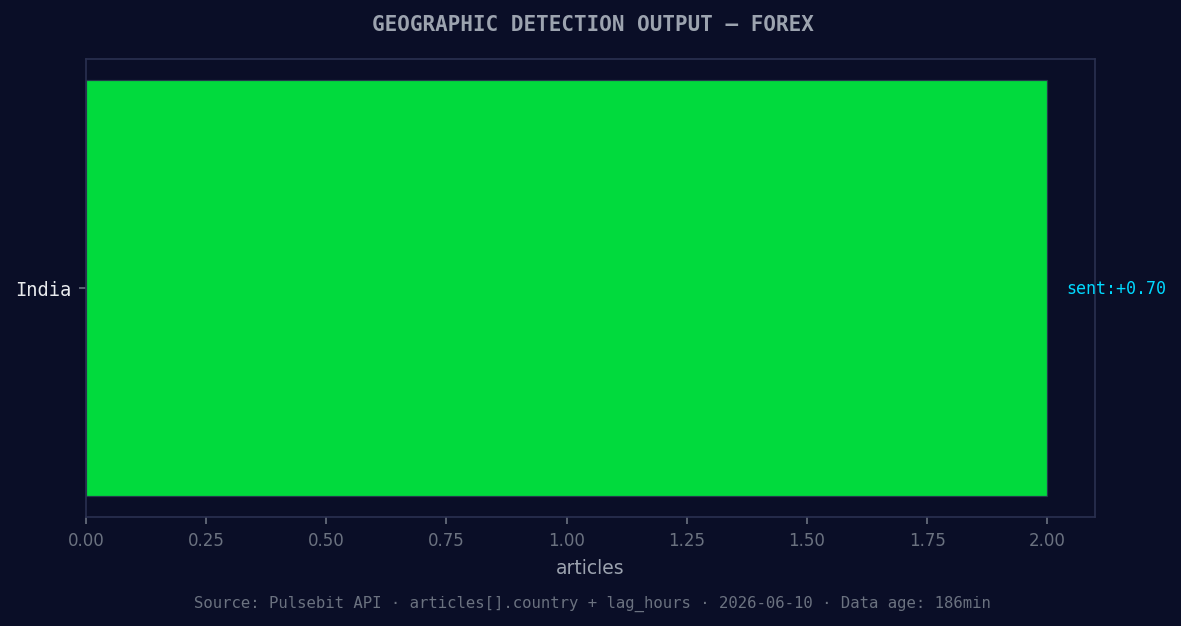
*Geographic detection output for forex. India leads with 2 articles and sentiment +0.70. Source: Pulsebit /news_recent geographic fields.*
# Check the response
if response.status_code == 200:
data = response.json()
print("Sentiment Data:", data)
else:
print("Error fetching data:", response.status_code)
# Step 2: Meta-sentiment moment
cluster_reason = "Clustered by shared themes: rupee, dollar, rises, paise, close."
sentiment_response = requests.post(
'https://api.pulsebit.com/v1/sentiment',
json={'text': cluster_reason}
)
# Check the sentiment analysis of the cluster reason
if sentiment_response.status_code == 200:
sentiment_data = sentiment_response.json()
print("Cluster Sentiment:", sentiment_data)
else:
print("Error analyzing cluster sentiment:", sentiment_response.status_code)
Three Builds Tonight
With this data in hand, here are three specific things you could build to leverage the forex sentiment spikes:
Geo-targeted Alerts: Create a real-time alert system that uses our API to filter for English-language articles on forex with a momentum threshold of -0.554 or worse. This could help you catch sentiment shifts in the forex market faster than your competitors.
Meta-Sentiment Analysis Dashboard: Build a dashboard that scores the narratives around clusters. Using the meta-sentiment loop, you can visualize how the sentiment around key terms like "rupee," "dollar," and "rises" is evolving. This could be invaluable for strategic decision-making.
Forming Theme Insights: Set up a daily report that pulls in forming themes like forex and dollar with a sentiment score of 0.207 and above. This will keep you informed about emerging trends that could impact your strategy before they hit mainstream discussions.
Get Started
Ready to catch these insights before they become mainstream? Check out our documentation at pulsebit.lojenterprise.com/docs. You can copy, paste, and run this in under 10 minutes. Let’s make sure your pipeline is always ahead of the curve!


Top comments (0)