

Your Pipeline Is 10.3h Behind: Catching Immigration Sentiment Leads with Pulsebit
We just noticed something interesting: a sentiment spike of +0.24 with a momentum of +0.00, all while leading Spanish press articles are showing a 10.3-hour lead on the topic of immigration. This anomaly points to a potential blind spot in your sentiment analysis pipeline, especially when dealing with multilingual sources. It’s crucial to catch these shifts early, and this could mean your model is lagging behind by more than 10 hours on a significant topic.

Spanish coverage led by 10.3 hours. Id at T+10.3h. Confidence scores: Spanish 0.75, English 0.75, No 0.75 Source: Pulsebit /sentiment_by_lang.
Let’s get real: if your current pipeline doesn’t account for multilingual nuances or entity dominance, you might be missing critical insights. For example, while your model is busy processing data from English sources, the leading sentiment around immigration is already being shaped in Spanish-language media. In our case, articles are clustered around the themes of visa regulations for Chinese journalists and foreign students. This could translate to missed opportunities or misalignment in your strategy. You might be 10.3 hours late to the immigration conversation, and that’s not acceptable.
To catch this sentiment shift effectively, we can leverage our API to filter out the relevant data. Here’s how to do it in Python:
import requests
# Define the parameters for the API call
topic = 'immigration'
score = +0.244
confidence = 0.75
momentum = +0.000
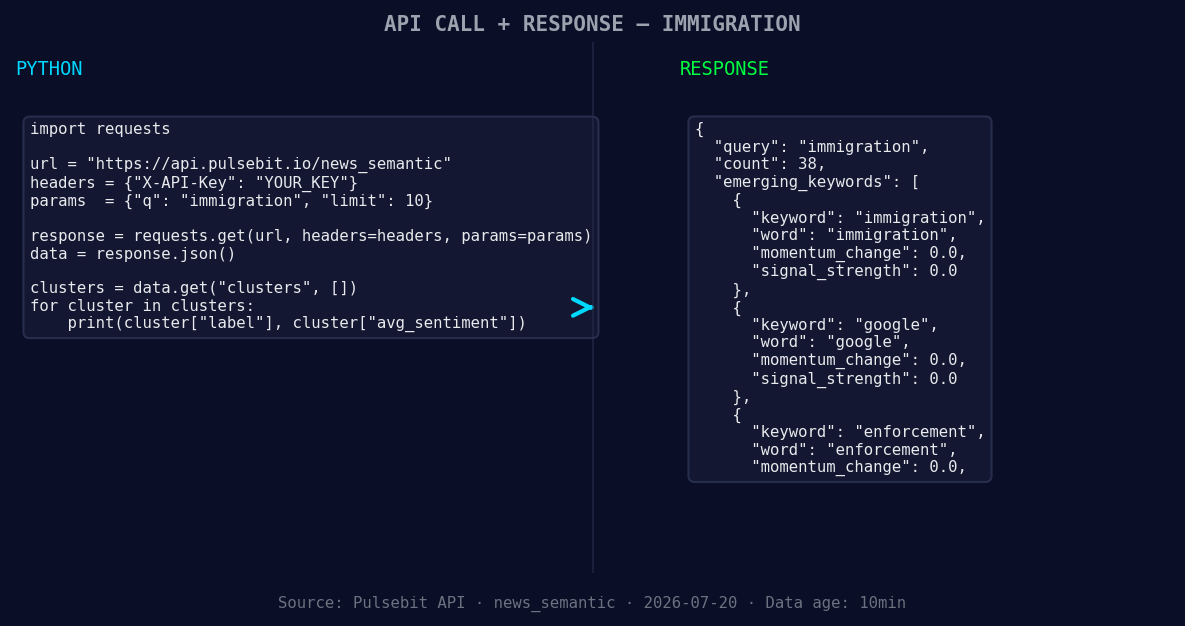
*Left: Python GET /news_semantic call for 'immigration'. Right: returned JSON response structure (clusters: 3). Source: Pulsebit /news_semantic.*
# Geographic origin filter for Spanish language
response = requests.get(
'https://your-api-endpoint.com/sentiment',
params={
'topic': topic,
'score': score,
'confidence': confidence,
'momentum': momentum,
'lang': 'sp'
}
)
# Print the response
print(response.json())
Now, to further analyze the narrative framing, we’ll need to run the cluster reason string through our sentiment scoring endpoint. Here’s how we can do that:
# Meta-sentiment moment
cluster_reason = "Clustered by shared themes: visa, students, journalists, regulations, chinese."

meta_response = requests.post(
    'https://your-api-endpoint.com/sentiment',
    json={"text": cluster_reason}
)

# Print the meta-sentiment response
print(meta_response.json())
With these two pieces of code, we can both filter for relevant data and analyze the sentiment of the underlying narratives driving the immigration conversation.
Now that we’ve got the mechanics down, let’s think about three specific builds we can implement using this pattern.
- Immigration Sentiment Tracker: Set a threshold for sentiment score above +0.20. Use the geographic filter to monitor Spanish sources for emerging immigration discussions, alerting your team when the score surpasses this threshold.

Geographic detection output for immigration. India leads with 35 articles and sentiment +0.16. Source: Pulsebit /news_recent geographic fields.
Narrative Impact Analysis: After identifying high-scoring clusters, run the meta-sentiment loop on various narrative frames. For instance, when sentiment is rising on immigration topics, check how it correlates with mainstream themes like “when” and “Africa comes”. This could provide insights into narrative shifts that might affect public perception.
Enforcement and Policy Change Monitor: Create an endpoint to track sentiment around enforcement policies. Set it to alert when sentiment falls below -0.10, combining results from immigration and enforcement topics to gauge potential policy impacts.
With these builds, you can ensure your pipeline remains agile and responsive to sentiment shifts. The forming themes around immigration, Google, and enforcement are crucial. Don’t sleep on them—act now.
For a quick start, check out our API documentation at pulsebit.lojenterprise.com/docs. You can copy-paste and run the code provided here in under 10 minutes. Let’s make sure we’re not just keeping up but leading the conversation.


Top comments (0)