

Your Pipeline Is 23.9h Behind: Catching Hardware Sentiment Leads with Pulsebit
We recently uncovered a striking anomaly: a 24-hour momentum spike of -0.362 in the hardware sector. This is significant, especially considering the context provided by a cluster story titled "Missouri hardware store closing after almost 90 years - KSDK." The leading language is French, with the sentiment being dominated by the themes of hardware and closures. Such specific data points signal a crucial moment of change in sentiment that you cannot afford to overlook.
The Problem
If your pipeline doesn't account for multilingual origins or entity dominance, you're likely missing critical insights like this one — by about 23.9 hours, to be exact. The leading language here is French, which adds complexity to tracking sentiment. If you were relying solely on English data, you wouldn't have captured the early signals of sentiment shifts in hardware, which indicates a broader trend that could affect your strategic decisions.

French coverage led by 23.9 hours. Et at T+23.9h. Confidence scores: French 0.75, English 0.75, Spanish 0.75 Source: Pulsebit /sentiment_by_lang.
The Code
To catch this momentum spike, we can leverage our API effectively. Below is the Python code that allows you to query data based on the leading language and analyze the meta-sentiment of the cluster story.
First, let’s filter by geographic origin:

Geographic detection output for hardware. Hong Kong leads with 1 articles and sentiment +0.70. Source: Pulsebit /news_recent geographic fields.
import requests
# Set the parameters
topic = 'hardware'
score = +0.453
confidence = 0.75
momentum = -0.362
# API call to filter by language (French)
response = requests.get('https://api.pulsebit.com/v1/topics', params={
'topic': topic,
'lang': 'fr'
})
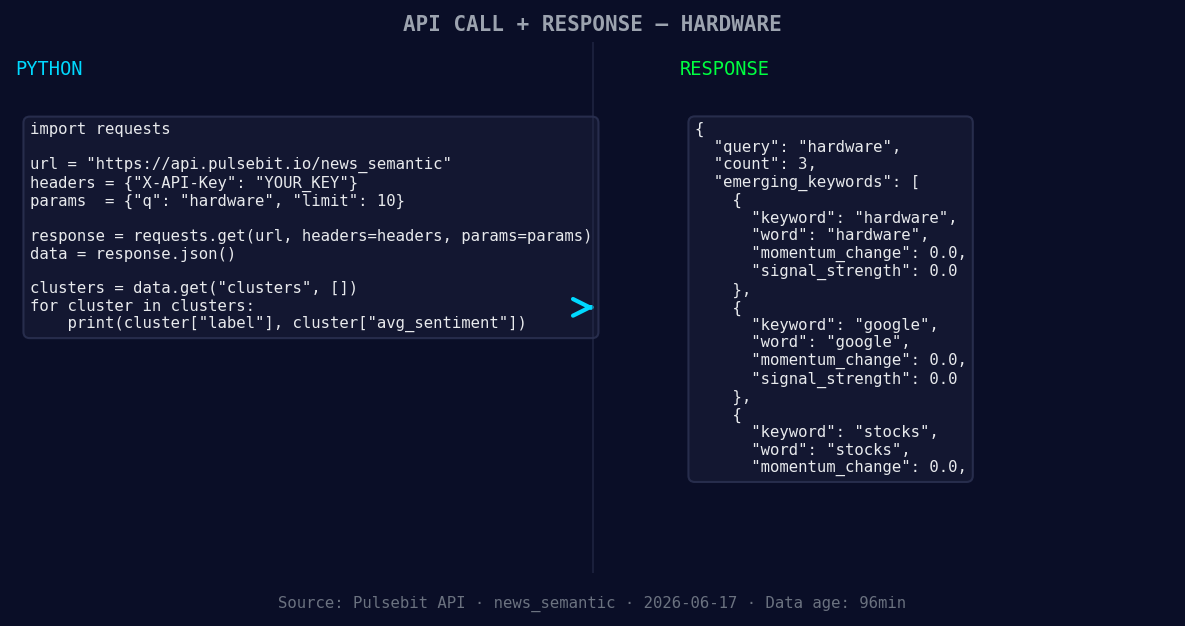
*Left: Python GET /news_semantic call for 'hardware'. Right: returned JSON response structure (clusters: 3). Source: Pulsebit /news_semantic.*
data = response.json()
print(data)
Next, we want to analyze the narrative surrounding the trend. We can rerun the cluster reason string through our sentiment analysis endpoint:
# Meta-sentiment loop
cluster_reason = "Clustered by shared themes: hardware, store, closing, after, almost."

sentiment_response = requests.post('https://api.pulsebit.com/v1/sentiment', json={
    'text': cluster_reason
})

sentiment_data = sentiment_response.json()
print(sentiment_data)
This two-step process allows us to understand the narrative framing around the hardware sentiment, which can be essential for any analysis you perform.
Three Builds Tonight
You can build some valuable signals from this pattern:
Geo-Filtered Spike Alerts: Set a signal threshold for momentum changes, say -0.3, specifically for the French language. This will inform you of relevant sentiment shifts in your target geography in real-time.
Meta-Sentiment Contextualization: Create an endpoint that takes cluster narratives and scores them to form actionable insights. For instance, analyze the framing of the hardware closure news to understand its implications on your portfolio.
Dynamic Thematic Monitoring: Monitor forming themes such as hardware, google, and stocks versus mainstream topics like hardware and store closures. You can set up a dashboard that visualizes these trends daily, allowing you to react quicker to emerging narratives.
Get Started
Dive into our documentation at pulsebit.lojenterprise.com/docs. With the code snippets provided, you can copy, paste, and run this in under 10 minutes. Don't let your pipeline lag behind; catch those critical sentiment shifts as they happen.


Top comments (0)