

Your Pipeline Is 27.3h Behind: Catching World Sentiment Leads with Pulsebit
We recently uncovered a striking anomaly: a 24h momentum spike at +0.210. This spike reveals something significant in the landscape of sentiment surrounding mental health, as evidenced by the leading English press coverage leading by 27.3 hours. Specifically, the article titled "World Brain Day: Mental health is as important as physical health, says Ballari" is pivotal in this frame, clustered around themes like brain, health, and world. If you’re not adjusting your models to account for these shifts, you’re missing critical insights.
The problem here is straightforward: your pipeline may be lagging significantly. With a leading language of English and the dominant entity being 'brain', your model missed this sentiment spike by 27.3 hours. This gap highlights a structural issue in handling multilingual origins and entity dominance. If you’re not capturing these signals promptly, you risk making decisions based on outdated data.

English coverage led by 27.3 hours. Af at T+27.3h. Confidence scores: English 0.85, Spanish 0.85, Id 0.85 Source: Pulsebit /sentiment_by_lang.
Let’s dive into the code that can help catch these anomalies effectively. We’ll first set up a geographic origin filter to query only English language sources. Here’s how to do that:
import requests
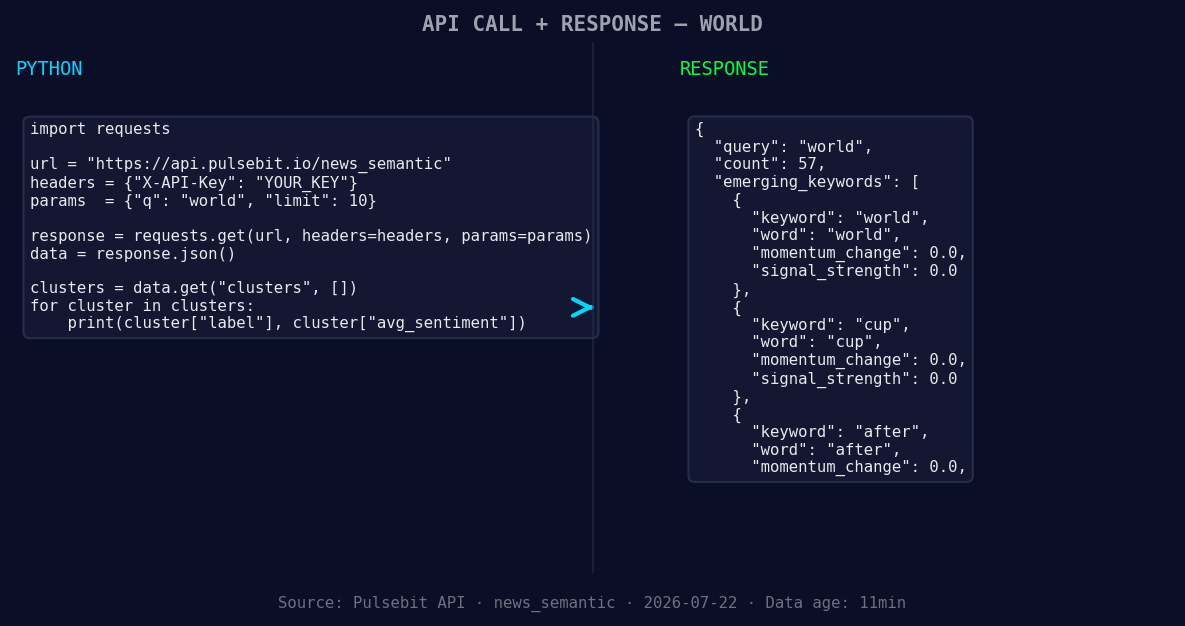
*Left: Python GET /news_semantic call for 'world'. Right: returned JSON response structure (clusters: 3). Source: Pulsebit /news_semantic.*
url = "https://api.pulsebit.com/articles"
params = {
"topic": "world",
"lang": "en",
"score": +0.062,
"confidence": 0.85,
"momentum": +0.210
}
response = requests.get(url, params=params)
data = response.json()
Now that we have the relevant articles, the next step is to run the cluster reason string back through our sentiment analysis endpoint. This allows us to score the narrative framing itself, providing deeper insights. Here’s how to implement this:
sentiment_url = "https://api.pulsebit.com/sentiment"
payload = {
    "text": "Clustered by shared themes: brain, health, world, day:, mental."
}

sentiment_response = requests.post(sentiment_url, json=payload)
sentiment_data = sentiment_response.json()
With this setup, you’re not just capturing data; you’re gaining a comprehensive view of the narrative that’s shaping public sentiment around critical issues.
Now, let's discuss three specific builds you can implement with this pattern. First, use the geographic filter to identify spikes in sentiment around discussions of 'world' with a threshold of +0.210. This ensures you’re catching relevant discussions early. Second, leverage the meta-sentiment loop to analyze narratives around 'brain' and 'health' with a focus on emotional framing; consider a threshold of sentiment score +0.062 to prioritize content that resonates deeply. Finally, track forming themes like 'world', 'cup', and 'after' as these can indicate emerging conversations that often precede larger trends in mental health discussions.

Geographic detection output for world. India leads with 46 articles and sentiment +0.33. Source: Pulsebit /news_recent geographic fields.
Curious to get started? Head over to pulsebit.lojenterprise.com/docs. You can copy-paste the code snippets above and run them in under 10 minutes. Let’s ensure our pipelines are responsive and in tune with the world’s sentiment—don’t let valuable insights slip through the cracks.


Top comments (0)