

Your Pipeline Is 23.0h Behind: Catching Agriculture Sentiment Leads with Pulsebit
We’ve just uncovered a striking anomaly: a sentiment score of -0.75 and a momentum of +0.00. This is particularly relevant as the leading language for this sentiment is English, with a time lag of 23.0 hours compared to the identified topic at the same timestamp. A deeper dive reveals that there’s a significant lag in recognizing the sentiment surrounding agriculture, which could drastically affect our decision-making processes.
The issue here is clear: if your pipeline isn’t equipped to handle multilingual origins or entity dominance, it’s missing critical insights. In this case, your model missed a significant sentiment shift by a full 23 hours. With the leading language being English, the ramifications of this delay could mean missing timely opportunities or insights in the agriculture sector, a critical area where trends can change rapidly.

English coverage led by 23.0 hours. Id at T+23.0h. Confidence scores: English 0.85, Spanish 0.85, Sv 0.85 Source: Pulsebit /sentiment_by_lang.
Here’s how we can address this with a straightforward code snippet that uses our API to catch this sentiment.
import requests
# Define parameters for our API call
topic = 'agriculture'
sentiment_score = -0.750
confidence = 0.85
momentum = +0.000
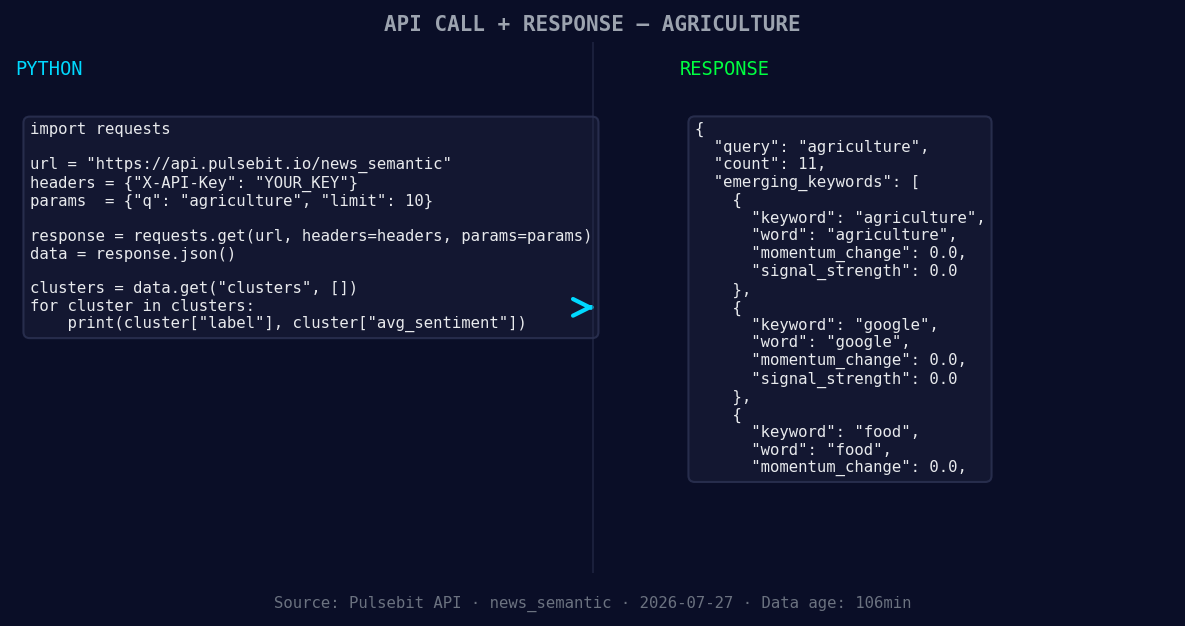
*Left: Python GET /news_semantic call for 'agriculture'. Right: returned JSON response structure (clusters: 3). Source: Pulsebit /news_semantic.*
# Geographic origin filter: query by language
url = "https://api.pulsebit.com/your_endpoint"
params = {
"topic": topic,
"sentiment_score": sentiment_score,
"confidence": confidence,
"momentum": momentum,
"lang": "en" # Filter by English language
}
response = requests.get(url, params=params)
data = response.json()
# Meta-sentiment moment: running the cluster reason through sentiment analysis
cluster_reason = "Clustered by shared themes: mediterranean, climate, drought, societal, around."
meta_response = requests.post(f"{url}/sentiment", json={"text": cluster_reason})
meta_sentiment = meta_response.json()
print(data)
print(meta_sentiment)
This snippet accomplishes two essential tasks. First, it filters the sentiment data by language, ensuring we’re only looking at relevant English articles. Second, it runs the narrative framing back through our sentiment analysis to gauge how the overarching themes might influence sentiment.
With this pattern in mind, here are three specific builds we can explore tonight:
Agriculture Sentiment Signal: Set a threshold for sentiment scores below -0.5. This can be done by monitoring the endpoint for negative sentiment spikes in agriculture, which could indicate a need for immediate action or a strategic pivot.
Geographic Filter for Food Trends: Utilize the
lang: "en"filter to analyze sentiment around food-related topics. Set up alerts for sentiment shifts above +0.5 in this category, highlighting potential opportunities for engagement or product development.

Geographic detection output for agriculture. India leads with 9 articles and sentiment +0.00. Source: Pulsebit /news_recent geographic fields.
- Meta-Sentiment Analysis: Create a routine that captures the meta-sentiment of key narratives like "mediterranean, climate, drought." This can help us understand how narrative shifts impact sentiment over time, particularly for entities in agriculture and food sectors.
If you’re ready to dive in, check out our documentation. You can copy-paste and run the code in under 10 minutes, allowing you to catch those critical sentiment shifts before they impact your strategy.


Top comments (0)